

CAMBRIDGE, Mass.–What makes for a bad manager or leader? It’s a question that has been studied for many years, and Scott Gregory CEO of Hogan Assessment Systems and is an expert on executive selection, development, and coaching and a frequent speaker on personality in the workplace, says the “key derailment characteristics of bad managers are well documented and fall into three broad behavioral categories:”
Writing in the Harvard Business Review, Gregory said those categories include:
- Moving away behaviors, “which create distance from others through hyper-emotionality, diminished communication, and skepticism that erodes trust.”
- Moving against behaviors, “which overpower and manipulate people while aggrandizing the self.
- Moving toward behaviors, “which include being ingratiating, overly conforming, and reluctant to take chances or stand up for one’s team.”
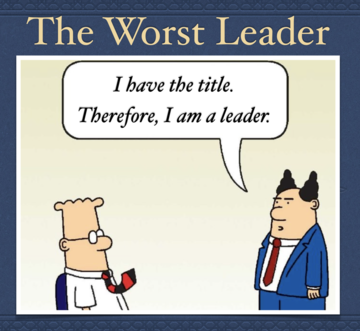
“The popular media is full of examples of bad leaders in government, academia, and business with these characteristics,” said Gregory, noting that many bosses are leaders in title only.
Worst of the Worst
The worst kind of leader, according to Gregory, is the “leader” who provides “absentee leadership,” which he said “rarely comes up in today’s leadership or business literature, but research shows that it is the most common form of incompetent leadership.”
“Absentee leaders are people in leadership roles who are psychologically absent from them,” wrote Gregory. “They were promoted into management, and enjoy the privileges and rewards of a leadership role, but avoid meaningful involvement with their teams. Absentee leadership resembles the concept of rent-seeking in economics — taking value out of an organization without putting value in. As such, they represent a special case of laissez-faire leadership, but one that is distinguished by its destructiveness.”
Gregory said that having a boss who allows a subordinate to do as they please may sound ideal, but a 2015 survey of 1,000 working adults found that eight of the top nine complaints about leaders concerned behaviors that were absent; employees were most concerned about what their bosses didn’t do.
“Clearly, from the employee’s perspective, absentee leadership is a significant problem, and it is even more troublesome than other, more overt forms of bad leadership,” he said. “Research shows that being ignored by one’s boss is more alienating than being treated poorly.”
Gregory said the impact of absentee leadership on job satisfaction outlasts the impact of both constructive and overtly destructive forms of leadership. “Constructive leadership immediately improves job satisfaction, but the effects dwindle quickly,” he said. “Destructive leadership immediately degrades job satisfaction, but the effects dissipate after about six months. In contrast, the impact of absentee leadership takes longer to appear, but it degrades subordinates’ job satisfaction for at least two years. It also is related to a number of other negative outcomes for employees, such as role ambiguity, health complaints, and increased bullying from team members.
Why the Lack of Confrontation?
Why don’t more organizations confront absentee leaders?
“Because absentee leaders don’t actively make trouble, their negative impact on organizations can be difficult to detect, and when it is detected, it often is considered a low-priority problem,” explained Gregory. “Thus, absentee leaders are often silent organization killers. Left unchecked, absentee leaders clog an organization’s succession arteries, blocking potentially more effective people from moving into important roles while adding little to productivity. Absentee leaders rarely engage in unforgivable bouts of bad behavior, and are rarely the subject of ethics investigations resulting from employee hotline calls. As a result, their negative effect on organizations accumulates over time, largely unchecked.”