

SEATTLE–Amazon has just offered a Master Class in how to keep entry-level staff happy, but it’s not available on its website, according to one person.
Instead, it’s an offering for the company’s own employees.
Writing on Inc.com, Kelly Main noted the company recently announced its new partnerships with Kaplan and Beyond 12 in an effort to expand its Career Choice program with academic and career coaching services.
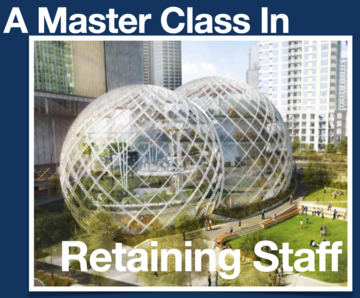
“The seemingly uninspired collaboration with the educational companies geared towards Gen Z and those without established careers isn't exactly groundbreaking,” Main wrote. “But at its core, it might just hold the key giving people what they need to work happily in entry-level roles.”
According to Main, the national shortage of qualified job candidates continues to leave many businesses short-staffed, including some credit unions.
Also Feeling Pressure
“The trillion-dollar e-commerce conglomerate that relies on thousands of lower-level staff is under pressure, too,” Main observed. “And its notorious reputation for being a poor employer only adds fuel to the fire. “
In response, Amazon's recently expanded employee benefits program is designed to help set staff in lower-level positions up for success and remain happily employed along the way, according to the post, which adds the company is not simply about offering more pay, but about offering more than pay to keep staff happy. “What's great about Amazon's Career Choice program is that it's not the program itself that other businesses need to replicate,” Main stated. “But it does offer three major underlying lessons that any business will want to replicate in order to keep staff happy--particularly those who are just starting their careers.”
The Three Lessons
Those three lessons include:
Be Realistic About What Roles are to Staff
“The reality is that not every job is a dream job. Yet, people work because they have to. For this reason, it may not come as a surprise that a large majority of people feel trapped, and more than 40% of people feel as though they've lost control in their career, reports LinkedIn,” Main stated.
One key aspect to Amazon's program is that it recognizes that employees may want a career beyond their current role--and even beyond what Amazon might have to offer, the posting added.
“Psychologically, this recognition alone can help staff to not feel stuck. In return, this can help keep them happy within their role, leading to more time in it.”
Recognize Every Role has a Lifecycle
The process of hiring and training is expensive, entry-level roles included. When finding good help is hard to find, keeping it becomes the goal. But it may not also be the goal of your employees themselves, Main wrote.
“While businesses should always be working to be good employers, they should loosen the reins on trying to keep workers in a position they may not want to ultimately be in, according to Deloitte,” according to Main. “Even if you aren't necessarily in a position to provide tuition assistance or career coaching like Amazon, you can come to grips with the fact that every role has a natural lifecycle. And when fighting it means holding staff back, no one benefits.”
Offer a Stepping Stone in the Right Direction
Main noted that every work experience offers something of value beyond a paycheck, from a set of skills to a broader network. There's a tremendous amount of value to be gained from just about any job or work experience. And many overlook the fact that every job is a step in the right direction, Main added.
“It's a common misconception amongst those who are early in their careers to think that you have to be doing what you ultimately want to be doing to get to where you ultimately want to go. When in reality, that job in the call center or waiting tables does lend to the skills and experience that will help them down the line--regardless of what they really want to do.
“While employers may not always be able to help staff understand the transferrable skills they're acquiring on the job, they can help employees be the best they can be,” Main continued. “For example, rather than having adequate sales associates, train your staff to become the best possible sales associates. When people become the best they can be, they begin to understand their worth and the transferable value they have to offer.”