

MADISON, Wis.–One person with a diverse history in credit unions on two continents has a unique perspective on some lessons for U.S. CUs from another country, as well as on the untapped opportunity at many credit unions in financial counseling.

Mark Lynch, who began his credit union career in Australia and who since coming to the U.S. has helped to train more than 2,000 people in credit unions, has announced his retirement from the National Credit Union Foundation. As he helps to launch a new consulting business, CUToday.info spoke to Lynch about his experiences, lessons learned, and more. For more info on his career, go here.
CUToday.info: How did you come to be involved in credit unions in Australia, and later the U.S.?
Lynch: When I was 22, I was offered a job as an organizer with the labor union for Australian bank and credit union employees. Part of my job was to recruit employees to join both the labor union and the credit union. Shortly after, I joined the credit union board and soon after that, became the board chair.
When mentoring at the Credit Union Development Education (DE) program in 2002, I met my wife who lived in Sault Ste. Marie, Mich. I was the adventurous one, so in 2004, I moved to the U.S. and in 2008 became a citizen. When I arrived, two things were instrumental in getting me started in credit unions. One was lots of help from DEs. The other was developing a presentation around the lessons to be learned from credit union taxation in Australia.
CUToday.info: Are there differences in credit unions between the two countries, whether business model or philosophical, that many in the U.S. might not realize?
Lynch: The business models are very similar in both countries. However, most Australian credit unions have very little focus now on the social mission. This loss of social mission focus was one of the reasons why credit unions in Australia lost their tax-exempt status and since becoming taxed, the movement has all but given up on the social mission. The trade association is now called “Customer Owned Banking Association” and many credit unions have dropped credit union from their name and replaced it with “bank.” The only real differentiation credit unions promote is better customer service.
CUToday.info: Why was the Enhanced FiCEP Program developed, and what have you learned about how best to train people (and has that evolved)?
Lynch: Through my work in the (National CU Foundation’s) REAL Solutions program, I noticed two things in particular. Millions of Americans were struggling to manage their finances and credit unions had very few staff with the skills to provide the counseling members needed. Then I saw that those credit unions that did recognize the need were finding it hard to develop successful programs. Just having certified counselors on staff without a plan meant that credit unions were missing a huge opportunity.
I’ve learned that developing a counseling and education program takes time and patience and that tracking and measuring the outcomes for the member and the credit union are also crucial. Training credit union staff to become good certified financial counselors is easy. Training credit unions to develop a successful program is the real challenge.
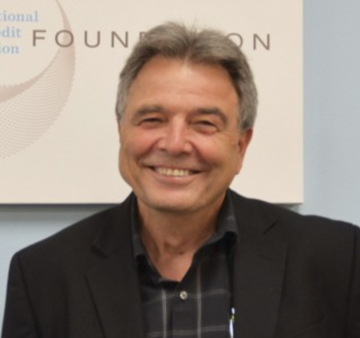
Mark Lynch
CUToday.info: What lessons do you think were learned from the REAL Solutions program, and how can those lessons be applied moving forward?
Lynch: The main lesson I learned from the REAL Solutions program was that credit unions that are doing a good job of attracting and serving low wealth members are always looking at ways to do this better and that those credit unions that really need to do a better job, struggle to make any progress.
I learned that credit unions that use the power of partnerships are growing much faster than those that rely solely on marketing and advertising to attract new members. I learned that there are a small number of credit unions that are successfully doing auto loans for members with low credit scores in way that is very good for the member and very good for the credit union.
CUToday.info: What are your thoughts on the future of credit unions, if there is to be one?
Lynch: I think the future of credit unions will be bright if they recognize that they need to get the right balance between the business mission and the social mission. Those that just concentrate on the business mission will look just like very small banks and lose their relevance. Those that focus just on the social mission will most likely fail financially. The other key is for credit unions to stay cooperative and not become competitive. The operating principle, “cooperation amongst cooperatives” might be the most important of the principles in coming years.
CUToday.info: You and Lois Kitsch, who is also retiring from the Foundation, are now beginning a new consulting business called cu.difference. What are your plans:
Lynch: We are planning to use what we have learned through our combined 80-plus years in credit unions and more particularly from our work in the REAL Solutions program and the Development Education program to help credit unions do a better job of serving their members by focusing on the credit union difference.
We want to help credit unions train their staff to be passionate about coming to work every day because of the way they can make a difference in people’s lives and in their communities. We want to help credit unions practice strategic philanthropy, where the great work they do in their communities is also good for the credit union. We want to help credit union design sustainable and affordable products and services for members who are living paycheck to paycheck and/or with low credit scores that can help these members improve their lives, while at the same time generating income for the credit union. We want to help credit unions understand the importance of getting that right balance between their financial and social missions.