

BROOKFIELD, Wis.—There’s no turning back from the Internet of Things, which is rapidly expanding the connected devices people have on them, in their cars and at home.
The challenge now for for financial institutions is to determine how consumers might want to consume financial services through these connected devices and what content is relevant for each device, according to one analyst.
“This is about member preference, not just assuming people want financial information delivered everywhere they can be and all the time,” said Scott Hess, vice president of user experience, consulting and innovation, Fiserv.
Hess said the best model for IoT banking is making these services opt-in only, both for the device and the type of information delivered to each.
“We are saying you won’t get your financial information sent anywhere you don’t want unless you opt in,” said Hess.
Quick Balance App
As an example, Hess cited Fiserv’s current quick balance mobile app, where consumers swipe their finger on their phone and get their balance before they authenticate. “The user has to opt in and select which accounts they want to have available pre-login, so that is the model we are taking with IoT.”
Fiserv recently won Best Use of Technology in the Pymnts.com Amazon Alexa Challenge. The contest featured 12 teams and 14 companies in a 10-day challenge to use Alexa (Amazon Echo) and its voice-activated technology to “reimagine” how consumers interact with their payments and financial services solutions providers.
“As part of the authentication with Alexa, when you set up the device you can enter in the user ID and Alexa would retain that,” said Hess about Fiserv’s effort.
Hess said that Fiserv had initially hoped to use voice biometrics to do the authentication.
“But as we dug into programing for the Alexa Challenge we learned that the Amazon cloud takes what it hears and translates that into words and passes it on to us,” said Hess. “It does not actually pass us the voice print so we could use voice biometrics . . . But we will continue to monitor this space as we would like to use biometrics here if possible.”
Simple Services
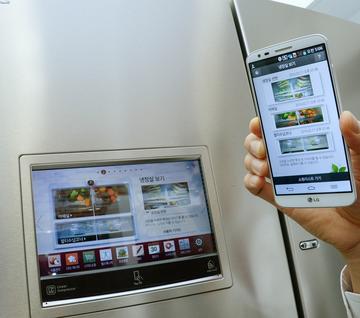
Hess does think consumers may look to IoT devices—possibly even their refrigerators—for simple services, like to check account balances. But it will be Alexa that is the game changer in IoT, he said.
“People are at home right now using Alexa for financial services and they like it,” said Hess, who added Alexa users are gravitating to the device for timely services, such as paying an overdue bill.”
Credit unions, too, must pay attention to the type of information members would see as being relevant over IoT devices, said Hess. He gave the example of how a low-balance alert might seem logical for an IoT device, as that information is not only relevant but timely.
“But how relevant is that data if the true balance is not available until batch processing at night?” said Hess. “So the credit union has to be careful, and cautious, in what kinds of information it sends over IoT devices,” said Hess, who added that too much information via IoT will eventually be seen as “noise.”
Hess pointed out that Fiserv in 2009 tested voice-activated banking.
“You could speak into a mobile application and do the same things Alexa does,” explained Hess. “But when we tested the solution with users in the real world it bombed. It did not test well at all. Most of the people said they would not use the application in a public setting, maybe only in the privacy of their car due to security concerns, and then only limited because they did not want to look at their phone while they were driving. So we didn’t do anything then with voice-activated banking.”
But Alexa has come out and paved the way for voice-activated banking, Hess said, noting that Amazon recently made some special offers to Alexa users only. “You had to go through your Alexa device to find out what the deals were. Things are changing now.”