


WAIKOLOA, Hawaii–Credit union board members here got a primer in what to look for in hiring a new CEO, including why it’s important to develop in-house talent but also interview outside the credit union, as well as where boards can make mistakes.
Judging from the turnout at a conference session on the subject, CU volunteers have a strong interest in finding their next CEO.
Speaking to the Volunteer Leadership Institute (VLI) meeting here, Jim This of James L. This & Associates, who has extensive experience in doing CEO searches and board consulting, said CU boards must be prepared for three different types of CEO succession planning: short-term absence, unexpected replacement, and planned succession.
In terms of short-term absences, this called for having a “clear policy” in place to cover vacations or absence due to illness or surgery. He said some CUs have a designed number-two in place, while others like to rotate the responsibility to develop leadership (a con with the latter being uncertainty over who’s in charge and delays in decision-making).
This said credit unions should have an annual staff development plan in place.
“Let (staff) take the lead on major projects. This is sometimes overlooked, but I think it is equally important,” said This. “You want them to have the lead on major projects and make presentations to the board and explaining the projects to the staff so they get used to the idea that they are in charge. Some credit unions purposely try to make it so at least once a year the CEO is absent from the board meeting and the number-two does the presentations there.”
Unexpected CEO Absence
In the event of an unexpected CEO absence, This said boards must ask themselves:
- How involved is the board going to be in the day-to-day?
- Who do we need to notify (regulators, insurance company and others)?
- What changes in authority do we need to make, including check signing, hiring and firing, investments, contracts, etc.?
- How can we determine incapacitation?
In such situations, This said, “Unless there’s a real problem in the talent pool in your credit union, I think it’s much better to hire someone from the inside who knows your credit union and your culture, plus you get to see how they perform in the role.”
There was lots of agreement among the directors in attendance that no one from the board should go in and manage the CU.
When it comes to making more permanent hires, This reviewed some of the pro’s and cons of internal vs. external candidates.
The pro’s of an internal candidate include knowledge of the credit union, a lower cost, and staff acceptance. The cons include limited experience (outside of that credit union), competencies that may not be in line with the strategic plan, and are they the most qualified?
“My recommendation is that getting outside people interviewed lets you see new ideas, the best that’s in the marketplace, the other skills that are out there,” said This. “And if nothing else, at the end of the process you’re able to say our internal person is the best of the best. It’s part of your fiduciary duties. It may hurt the feelings of some of your internal people, but you have to approach this from a business point of view.”
Internal Candidates
When it comes to developing internal candidates for a CEO position, This said there can be “huge problems when you ask only certain people to apply. In my opinion, there’s nothing wrong with asking people to apply if they want to apply. The process will work this out. But as board members be very careful about going up to someone and encouraging them to apply. What that person hears is ‘I’m in’.”
Just as important, said This, is putting in place a plan for those internal candidates who are not selected for the job. “People will respond, ‘It’s obvious the credit union doesn’t want me, I’m out.’ So it takes some TLC from the board.”
This knows whereof he speaks. He was a long-time number-two with Washington State Employees Credit Union and had been identified to succeed a CEO who was retiring. But that CEO’s wife unexpectedly died, and he changed his mind about leaving. “So I started thinking, ‘Wait a minute, I need to make some career choices on my own.’ You need to think about it.”
This said many CEOs can be under the mistaken impression that the board is as high on a number-two candidate as is the CEO. “The board may not be so sure about it. They may have never seen him or her in executive management opportunities.”
For credit unions looking to put a planned succession process in place, This outlined six steps to making it work:
Create a Timeline and A Succession Committee
“Work backwards from when you want the person to be on site? How much overlap do you want with the current CEO?” asked This. “A year is too long. Don’t forget that the candidate normally will have to take time for the transition. In my opinion, if you’re hiring a competent person, make that time relatively short.”
This said credit unions should allow three-four weeks to prepare for a job posting; six-eight weeks for advertising and initial screening; four-six weeks for a final interview process, and two-four weeks for negotiation and transition.
He said the Selection Committee should be made up of no more than three or four members of the board, all of whom need to be aware of the time commitment involved. This said that when it comes to having the CEO as a member, he recommends if the CU doesn’t have a policy in place that the CEO serve on an ad hoc basis because 1) they know the credit union inside and out, and 2) the CEO is the eyes and ears of the staff in the process.
“It’s not the staff’s role to directly be involved, but somewhere along the line have to get some staff buy-in,” he said.
Competencies Of The Position
Most job descriptions are too long, according to This, who said there are about eight categories of essential functions:
- Strategic planning
- Relationship with the board
- Financial performance
- Compliance
- Senior team selection
- Risk management
- Community relations
- Staff performance
In terms of education, This said an MBA is preferred but related experience year for year, should also be considered. “There’s been a big movement educationally for CEOs over the last 10 years,” This noted, adding he recommends a minimum of 10 years of successful experience in key management positions within financial services demonstrating progressively greater responsibility should be a requirement.
Determine The Compensation Philosophy
This said a board needs to understand the goals of executive compensation, including:
• Recruit and retain highly qualified executives
• Provide fair compensation that reflects their responsibility and performance
• Incent and reward extraordinary performance
• Provide sufficient personal reward to encourage long-term relationships
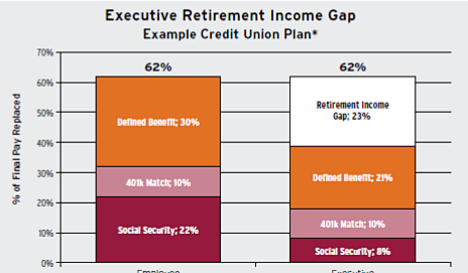
Beyond that, the board must then arrive at a position on the components of compensation, most especially base salary vs. incentives, along with benefits and perks, including retirement plans. He said credit unions should consider looking outside the industry for compensation data, including from the American Bankers Association, (and CUs need to be prepared to pay for that data, he reminded).
Compensation based on skill level, experience and performance.
Conducting The Search
Boards reaching outside the CU for a candidate should promote the opening on various publications within the industry (CUToday.info lists job postings for free in The gig, for instance), as well as broader general publications and websites, including HR sites and CEO networks.
When it comes to the application packet, This recommended it include an application form, a release acknowledgement, and three to five questions along the lines of “Why do you feel you are the best candidate for position,” and “What do you feel are three keys to the success of credit unions in the next five years?”
Every board, too, he cautioned, needs to be prepared to handle applicants with cloudy pasts.
In all cases, he said, the selection committee should narrow the search to between five or six semi-finalists, with the board interviewing two to three finalists.
Finalists, he said, should spend time with the board with a shortened formal interview, should have time to visit offices, should be given time to interact with staff (but not be interviewed) and even have time for a social function.
And, added This, when the evaluation packets of job candidates are no longer needed, they should be shredded.
Negotiation
This recommended boards not only identify their number-one choice, but also make sure they have a contingency plan in place. “Settle things with the number-one choice before talking with others,” said This.
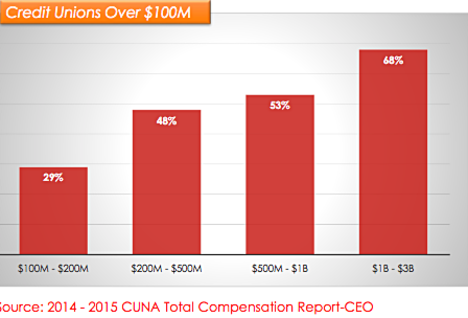
With a choice in place and the written offer signed, This said it’s “time for celebration,” followed by conversations with the senior team, as well as conversations with any unsuccessful internal candidates. Data show about 29% of CUs between $100 million and $200 million have a written contract in place,
Following that, he said the board and the new CEO should set joint expectations for the first 90 days, first six months and first year. Moreover, This recommended regular coaching sessions with the board chairman.