

PHOENIX—There are two Black Swans on the horizon for credit unions when it comes to payments: Blockchain and Apple Pay.
It’s likely many CUs are unfamiliar with the former, and have heard reports, including in CUToday.info, that Apple Pay has lagged in terms of usage. But with the latter, said Ron Galloway, a speaker and author, that’s about to change with the introduction of the Apple Watch.
Speaking to the MountainWest CU Association’s annual meeting here, Galloway said credit unions need to understand how Blockchain is going to be critical. Blockchain is the public ledger for all transactions on Bitcoin that have ever been executed. Given that most credit unions remain somewhat unsure of how Bicoin works, it’s not surprising that many are unfamiliar with its underlying technologies, Galloway acknowledged.

Ron Galloway speaking to attendees at MountainWest CU Association meeting.
But that lack of familiarity shouldn’t mean underestimating the effect Blockchain is going to have, he said.
“Blockchain is going to change finance as we know it,” said Galloway. “It’s going to change authorization of credit cards, payments, stock trading, etc. It’s a public ledger of all Bitcoin transactions. What it will do is change authorization of payments so if you charge something it’s going to make it a one-step process.”
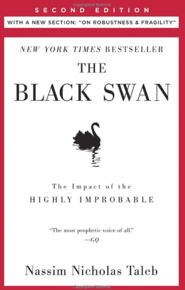
A one-time Black Swan event –which is a consequential event in history that comes from an unexpected source and is a description coined in the book of the same name by Nassim Nicholas Taleb—that is now generally recognized for the consequences is has created is the mobile device/phone. Galloway said that by 2016 there will be 1.7-billion people with a phone but not a bank account, especially in Africa where mobile-device payments and financing are being embraced faster than any other place.
“Most financial assets today exist as purely digital records,” said Galloway. “And these are going to be stored on this giant, open spreadsheet called the Blockchain. The big Black Swan occurring in America now is that businesses are transforming into data businesses. Credit unions are transferring into data businesses. Facebook is comprised entirely of data and worth $155 billion. No one pays for Facebook. It’s worth that because of the data and what it learns from the data. But what’s weird about the data is that none of it is verified. But the data you have on your members is verified data.”
One component of payments that is not purely about technology, said Galloway, is faith in the system and the payment. What Blockchain does, he said, is show who is a faithful payer.
Payments Space Next for Phone Companies?
Galloway, who predicted that the next frontier for various phone companies such as T-Mobile and Verizon will be payments, said the advantage of a company such as Google when it comes to payments is that the company doesn’t just have massive scale and IT, it also has the added layer of faith.
Similarly, Facebook, which does not enjoy the same level of faith as Google, has just rolled out Facebook Messenger, the sole purpose of which is payments, said Galloway.
He noted the irony that LendingClub had come together on Facebook with a purpose of bringing people together to make loans to each other. “What does that sound like?” he asked. “Credit unions.”
The second Black Swan Galloway said credit unions must be prepared for is Apple Pay. To date sign-ups have not been matched by usage, as CUToday.info has reported. Two factors are combining to boost that acceptance, according to Galloway. The first is the October deadline for EMV compliance, which has forced many merchants to update their POS terminals—including being NFC-enabled. The second is the soon-to-be-introduced Apple Watch.
“Apple Pay on the Apple Watch is going to be so easy,” said Galloway. “Studies with people who have been wearing the Apple Watch show that they take their phone out of the pockets 70% less often.”
The Apple Watch offers some unique security measures, including monitoring the pulse of the person who is wearing it. “Wearables are going to be the the killer app for Apple Pay. All of our parents and all of us are going to have a wearable. You would think that Apple Pay on a watch is going to be a younger person thing to do, but I think it’s going to be an older person thing to do. And they have the assets.”