AUSTIN, Texas—Millennials are the largest U.S. generation, but does there behavior also make them the riskiest when it comes to cybersecurity?
A new study has found that Millennials engage in riskier behavior than other groups when it comes to certain activities at work, but that other generations bring their own types of risk.
Those findings and others are part of a study by Software Advice here, which examines the attitudes of Millennials, Generation X and Baby Boomers toward privacy, expectations regarding what devices and apps they can access at work, and other cybersecurity challenges related to the workplace. The study defined Millennials as those boran after 1980, Generation X as those born 1965-1980, and Baby Boomers as those born 1946-1964.
Among the findings:
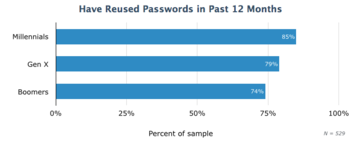
- Millennials have the worst password reuse habits of all demographics: 85% admit to re-using credentials across sites and services.
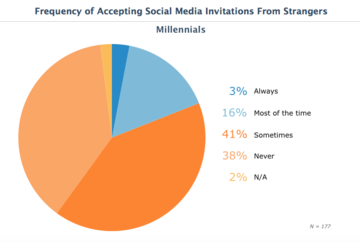
- Risky behavior can be found across demographics: 16% of Millennials and 14% of Gen-Xers accept social media invites from strangers “most of the time.”
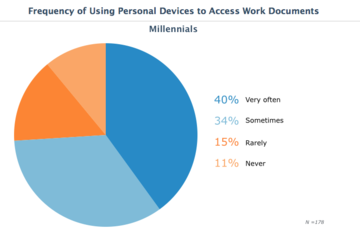
- Boomers may in fact pose a bigger Bring-Your-Own-Device (BYOD) challenge than Millennials: 48% of the former use personal devices to access work files, versus 40% of the latter.
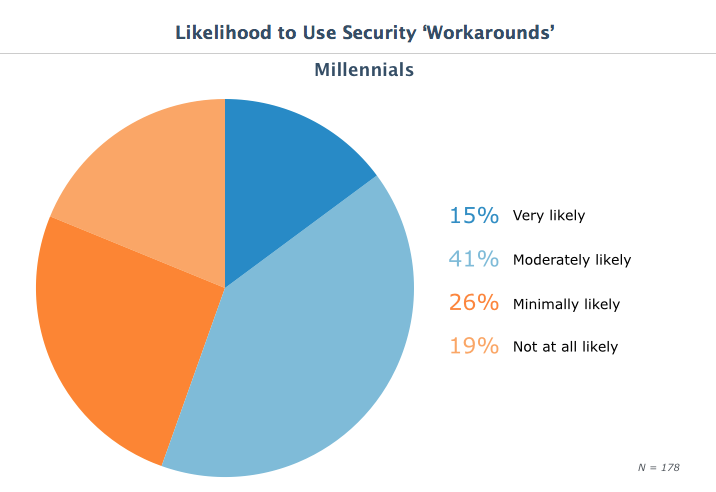
- Millennials are most likely to find security workarounds: A combined 56% admit they would “very” or “moderately likely” evade restrictive workplace controls.
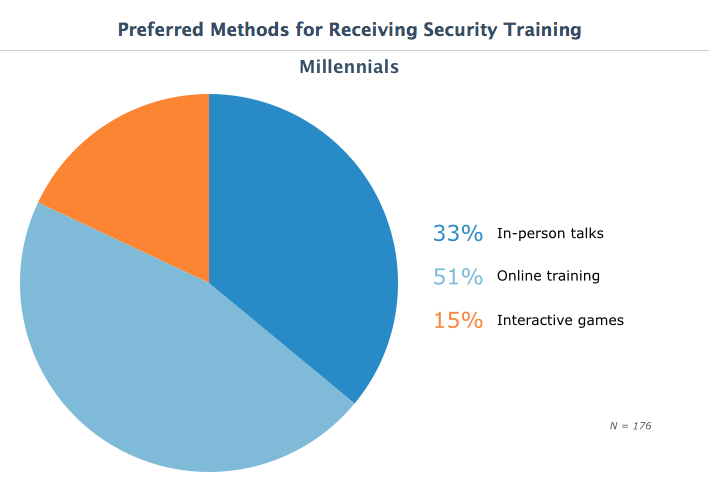
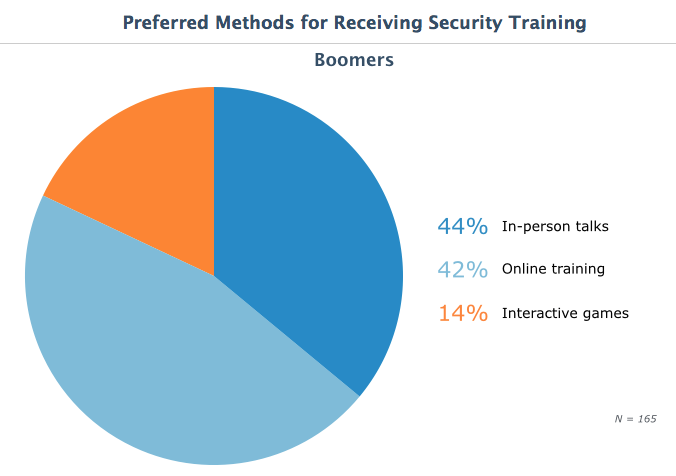
- Millennials are less interested (15%) in receiving security training through “gamification” than Gen-Xers (18% ), while boomers prefer lectures (44%).
Millennials More Cavalier? Not Necessarily
According to Software Advice, the “allegedly tech-savvy, superconnected segment of the population—is leaving some security experts profoundly anxious.” The company quoted two executives with security firms expressing concerns over Millennials’ apathy toward security, with one person calling the generation a “new attack vector that is emanating from the inside.”
But other analysts have said Millannials pose no greater cybersecurity threat than any other generation.
In looking at the most basic of security measures, passwords, the Software Advice study found that 85% of Millennials admit to reusing passwords. But Gen X was close behind at 79%, and Baby Boomers weren’t much better at 74%.
“So are Millennials inherently more cavalier regarding password security?,” Software Advice asked in its analysis. “Not necessarily: assuming Millennials use more online services and apps than their parents and grandparents, they will have a greater quantity of passwords to remember. So it’s no surprise if they reuse some of them.”
The study quoted one analyst who urged businesses to put the “tech-savviness of Millennials to work for them” by encouraging the use of password managers.
Meanwhile, what about the usage of social media and the concerns by some that Millennialsmore relaxed attitude toward online privacy increases this risk.
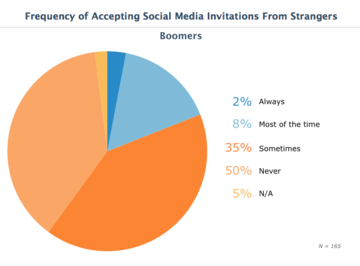
The study found that Millennials are only marginally ahead of Gen X and the boomers, with 3% “always” accepting invites versus 2% in both older demographics. “This close alignment suggests that it is less a question of generational attitudes and more that there is always a small subset of individuals in the wider population who are excessively open or trusting,” Software Advice said.
The study found that in the next-riskiest category, Millennials and Gen X are closely aligned, with 16% and 14%, respectively,accepting invites “most of the time.” Only the Boomers show heightened concern, with a mere 8% accepting such invites “most of the time”—and a further 50% “never” doing so, versus 38% of Millennials and 42% of Gen-Xers.
When it comes to the generations and their attachments to devices, the cybersecurity vulnerability lies in using personal devices to access work-related information. But the study found that while Millennials tend to be more connected to their devices, it’s older generations that may pose the greatest risk.
Forty-seven percent of Gen X and 48% of Baby Boomers in the Software Advice study admit to accessing work documents on personal devices “very often,” versus 40% of Millennials.
One analyst in the Software Advice study urged firms to provide users with a list of approved apps and implement document control, limiting which resources employees can access using their own devices.
How Generations Approach Workarounds
Despite those precautions, another challenge identified in the study among all generations, is the “just get the job done” mentality of many workers who find ways to work around security.
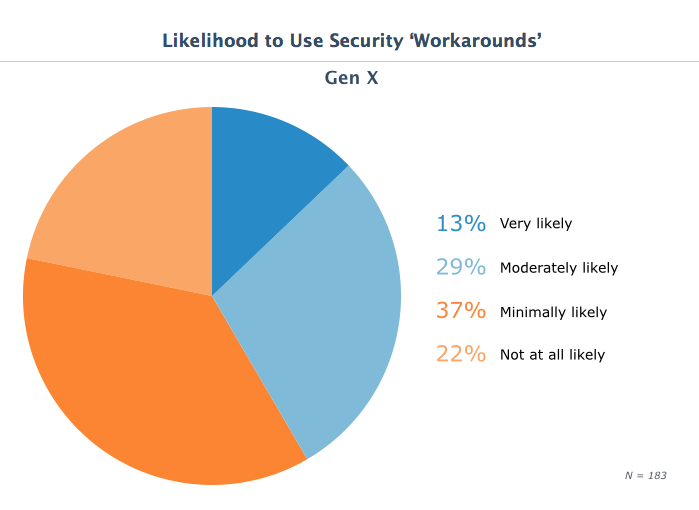
Fifteen percent of Millennials in the Software Advice study said they are “very likely” to find a way around security controls they consider too restrictive, versus 13% each of Gen-Xers and Boomers.
But the results for “moderately likely” tell a different story. Here, 41% of Millennials—versus 29% of Gen-Xers and 15% of Boomers—say they are willing to consider finding a workaround.
The biggest generation divide found in the study was in the area of training, especially between Boomers and the two younger demographics.
Software Advice said it found that 44% of Boomers said that they prefer “in-person talks,” while Millennials and Gen X, however, prefer to receive their training online.
The full study can be found here.