

COLORADO SPRINGS, Colo.—Nilofer Merchant still recalls the nervousness. She had heard of Steve Jobs, but had never met the man who had founded her employer, been shown the door, and had now been brought back to resurrect Apple Computer when its stock was trading below the price of a cup of coffee.
Merchant had been handling Apple’s channel strategy, and had reason to be proud of the results. What had been a $2 million business was now $180 million, with a margin in the 50% range. She had spent the night working up a PowerPoint presentation, and was wearing her best suit when Jobs walked in wearing a t-shirt and sandals.
Standing before a slide that read “Channel Management” in the meeting room, Merchant began reciting her well-rehearsed remarks when Jobs interrupted. “Fuck the channel,” he told her.
“I was a 20-something and didn’t know what to do,” she said. “But in that moment I learned more about innovation than at any other point in my career.”

Nilofer Merchant speaking to THINK Conference.
Merchant, who is now a best-selling author, TED speaker and consultant, recalled that Jobs had seen the very same reports she had, but he also saw the deeper issues: people wanted to get closer to the brand, that disruption was going to take place, and one of the channels that was going to be disrupted were the Apple re-sellers.
“He was looking at that and saying “No, you don’t get to the future by fixing the past’,” Merchant shared with CO-OP Financial Services’ THINK 15 meeting. “You invent the future by running toward it. And the dilemma I remember thinking was that I was out of a job.”
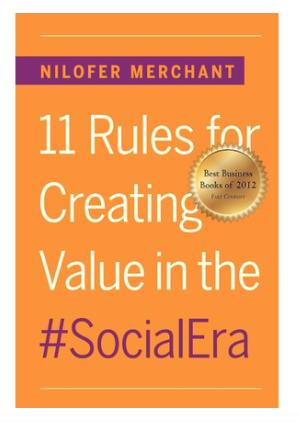
Merchant has gone on to author several best-sellers, including “11 Rules For Creating Value in a #Social Era.” At the center of her message to credit unions was this: “It’s not ‘if,’ but the new ‘how.’ It’s not if we are ready, it’s how we will be ready.”
Merchant quit her job at Apple ahead of what she anticipated would be a lay-off, and later when she encountered the person who filled her position she was prepared to hear a story of woe. But that was not the case. “In reality, it was about managing today,” she said of the conversation in which her replacement said everything was going well. “You have to figure out how to manage today’s business and plan for the future. It’s the duality of what it means to lead in modern times in an existing organization, and also to get us ready, armed and prepared for the future.”
Get Ready to Unlearn
To “(re)invent” the future, as Merchant described it, requires a willingness by leaders to “unlearn the things you learned were truths in the past.” She said it’s about being able to “see(k) around corners.”
As an example of unlearning a long-held truth, Merchant used the TED organization and its now famous TED Talks. In addition to large, international TED meeting, more than 6,000 smaller, local TEDx talks have now taken place around the world, and continue to do so. That initially led to some anarchy, noted Merchant.
“This is scale. But what was this scale about?” asked Merchant. “Is it about TED spending money? TED hiring people. No, it’s about social. What they said is ‘I will trust you to figure out which ideas matter to you’.”
That concept is “kind of scary” for many companies, said Merchant, which react by raising questions such as, “We’re going to let someone else do something else on our behalf? What if something goes wrong?”
Something did go wrong with a TEDx meeting in Barcelona, Spain that was supposed to be about good science, but turned out to be anything but. The reaction was many people demanded the TED organization regain control from the top down.
“Instead of taking that one person behind the woodshed, what TED actually said was, ‘We do seem to have a problem here. What do you think the problem is?’ Over the course of blogosphere conversations the conclusion was, ‘It’s not for TED to tell us what went wrong, it’s for us to say. What is this shared thing we signed up for? So it’s both their thing and our thing.’ In the end they came up with much more clearer set of guidelines. Now no longer TED’s job to monitor it. It’s everyone’s. We’re in this together, and let’s learn how to address when something goes off-line. That’s social.”
The concept is similar to what co-operatives are all about, offered Merchant. “They are about an idea we all believe in. Is it for everyone, or is it ours?. What does it mean when we say it is a cooperative? We are drawn to a common flame and that purpose ends up uniting us.”
TED is a big organization, and Merchant said she recognizes that there are times when being big is going to matter. “But in all other cases, connectedness matters. The gorilla may be dominant, but the gazelles win by communicating with one another. For us, it’s that highly connected sense that we are in this together.”
It is that connectedness of smaller organizations and even individuals that has erased many of the competitive advantages certain companies held years ago. Competitive arcs have shrunk from 40, to 12 to five years now in “fast-moving industries, and you’re in a fast-moving industry,” Merchant told credit unions, quoting Rita McGrath’s work. She also cited an observation made in Wired Magazine: “Relationships are to the social era what efficiency was to the industrial era.”
Three Roles
Citing some of the points made in her book, Merchant told the THINK Meeting it is time for everyone to think about their role as leaders—for individuals, for the “us,” and for the organization.
Individual: The Power of ‘Onlyness’
At this level, anyone can participate. “Sometimes talent doesn’t look like what you think it should look like, and it might be sitting in a part of your organization that you don’t pay much attention to. Just because you don’t see it doesn’t mean it doesn’t exist.”
Merchant said credit union leaders should make it clear to their own staffs that whatever idea they bring, it has value. “Who we are is what we make. People talk about chasing the big idea, but it doesn’t start as a big idea, because other people don’t see it. Today, value lies in the individual. I call this ‘Onlyness.’ The value lies in only the place you are standing in. Anyone, quite possible everyone, can count. Even the unexpected ones. Your job as a leader is to try to figure out how to invite everyone to play at the table. The reason something fails isn’t that people are stupid, it’s that you don’t understand what the problem is.”
Us: Babysitter or Parent?
Merchant pointed to sports teams to illustrate this point, observing that what makes a team play well together isn’t that team members understand their own positions and responsibilities, it’s that they trust their teammates understand theirs. Merchant shared an observation made by one organization team that summed up the issue within many companies: “We treat our work like the babysitter and not the parent.”
“What is the job of babysitters?” Merchant asked the meeting. “To not let the baby die on their watch. (This team) learned how to have a really different construct and communication. The reason that’s important is they came to their own metaphor, their own understanding. What would be the metaphor if your team had this conversation?”
Merchant summed up her point this way: “Purpose brings out the best people, and the best in people. What do you do everyday to say this is why we are here?”
We: The ‘Air Sandwich’
Leadership, said merchant, s about getting the best ideas on the table while understanding what it is that holds the organization together. What leadership isn’t about, she said, is the org chart.
“We don’t fail today in business because people don’t do their individual things, but because of the gaps between the boxes in an organization, where the top tells the bottom what to do, and what is left in between is the air sandwich,’” she said calling those at the bottom the “do-ers.”
Research has shown that effective listening can drive a 40% variance in effective leadership, said Merchant. “The number-one thing you can do as a leader is listen. But how many of us go into meetings looking to listen? When’s the last time you made a list of questions before you went into a meeting? Most of us make a list of facts to share. So at the next meeting you have, think about what questions do I hope to have answered this session?”