RALEIGH, N.C.–One student who describes himself as “indifferent” to banks admits he also doesn’t know whether credit unions are also banks—but also expresses an interest in the CU concept once it’s explained.
That’s been a common theme in a series that asks college students what they really think and know about credit unions, money management, finances and more.
CUToday.info has partnered with Zogo, a fintech founded by undergraduate students at Duke University that is focused on innovative ways to use mobile first to improve financial literacy, to feature real interviews with college students.
Some of the answers as revealed in a new series of interviews, which were conducted by Zogo, will be eye-opening to many in credit unions, and will likely send decision-makers back to the digital drawing board if they want to capture the next generation of members.
The introduction to the series, including the first student interview, can be found here. Other interviews can be found here, here, here, here, here, here and here.
Here’s what the latest student in the series had to say
Name: Eric Yelton
Age: 22
Hometown: Greenville, S.C.
Major: Physics
Fun Fact: Plays drums
Zogo: How did you learn about personal finance in high school?
Yelton: We had a class on personal finance in high school. We had a section centered around investment and making diverse investments and stuff like that.
Zogo: Did you feel like it was effective?
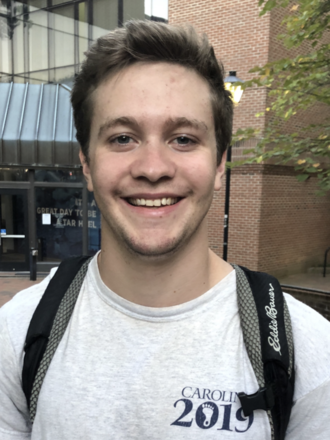
Eric Yelton
Yelton: I’m kind of different from the other students because my mom’s a financial advisor. It’s hard for me to tell if it stuck with other students as well as it had for me, because that’s what I’ll talk to my mom about.
Zogo: How can a person increase their credit score?
Yelton: Pay everything on time. I’m not sure what exactly it involves. I think mortgages? Definitely credit card stuff. Pay your freaking credit card bill on time. That’s pretty much all I got.
Zogo: What is an insurance deductible?
Yelton: Alright, I’m not confident and I’m kind of embarrassed, but I’m pretty sure that’s like how much you as a customer pays along with your insurance. Like it’s kind of just how much you pay to have your insurance I think?
Zogo: Describe banks to me.
Yelton: They hold your money. You don’t have to keep your cash inside of your mattress.
Zogo: What is your relationship with your bank? Do you have a favorable or unfavorable opinion of them?
Yelton: Well, the thing is, I’m kind of indifferent towards them. I know that they make money off of me some way. I am cautious of them because they are here to help me, but they have to make money off of me some way.
Zogo: Do you feel loyal to your bank?
Yelton: No, not at all. I’m with Suntrust just because my parents were with Suntrust. I don’t really care about Suntrust.
Zogo: Can you describe credit unions to me?
Yelton: I know there’s the State Employee’s Credit Union. I’ve seen that building, SECU, around. So, all I really know is that it’s maybe just for state employees, maybe? I don’t really know. Is it a bank? I don’t know.
Zogo: Credit unions are like banks, but they’re non-profit. When you open an account at a credit union, you become a member and own part of the credit union. So while traditional banks are run by shareholders whose goal is to maximize profits, credit unions return all profits to their members in the form of reduced fees, higher savings rates and lower loan rates.
Yelton: How do you become a part of a credit union? The one I was talking about is for state employees, so I assume you get these benefits if you work for the government. Can I just like join one? Like, do I have to be part of a union or something? Can a random college student join a credit union?
Zogo: After hearing this description of credit unions, how has your attitude towards credit unions changed?
Yelton: Well, they’re non-profit, so they seem like a better option than a bank. I don’t know why I wasn’t aware of this or been told about them in the past.