

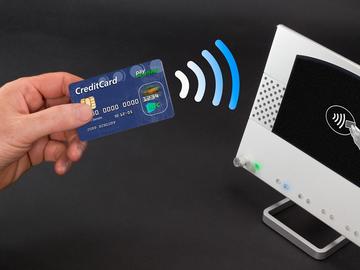
DES MOINES, Iowa—Dual interface chip cards, where consumers can either tap-and-go or dip their plastic, are being ordered by issuers in greater numbers in the year since the October 2015 EMV liability shift took place.
“We seeing a lot more usage in our portfolio of dual interface EMV cards,” said TMG Product Manager Chole Casber. “We are at 65% dual interface across our total portfolio of debit and credit.”
Casber’s comments are part of a series of interviews by CUToday.info marking the one-year anniversary of the EMV liability shift.
Casber said that TMG clients issuing the NFC plastic typically see dual interface cards as a bridge to mobile payments—getting cardholders comfortable with tapping instead of swiping or dipping.”
“It’s a very similar action to a digital wallet, and it often feels like a faster transaction than dipping the EMV card,” said Casber.
Faster Than 'Quick Chip'
That is one of the reasons for the growing appeal of dual interface, said Casber. As consumers and retailers complain about the time it takes to dip the EMV card, the dual interface card is faster, said Casber—even faster than the new “quick chip” solutions provided by Visa and MasterCard to speed up EMV transactions.
“Visa and MasterCard have their quick chip solutions. MasterCard has M/Chip and Visa Quick Chip for contact-only EMV cards,” said Casber. “But tap-and-go is still faster than these solutions.”
Casber said that part of the problem with EMV transactions is the change in consumer POS behavior, having to leave the card in the reader.
That, in itself, often makes the transaction seem longer, said Casber. “With tap and go it’s more like what the user experienced with the swipe. They use their card and immediately place it back into their wallet.”

Casber sees the dual interface card as an excellent step between plastic and digital wallet usage.
“It’s an intermediate step that we think will eventually lead more consumers to use digital wallets,” he said.
Casber said TMG is beginning to hear more about interest from major banks in issuing dual interface chip cards.
“We think some are testing the waters. Some of the major brands, like US Bank and Bank of America, don’t necessarily have a dual interface card for debit in the marketplace today, but I do expect in the next couple years as EMV adoption increases and NFC terminals become more commonplace we will see more interest from the major brands.”
Higher Cost
Issuers pay more for dual interface cards than standard chip cards, but the price has been falling since the liability shift deadline, explained Casber.
“The cost varies by vendor. But what we typically see is an additional 25 to 50 cents per card,” said Casber. “It was about and extra dollar at the outset of the EMV migration, but a lot of that was due to delays in overall plastic production at the time.”
But due to the extra cost and the larger size of the debit portfolio, most TMG clients are choosing to issue dual interface for credit, more so than debit.
“When issuing dual interface cards it’s certainly important to think about the size of the portfolio,” said Casber. “That is why we have seen the largest uptake for dual interface on credit. But we are seeing more issuers begin to issue now on the debit side as well, wanting to match what they offer already on credit. With debit it becomes more of a judgment call—is it worth the extra money to spend for dual interface on this large portfolio to provide this payment option for members.”