

LAS VEGAS–A lot of credit unions could use much better project management around their project management.
While most CUs—like all organizations—recognize that creating operational excellence in a rapidly evolving marketplace is critical to survival, they often frequently fail in some common and fundamental ways when it comes to managing projects intended to deliver that operational excellence, according to Mollie Bell, the chief transformation and engagement officer who has also held positions with Filene, CUNA Mutual and Accenture.
Credit union leaders recognize they can’t simply “keep their heads in the sand” and assume incremental change will be sufficient, noted Bell. And they’re not alone, she said, citing one survey of Fortune 500 CEOs who said their chief worries are operational excellence and the ability to adapt to the speed of change.
“One way to survive this world is to change the game internally in order to be agile enough to seize new opportunities,” Bell told the joint meeting of the CUNA Technology Council and CUNA OpSS council here. “The new definition of execution is the coordination and collaboration with functional units of the organization; the ability to seize those opportunities.”
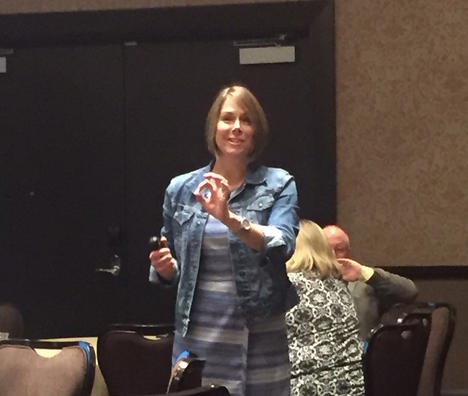
Mollie Bell speaking to CUNA Councils' conference.
Bell said there are three things credit unions need to think about when it comes to project management and organizational change.
Culture
What culture? According to Bell, it’s an organization’s true values, which reveal themselves when teams make hard choices. She noted that organizations that have incentives based narrowly on execution, for instance, can have a negative impact on behaviors, as the scandal at Wells Fargo is making all too clear.
A culture, said Bell, “should reward good judgment, agility, teamwork, collaboration and smart risk taking.
We can talk about all this all day long and none of it matters if you don’t have a culture in your organization that will drive toward organizational excellence,” she continued. “You have to have a culture that values certain values. You want to incentivize really good judgment.”
There is often pushback on that point, she acknowledged, from those who argue they don’t own or control an organization’s culture. “Does it need to be driven from the top down? Absolutely. But who executes that culture? We do. So let’s help build it.”
Strategy
Bell said the “best-laid plans of mice and men are meaningless” without a strategy.
“Strategic objectives must connect to the overall organizational strategy,” said Bell, who sits on the board of two credit unions. “Strategic objectives must be clearly articulated, but, more importantly, must be understood by management and staff. Organizational priorities must connect to the strategic plan, and teams must be able to connect the dots.”
When it comes to strategy a common failing within credit unions is frequently related to focus and field of membership. Bell said, for instance, she had met with one credit union that had a “beautiful strategic plan and magnificent business plan,” but neither spoke to the issue of who the CU wanted walking through its doors. But it did not in any way talk about who it wanted to walk in the door, or who it is targeting.
Credit union history plays a role in that failing, according to Bell. She noted that credit unions were founded and then lived for much of their lives based on serving single sponsor companies and select employee groups.
“An airline credit union knew the difference between what a maintenance person needed and what pilots needed,” she observed. “But when credit unions went to community charter they started to have very broad FOMs, which was great in a way, but at the same time I think we lost sense of that notion of our target. We tried really hard to be everything to everyone. I’m not saying your doors aren’t open to everyone, but you as a credit union must find a portfolio that matches a much narrower set, because you can’t get scale. I see credit unions really struggling with finding a target, the ‘for whom’ piece.”
Returning to the issue of strategy Bell asked, “Why are you different from every other financial institution in your community? Why are you distinctive? Hopefully, it relates to the who. You can’t do one without the other, the who and the why. This is strategically key, and if you feel it’s a gap for your organization, solve it.”
Adaptability
A lack of agility is a major obstacle to effective execution, said Bell, pointing out that many organizations react so slowly that they miss fleeting opportunities or fail to mitigate emerging threats.
Similarly, organizations struggle to divest or exit business lines or initiatives quickly enough to effectively reallocate resources to more strategic efforts. “You have to know when to say when. If you know your ‘For whom,’ you will know what products to exit.”
Bell said that while she was with CUNA Mutual she had approximately 135 direct reports, and project management was critical.
“The biggest mistake credit unions make in project management is underinvestment in the talent,” said Bell. “What they do is they ask their business leaders to be project managers, and that’s almost impossible. Is the person who had to get the money to get the project done really the best person to say the wheels have fallen off?”
Also imperative, Bell cautioned, is that management teams not invoke agility as an excuse to skip planning or chase every opportunity that crosses their paths. In other words, she said, don’t be squirrely and go after every acorn.
“It’s about having some skillsets in place to know the right time to grab the right opportunity. It also means we don’t skip the plan section of process management,” said Bell.
Bell said that when she was hired by CUNA, CEO Jim Nussle felt all of the forces of change at work required a more robust strategic plan that helps to identify the strategic priorities.
How to Identify Priorities
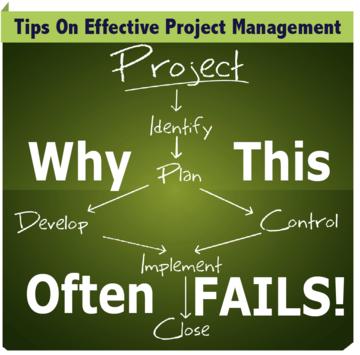
To identify those priorities, Bell recommended using this funnel, which begins at the open end with Assess, and is then followed by Define (initiate and plan), Execute, and, finally, Stabilize.
The Assess phase is also the cost-benefit analysis phase, said Bell.
“Project costs are not just the vendor. It’s you, your sponsor, your business intelligence inside your four walls,” Bell told the meeting. “You have to get your organization’s head around that, otherwise you’re going to stick your project managers with all this work and no concept of what all this is going to cost. You have to know true total cost in order to get something done, and it’s very powerful.”
As an example, Bell said she has had experience working for an organization that would identify 100 priorities and then build 100 business cases around each before narrowing down its priorities to five. That meant a lot of needless expense. Instead, she said the better method is to assess and narrow the priorities to 25, for instance, and then build the business cases.
“These steps cannot be over-stated. Spend the time here building your portfolio,” she recommended.
She also urged credit unions not to overlook that last step, Stabilize. “Sometimes people forget there is an operational plan that needs to be developed for post-project.”
The nuts and bolts of project management can be seen as a pyramid, said Bell, at the bottom of which are the project teams made up of project experts and business functional leaders. Above that is the the project manager, and above that layer is the top where the project sponsors and executives lead the way on strategy and culture.
“Projects equal change,” said Bell. “It’s a temporary endeavor undertaken to create a unique product, service or result. Project management equals managing change. It’s the application of methods, tools and and discipline to initiate, plan, execute and control the work.”
Project management, added Bell, is more about business impact and outcomes than scope, schedule and budget.
A lot of projects are pitched as a “really cool idea” but there is almost no confidence in the numbers being proposed, said Bell. “As you go through the steps, you must build up to 100% confidence that I will be delivering X for the org: this much revenue in this much time for this much money.”
The Wrong 'P'
Bell said another common failing in project management is that in the triangle of people, process and technology, the wrong one typically gets all the attention.
“We hear this all the time, but we usually go right to technology. We never pause to say it could be our people are not the right people, or our processes suck and we need to do some analysis,” said Bell. “Quite often I think the tool is the last thing we should do.”
While the project management team may be small, its outcome will affect the entire organization, and Bell urged credit unions not to forget to also focus on that People piece.
“People have to be brought along to adjust to the change curve,” she said. “They need to be helped to understand through communication, communication, communication—two-way communication. The number-one thing you can do with larger projects is help your people understand the why. How does this connect to the strategy? How does this help the members? You have to communicate this at every opportunity. If you screw up and your plan goes awry, tell them that, too.