

CHICAGO—If there’s one piece of “fake news” to which many consumers cling, it’s that credit unions aren’t interested in their mortgage business, according to one person.
Asked to name myths about credit unions, Terry S. Cox, vice president of MPF (Mortgage Partnership Finance) sales at the Federal Home Loan Bank of San Francisco, says, “The most dramatic misperception is many people don’t think of credit unions as players in the mortgage space.”

Cox’s remarks are part of a CUToday series on “fake news” in the credit union industry, myths and misperceptions that industry officials need to be thinking about.
Actually, credit unions have been increasing market share and participation in the MPF program, according to Cox. MPF, which is marking its 20th year, is based at the Federal Home Loan Bank of Chicago here, but the San Francisco district bank and nine of the 11 home loan banks nationwide are participants.
Nationwide, there were nearly 150 credit union members in the MPF as of 2016, comprising a share of more than 20% of all unpaid principal balances in the program. That’s triple the number of CUs in the secondary mortgage market program in 2009. And that pace of growth has continued in the first half of 2017, according to the Federal Home Loan Bank.
In the MPF program, credit unions and other lenders sell their loans to MPF, which then passes them through to another secondary market investor or packages them into securities.
As of 2015, the MPF program had bought 1.5 million loans worth more than $200 billion, retaining $43 billion of that amount in portfolio.
What's the Attraction?
Why are credit unions attracted to the MPF? According to Cox, there are benefits for both the institutions and their members.
Members are looking for someone they can trust to do such a large financial transaction as a mortgage, he feels. And with the MPF, credit unions can retain the servicing on the mortgages, keeping the transaction local as far as the member is concerned.
“They can walk in and make their payments at the branch,” Cox says. “Members appreciate that.”
That also helps the institutions retain good relationships with their members, he notes. If the credit union does not want to keep the servicing, the MPF can help the CU find a buyer for it with one of several servicing buyers it uses.
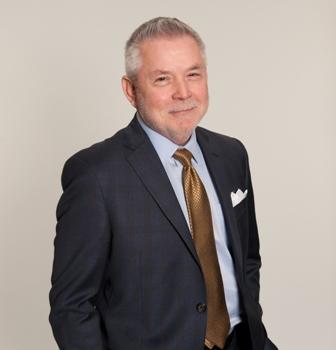
Terry Cox
Of the 21 financial institutions in the MPF in the San Francisco district, which re-entered the MPF program in 2014, 15 are credit unions. Cox anticipates their numbers will continue to increase in upcoming years.
Many add the MPF after already being in the Federal Home Loan Bank System (made up of the 11 district banks).
“They appreciate their relationships with the Federal Home Loan Banks,” he says. “They already may have done business on the advance (loans from the district bank) side, or with letters of credit.”
Secondary Market Programs
MPF offers several secondary market programs for credit unions, Cox explained. The institutions range from bigger, well-established secondary market users to smaller credit unions that might be new to the secondary or too small to be a player in it.
“Most often sold to us is the risk-share product,” he says. “Credit unions are confident in their loan manufacturing processes. They are confident those loans are going to perform.” For sharing credit risk, credit unions earn a credit enhancement fee of 10 basis points (that’s what the San Francisco district pays, though it varies from district bank to district bank).
Smaller credit unions can use the MPF Extra program to leverage the System’s heft in the secondary market, he said.
“We aggregate and sell the loans to (government mortgage agency) Fannie Mae,” Cox said.
Smaller credit unions can use this to get entry into the secondary market and access to more sophisticated technology, like Fannie Mae’s Desktop Underwriter.
Newly Introduced
Being introduced now in the San Francisco district is a Ginnie Mae mortgage-backed securities program, similar to the Extra program but for Federal Housing Administration and Department of Veterans Affairs mortgages. (The Fannie Mae program is used for “conventional,” non-governmental, loans). The Chicago district bank packages these loans and issues Ginnie Mae securities.
Smaller-volume government programs like the Rural Housing Service Section 502 and the Department of Housing and Urban Development Section 184 mortgage can also be packaged into the Ginnie Maes.
Cox said the VA loans are popular with cooperatives. “Credit unions are interested in doing business with veterans,” he observes.
The FHLB-SF has a lot of focus on credit unions, Cox said. “Credit unions are very interested in discussing programs with us. We have some good programs for them.”
—Mark Fogarty