

FORT LAUDERALE, Fla.—Attendees at Trellance’s immersion18 annual meeting received a glimpse of something many credit union executives may never see—the dark web.
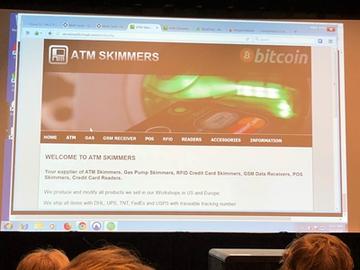
In a session on protecting members from nefarious actors, Eli Dominitz, CEO of Q6 Cyber, walked attendees through a live demonstration of the dark web, showing the meeting what hackers see when they shop for the tools of their trade and batches of compromised cards.
The standing room only session was visibly affected by what they saw—one attendee said they were “floored” by the level of sophistication of the dark web sites, their “slickness” and how professional they were.
The sites include checkout carts, and they allow for ratings of sellers.
“This is a very sophisticated industry. That is very, very clear,” said Lou Grilli, director payments strategy at Trellance, who sat in on the session. “One site allowed for criminals to pick the state, area code and financial institution, and even BIN numbers of the cards they wanted. Incredible.”
Other highlights from day one of the Trellance immersion18 meeting:
- David Lott of the Federal Reserve Bank of Atlanta told attendees that no matter what they might believe, cash is still king. He said a number of the Fed’s payment studies reveal that cash remains the preferred method of payment for purchases under $10. He told the meeting that CUs need to move their members from cash to debit, move debit transactions to credit, and then migrate credit and debit swipes to mobile payments. He emphasized the reason for the move to mobile is that tokenization makes the transaction much more secure.
- In a session on digital wallets hosted by Grilli, the topic of P2P was addressed and was a big concern among attendees. Several members of the audience that had yet to offer a P2P solution asked why one is needed with all of the options already available now to members—such as Venmo, PayPal, Square Cash, Facebook Messenger—and further questioned why they need to offer a solution such as Zelle, which costs the CU to implement.
- Visa’s Lori Hodges shared that 484-million cards now have chips in them, representing 67% of all plastic in the U.S., and 97% of all transactions are chip on chip—chip card and chip terminal. But she also pointed out that 20% of fraud at POS is chip on chip. With EMV cards virtually impossible to compromise in any large quantity, how is this happening? Hodges said the reason is first-party, friendly fraud, where a person buys an item and then falsely reports it as fraud.
- Mollie Bell, Chief Engagement Officer at CUNA, emphasized the need for credit unions to really know who their members are. She said that while some credit unions argue that they are community based and they serve everyone, Bell said that credit unions must understand and focus on what things their members are looking for.