

VANCOUVER, B.C.–In front of a large crowd that was made up of a significant number of CU board members, three people challenged CU volunteers to have “hard conversations” with themselves about whether they are past their shelf life and need to step aside for new, primarily younger replacements, and whether a new board member is ”over-boarded.”
During a breakout session at WOCCU’s World Credit Union Conference, three different speakers offered what were often frank assessments of credit union board members and of the task that lies ahead.
Sharing their views during a session titled, “Overcoming the Board Recruitment and Development Dilemma” were Corlinda Wooden, SVP/chief retail officer at Unitus Community Credit Union in Portland, Ore.; Austin Brown, president and chairman of the board at Community and Workers of Jamaica Co-operative Credit Union, and Robert Kelly, president and CEO of the Association of British Credit Unions, Ltd. (ABCUL).
Here’s a look at what each had to say.
Wooden: Seeking Both ‘Passion’ & Diversity
The $1.7-billion Unitus Community Credit Union in Portland began as a SEG-based CU serving the telecommunication industry. It now has a community charter and more than 100,000 members and 13 branches (including one virtual branch).
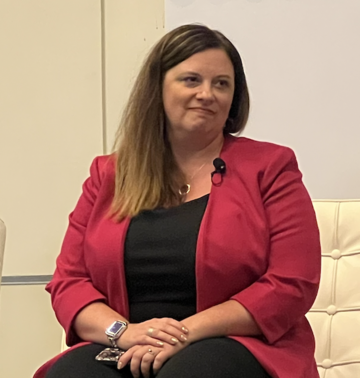
Corliinda Wooden speaking at WCUC.
In looking for board members, “We really want that engagement and that inspiration and when people have that same passion and share the same vision and values, then we can achieve great things together,” said Wooden. “That is really the very first instrumental piece of creating your board. The next piece of it is you really want to define your membership. What does your membership look like today? What is the vision of your membership for the future? How can you determine the needs that you have to fill those gaps (on the board)?”
Reflecting the Community
Wooden said as Unitus Community has expanded into the community it has sought to reflect the diversity of those communities, and that includes its board.
“For those that are used to the selling world, we practice the ABC's, always be closing, and we're always recruiting for our board members each and every day,” she said “One of the pieces that helps us identify the best fit is when we're active in our community, so we have a number of different community partners across the state of Oregon and southwest Washington.”
Reaching Out to New Market
Wooden explained that in 2019 the credit union sought to have better presence in the Hispanic community, the fastest-growing community in Oregon. To that end it has sought to have Hispanic representation on its board.
Wooden noted the research shows diverse boards often lead to more productive and successful organizations.
Brown: Skewering Some Sacred Cows
The credit union movement in Jamaica may be 62 years old, but Austin Brown said that isn’t what’s important: the next 62 years are.
In spirited, insightful and often sacred cow-skewering remarks, Brown challenged a large room where a significant number of board members were present to “set a framework for the movement to remain relevant for the next century. We cannot allow this movement to die because we failed to make ourselves relevant and to leave a platform for the next generation.”
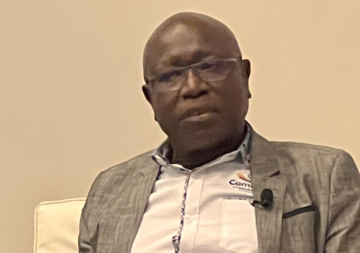
Austin Brown speaking to WCUC.
Brown said the simple fact is “uncomfortable conversations” must be had around whether current board members are fit to be serving or qualified to create a “lasting legacy.”
Every board member, he said, must understand information is now coming “at the speed of light” and that “change is on steroids.” As result, those serving on boards must be at the “peak of their performance and capabilities.”
Not About Who You Know
“It means we have to be very deliberate when we bring people on,” Brown said. “It means we can no longer have people coming onboard because they know someone or because they have been in credit unions for a long time or have been waiting to get on the board for a long time. The criterion for selection has to be your relevance.”
Brown said he has encountered people he calls “over-boarded,” that is they serve on too many boards.
“By the time they come to your board there’s a diminishing return,” he said. “They are on committees at these other boards. You may be a star, you may have a Ph.D., but can you really give us the presence and attention we need to be competitive and relevant? That has to be in the conversation for how we select people for the board. It’s not a popularity contest. It’s about those who are willing to be committed and to make the hard decisions independently to move this movement forward.”
Board Member Training
Brown advocated for a board-member-in-waiting process that trains people in credit union issues and matters that go beyond the finances before they serve on the board, rather than taking place after they have joined the board.
He said his own credit union has developed a matrix of skills needed so it can find people to fill the holes.
For current board members, he said his CU has an evaluation process in place and he recommended other CUs do the same.
“We continue to assess if you belong on the board,” he said. “There is an evaluation process. Some people check out. We need to know the investment in the board members is bearing fruit. If the results show you’re marginal, we have to politely say ‘We are not sure we are going to extend you’.”
Just as there is succession planning for executives—or should be—so should there be for board members, according to Brown.
Short Shelf Life
“We all have a shelf life. We are not here forever,” he said, saying discussions need to be had around board retirements.
“Imagine a person waiting 20 years to join a board—that person won’t be young anymore by the time they join the board,” Brown observed. “As someone comes off the board, someone has to be ready to come on. The board is a living , flowing organism. If you have boards with people already past their peak, you are operating with diminishing returns.”
The increasing use of AI and technology means everyone must be at their peak, he stated several times. Boards need to recruit people who are digital natives and who can “drink from a firehouse and not choke.”
And for those who come off a credit union board, they need to “stay off,” Brown said, adding they can still act as mentors passing along their institutional knowledge to new board members.
Billions At Stake
“As board members we have billions of dollars to manage. We need to ensure that at this level we are paying the same level of attention to being relevant. We must hold ourselves accountable for the succession of the governance of the organization we serve,” Brown said. “My challenge to my fellow board members is, let’s have a hard conversation with ourselves. Is it time for me to look around while we still can look around for who can I hand off all of my experiences to so they can become greater than I am? This isn’t about preserving an individual; it’s about preserving a movement that’s bigger than all of us.”
Kelly: Three Components to Board Membership
After two decades in credit unions Robert Kelly, president of the Association of British Credit Unions, Ltd. (ABCUL) said he has seen the issue of volunteerism from both sides, having served as both a CU CEO in Scotland, a board member and now as the leader of the U.K. trade group.
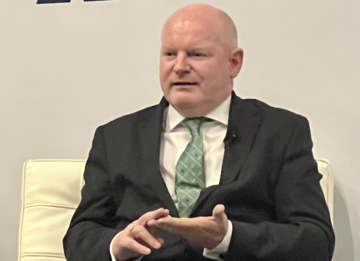
Robert Kelly speaking to WCUC.
“I don’t want it to be a soundbite, but to me there are three key components in board membership,” he said.
Not About Being ‘Cozy’
Those three components are:
- Authenticity. “I think that is so important. You’re there for ordinary people who are just trying to do better.
- Adaptability. “We’ve grown so much and my view is that the board must grow at the same pace as the asset levels and the needs of the members,” he said.
- Honesty. Board members need to be “constructive friends” to senior management. “That doesn’t mean cozy relationships. That dynamic really has to work very well. Those relationships need to be there.”
Kelly said the issue of boards being up to the task has become even more critical in the U.K., where new laws are granting credit unions the power to begin offering a number of new products.
“If you’re not willing as a board member to tackle those demands, then it’s probably not right for you to stay on the board,” he said.
Getting Uncomfortable
Kelly added that boards as a whole also need to embrace the uncomfortable.
“Get the taboo on the table as quickly as possible,” he advised. “Don’t let it fester and linger. It has to be debated respectfully, and always with the member lens.”
Like Brown who spoke before him, Kelly said he agrees there is a “shelf life for everyone. We lose institutional knowledge at our peril. But it’s important to talk about the issues of the day. We are debating at home should board members be paid? Does that take away the ethos or change the psychological contract between the individual sand the organization? If you start paying board members it doesn’t mean they revolutionized themselves. There has to be a willingness by board members to ask, ‘Are we still doing a good job? Are we willing to be honest? Do we have that connection? “
Any board member unwilling to get out of their comfort zone probably isn’t doing a good job, he said.