

MADISON, Wis.– Wis.–Credit union leaders were given an update on the status of Open Banking in various regions of the world and what they need to know about it as the look to move forward.
During the World Council’s virtual World Credit Union Conference, a session on “Open Banking and Privacy: Emerging Regulatory Issues” focused on how worldwide changes to privacy regulations are shifting control of data to consumers and how those changes might impact credit unions, WOCCU reported.
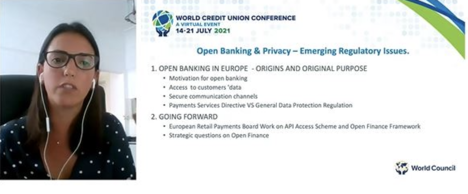
Paloma Garcia
Experts from the United States, Canada and Europe gave regional perspectives on the implications of open banking on retail financial products, such as loans and mortgages, to payments. According to WOCCU, the experts said changes may require significant and expensive operational changes for credit unions, as well providing more access to member data (beyond payments) to third-party providers.
“The motivation is to foster competition and innovation in the retail financial services market, and also to increase efficiency and create a more inclusive environment for the unbanked or the newly-banked, without losing sight of financial system stability or consumer rights’ protection,” said Paloma Garcia, senior consultant and head of Payments Practice at Afore Consulting, a Belgian firm that specializes in EU financial regulations.
The Word From Down Under

Rob Hale
Whether Open Banking is a threat to credit unions or a once-in-a-generation opportunity for them was the focus of a separate breakout session conducted by Rob Hale, chief digital officer for Regional Australia Bank, a customer-owned bank based in southeast Australia.
WOCCU noted that no country has made greater strides toward establishing a functional regulatory ecosystem for Open Banking than Australia and Regional Australia Bank took an early and active role in that process. Hale advises all financial institutions do the same when Open Banking becomes a priority in their country or region.
(CUToday.info has expanded coverage of just what is happening with Open Banking in Australia here.)
“Get involved, get involved early,” said Hale. “Take some ownership of this and get involved on the ground floor and actually help inform and contribute to the evolution of the rules and how consumers are going to benefit from that.”