

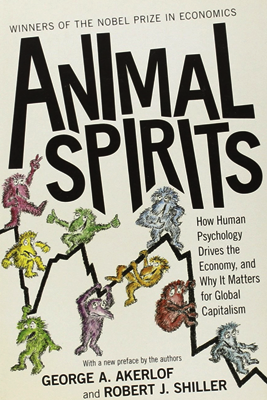
SAN FRANCISCO–A credit union’s success at lending depends on numerous factors, both internal and external–and a big factor in the latter is “animal spirits” according to one new economic study.
Wells Fargo Securities Economic Group has released a study that indicates in large part it is emotions, such as money anxiety, that play an outsized role in financial confidence and the economy.
The Wells Fargo study echoes a similar analysis that has been made in recent years by Dr. Dan Geller, who produces the Money Anxiety Index.
"A quantitative measure of animal spirits may lead to a more accurate estimation of the potential effect that a change in animal spirits has on the economy,” said Wells Fargo Securities Economic Group in publishing its work.
The Wells Fargo team did not coin the term “animal spirits.” Instead, it was originally coined by economist John Maynard Keynes to describe the human emotion that drives consumer confidence and the economy in his 1936 publication, "The General Theory of Employment, Interest and Money."
“Major U.S. equity indices are at all-time highs, with the S&P 500 index closing above the 2,700 mark in early January for the first time ever,” said Wells Fargo Securities Economic Group. “Whispers that animal spirits are at play are being heard around the markets. Keynes stated that animal spirits are one of the key factors behind fluctuations in the economy and changes in the business cycle. Therefore, a quantitative measure of animal spirits may lead to a more accurate estimation of the potential effect that a change in animal spirits has on the economy. Furthermore, it would be helpful for decision makers to understand the underlying drivers of animal spirits, thus giving them the ability to directly influence animal spirits.”
The Wells Fargo Securities Economic Group said it is its opinion that instead of relying on a single variable, like the consumer confidence index or S&P 500 index, it would be more informative to construct an index based on several indicators to represent different behaviors across major sectors of the economy.
For the full study, go here.