Odysseas Papadimitriou
WASHINGTON—The fact that U.S. households paid down roughly $26.8 billion in credit card debt during the first quarter of 2016 is NOT good news for the overall consumer balance sheet, according to CardHub.
CardHub, in its Q1 2016 Credit Card Debt Study, points out the paydown is not nearly as great as needed to slow the rapid rise of consumer debt that has been piling up in the last year.
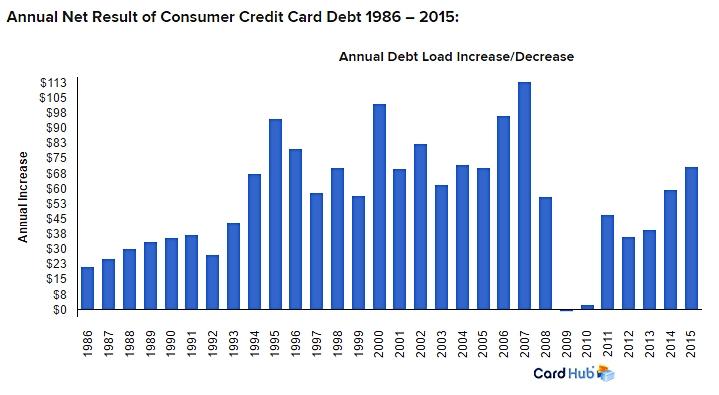
“Not only does this paydown come on the heels of a year in which we added an astounding $71 billion to our tab, but it’s also the smallest first-quarter debt reduction since 2008,” said CardHub CEO Odysseas Papadimitriou.
Papadimitriou added that the first quarter of 2016 shares a lot of similarities with Q1 2007, including the paydown amount, its size in relation to the previous quarter’s build-up and the charge-off rate at the time.
“That is not good news for consumers, considering the financial turmoil that followed the last time around,” Papadimitriou said.
CardHub is projecting that the U.S. will end 2016 with roughly $1 trillion in outstanding balances for the first time ever, which would bring the amount owed by the average indebted household to more than $8,500.
“You therefore have to wonder how long we can keep this up,” Papadimitriou said.
Other study highlights:
- The first-quarter pay down covers just 38% of the $71 billion consumers added to their tab in 2015.
- With eight of the last 10 quarters reflecting year-over-year regression in consumer performance, evidence is mounting to support the notion that credit card users are reverting to pre-downturn bad habits.
- Although the average indebted household’s balance dipped to $7,597 during the first quarter, this still represents a 6% increase relative to Q1 2015. It’s also just $831 below the tipping point CardHub identified as being unsustainable.
- Despite credit card debt levels trending significantly upward, charge-off rates remain near historical lows. “Something clearly has to give, and it does not seem to be our spending habits,” Papadimitriou said.
For more on the CardHub report, go here.