

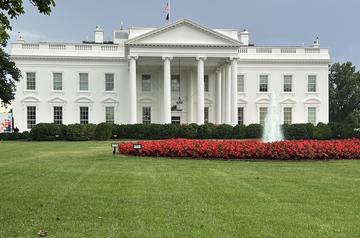
WASHINGTON–The White House has released its first-ever “digital asset framework” that outlines its vision of what crypto regulation in the U.S. should look like, including ways in which the financial services industry should evolve to make borderless transactions easier, and how to crack down on fraud in the digital asset space.
Oversight of cryptocurrency and digital assets has been an ongoing hot button in Washington ranging from whether there should be much regulation at all to how much regulation and who should be responsible for oversight. The new statement from the White House mentions both the Securities and Exchange Commission, where its head, Gary Gensler has been pushing for strong SEC oversight, to the Commodity Futures Trading Commission, although the statement does not take a firm stand.
“It is a known fact that innovation plays an integral role in the health and competitiveness of the financial services market,” said NAFCU President and CEO Dan Berger in a statement following release of the framework. “All financial institutions, especially credit unions, must have a clear regulatory framework to take advantage of such innovations, including digital assets. NAFCU understands that the development and use of digital assets has seen unprecedented growth in recent years.
“ While we welcome clarity and guidance from the Biden Administration on how credit unions can integrate the use of digital assets into their services, we urge continued engagement with smaller financial institutions and ask that the NCUA remain a focal point when addressing feedback and concerns over the use of certain digital assets,” Berger continued.
Framework Follows Exec Order
The framework comes six months after President Biden issued an executive order in March calling on federal agencies to examine the risks and benefits of cryptocurrencies and issue official reports on their findings.
Since that time, various government agencies in addition to Congress itself have been working on their own frameworks and direction, including on issues related to consumer and investor protection, promoting financial stability, countering illicit finance, U.S. leadership in the global financial system and economic competitiveness; financial inclusion and responsible innovation, according to a CNBC report.
According to the analysis, the topics touched upon in the new White House framework include:
Fighting Illicit Finance
"The President will evaluate whether to call upon Congress to amend the Bank Secrecy Act, anti-tip-off statutes, and laws against unlicensed money transmitting to apply explicitly to digital asset service providers — including digital asset exchanges and nonfungible token (NFT) platforms," according to a White House fact sheet.
The president is also looking into whether to push Congress to raise the penalties for unlicensed money transmitting, as well as potentially amending certain federal statutes to allow the Department of Justice to prosecute digital asset crimes in any jurisdiction where a victim of those crimes is found, CNBC said.
Crime is rife in the digital asset sector. More than $1 billion in crypto has been lost to fraud since the start of 2021, according to research from the Federal Trade Commission cited by CNBC.
The New Digital Dollar
The framework also points to the potential for "significant benefits" from a U.S. central bank digital currency, or CBDC, which you can think of as a digital form of the U.S. dollar.
For now, there are several different types of digital U.S. dollars, including fractional U.S. dollars, which are partially backed by reserves, USD-pegged stablecoins, and a hypothetical digital dollar that would be the Federal Reserve's take on a CBDC.
Safeguarding Financial Stability
"Digital assets and the mainstream financial system are becoming increasingly intertwined, creating channels for turmoil to have spillover effects," the White House fact sheet states.
To make stablecoins "safer," the administration says the Treasury will "work with financial institutions to bolster their capacity to identify and mitigate cyber vulnerabilities by sharing information and promoting a wide range of data sets and analytical tools," as well as team up with other agencies to "identify, track, and analyze emerging strategic risks that relate to digital asset markets."
The Next Steps
In terms of next steps, "Treasury will complete an illicit finance risk assessment on decentralized finance by the end of February 2023 and an assessment on non-fungible tokens by July 2023," reads the fact sheet.
In terms of next steps, "Treasury will complete an illicit finance risk assessment on decentralized finance by the end of February 2023 and an assessment on non-fungible tokens by July 2023," reads the fact sheet.
The full White House framework can be found here.