ST. LOUIS–Three major culprits have been identified as driving Americans’ total personal debt to more than $4 trillion (and that doesn’t include $9.4 trillion in mortgage debt), according to a new analysis.
It’s a number that has grown by 25% in the past five years alone and that has doubled since the turn of the century, according to Clever Real Estate.
So how did we get to the point where American households hold more debt than the government of the United Kingdom? To answer this question, Clever said it assessed consumer debt since the 1950s using Federal Reserve data and identified three major culprits that have played a pivotal role in Americans’ spending habits: credit cards, financial literacy, and location.
The Findings
Among the findings of the new research:
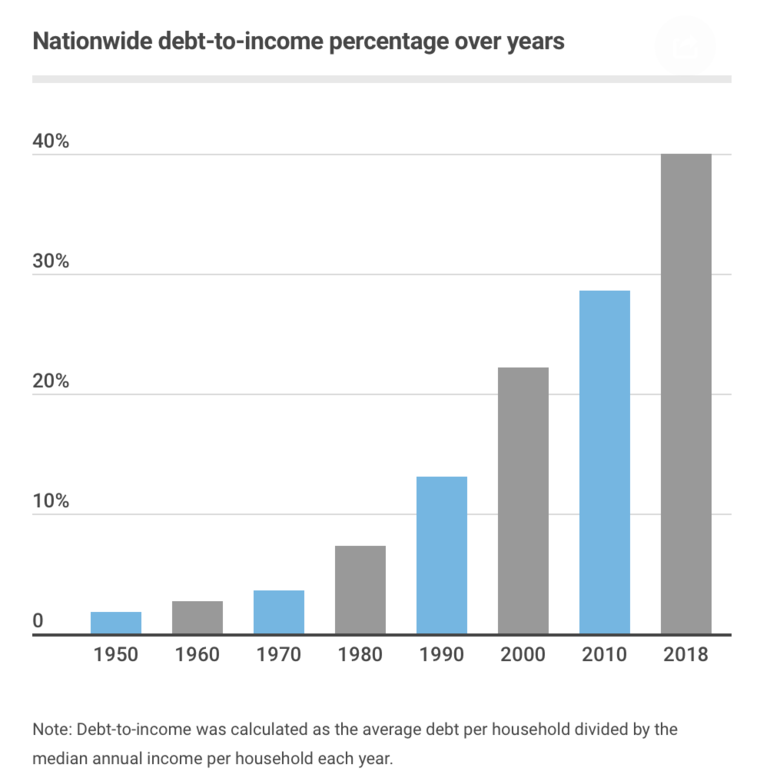
- The average American household held $533 in debt and earned $30,300 in 1950. In 2018, households had $31,420 of debt relative to a median income of $78,646.
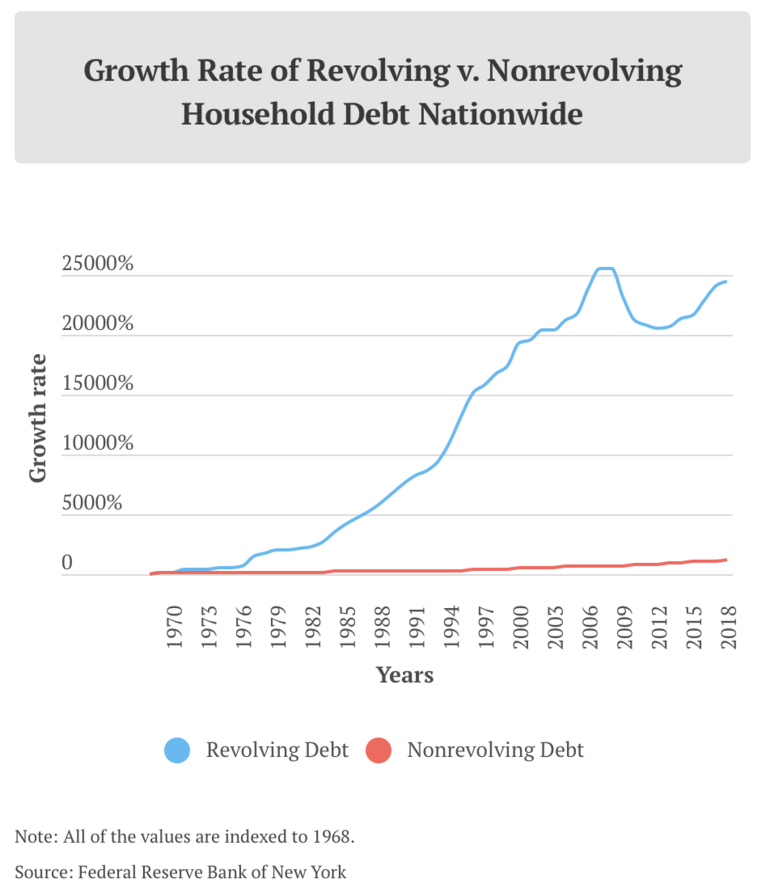
- Revolving debt — which is composed mainly of credit card debt — increased 24,500% since 1970.
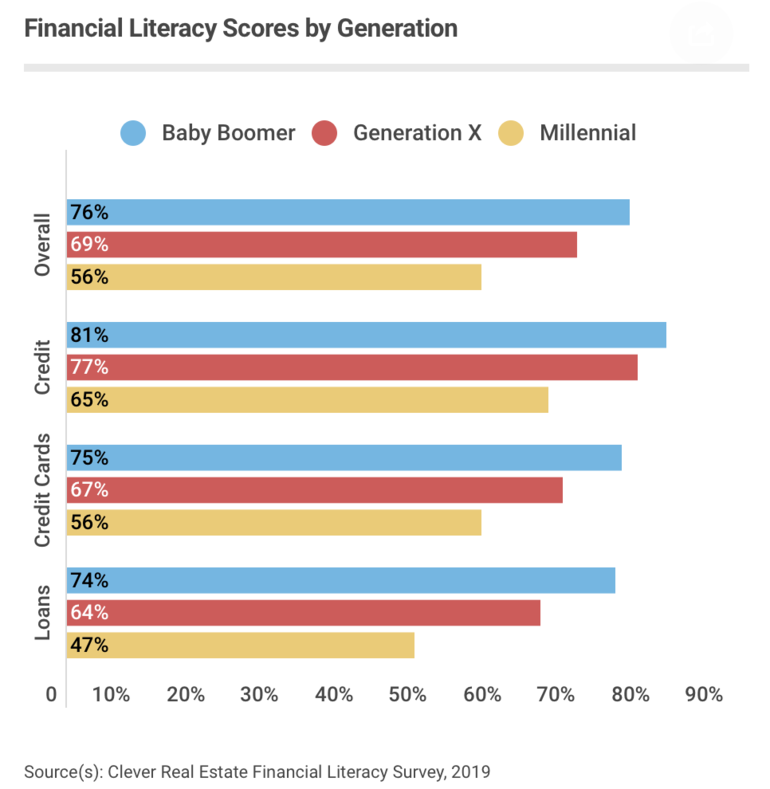
- Boomers scored a solid “C” on the 2019 Clever Real Estate Financial Literacy Survey. Millennials failed.
- Southern states hold more debt as a proportion of their income than other regions in the U.S.
Other Findings
Other findings in the Clever Real Estate analysis:
- Over 50% of Americans break even or spend more than their income each year.
- The average 1970s household held $78 in revolving credit. Today, Americans have $8,000.
- Over 70% of credit card users don't pay their balance off every month.
- Americans paid $113 billion in credit card interest and fees in 2018, up from $74.5 billion in 2013.
- Only 4 in 10 Millennials in the Financial Literacy survey knew the definition “interest.”
- Millennials were three times more likely than Baby Boomers to believe that checking their own credit hurts your score.
- Baby Boomers scored 27% more points on questions about loans, 18% more on credit card questions, and 16% higher on credit score questions than Millennials.
- People's purchasing power varies greatly by state. A dollar goes much farther in the Midwest than it does in the Northeast, on average.
- Texans have nearly $7,000 in auto loan debt on average compared to $4,700 nationwide.
Debt Drivers
Looking specifically at each driver of debt, according to Clever Real Estate:
- In 1966, the Bank of America released the first general-purpose credit card that could be used at over 60,000 companies nationwide and in 1968, Mastercard went global. The average American household held only $78 (adjusted for 2018 inflation) in revolving debt two years after its debut, but no longer were the days of lusting over unaffordable commodities. Americans could carry a loan in their pocket to use as they pleased. By 2018, revolving credit exploded by 24,500%, leaving households with an average of $8,000 of (mostly) credit card debt. The 7 in 10 borrowers who didn't pay the full balance on their accounts each month paid $113 billion in credit card interest and fees last year. That's up nearly 50% since 2013 while overall revolving debt increased 20% during that time, suggesting that we're not only spending more in general, but more of that debt is going unpaid month-to-month, compounding initial debt.
- Clever noted in 2019 it launched Financial Literacy Survey of 1,000 and found people answered 67% of the questions correctly, with the highest scores on questions about credit scores (74%), followed by credit cards (66%), and more general loans (61%). “If our survey was a college exam, our students would have earned a solid “D,” the company said.
- The price of living in a particular area of the country is highly dependent on cost of living, which bleeds into the cost of goods and mortgages. Unfortunately, the wage differential isn't always large enough to cover the variation in cost of living across the country, according to Clever.