

WASHINGTON— Consumers continued to report substantially divergent views of homebuying and home-selling conditions, according to the Fannie Mae Home Purchase Sentiment Index (HPSI), which decreased 0.5 points to 74.2 in December.
Overall, three of the index’s six components decreased month over month. In December, 76% of respondents reported that it’s a good time to sell a home, compared to the survey record-low 26% of consumers who reported that it’s a good time to buy. By comparison, in December 2020, 50% of respondents believed it was a good time to sell, while 52% believed it was a good time to buy. Year over year, the full index is up 0.2 points, according to Fannie Mae.
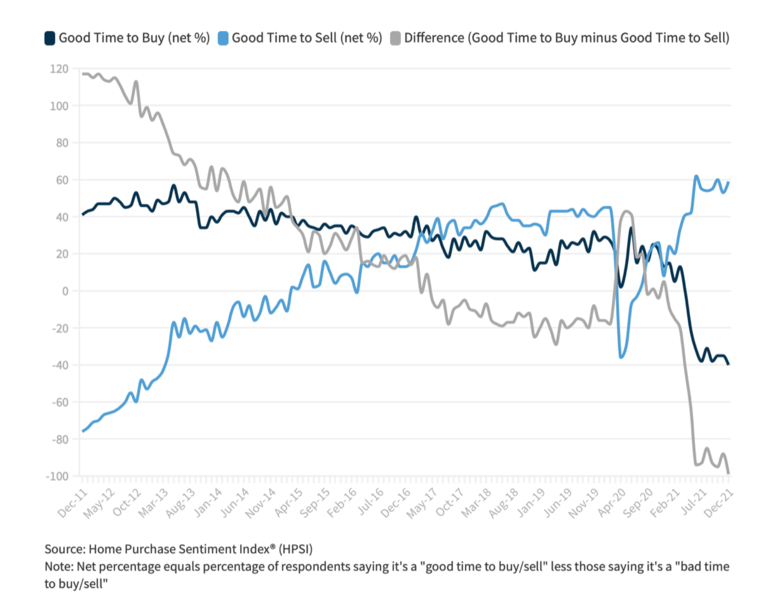
“The HPSI’s underlying components changed dramatically in the last 12 months – particularly the two related to homebuying and home-selling sentiment – and we have seen the index drift slightly downward since March 2021, an indication that the housing market may begin to soften in the coming year,” said Doug Duncan, Fannie Mae’s senior vice president and chief economist. “Over the past year, low mortgage rates plus government stimulus programs helped increase mortgage demand, but the bidding-up of homes increased prices to record levels, making affordability a greater constraint for both first-time and move-up homebuyers.
Many Have Reservations
“Among homeowners, the ‘good time to buy’ sentiment fell 30 percentage points over the past year to its current level of 30%; for renters it fell from 37% to 21%. Even though demand remains strong, a majority of consumers clearly have reservations about purchasing a home at current prices.
“We currently expect mortgage rates to continue to drift modestly upward through year end, despite inflation concerns, which will likely compound the affordability concerns expressed by consumers in the HPSI,” Duncan continued. “Recent MBS issuance data indicating a rise in average debt-to-income levels also backstop that concern, suggesting additional affordability constraints. Combined with our survey results showing rising expectations for higher rent prices among consumers, we believe some would-be renters may look to accelerate their home purchase timeline, helping to drive continued strong (though decelerating) home price growth.”
Duncan said Fannie Made expects an increase in new homes to come to market later in 2022, which should provide some supply relief.
“However, it may not be enough to meaningfully affect home prices, Fannie Mae said. “As such, affordability is likely to be a growing challenge over the coming year.”
Component Highlights
According to Fannie Made, highlights of the report include:
- Good/Bad Time to Buy: The percentage of respondents who say it is a good time to buy a home decreased from 29% to 26%, while the percentage who say it is a bad time to buy increased from 64% to 66%. As a result, the net share of those who say it is a good time to buy decreased 5 percentage points month over month.
- Good/Bad Time to Sell: The percentage of respondents who say it is a good time to sell a home increased from 74% to 76%, while the percentage who say it’s a bad time to sell decreased from 21% to 17%. As a result, the net share of those who say it is a good time to sell increased 6 percentage points month over month.
- Home Price Expectations: The percentage of respondents who say home prices will go up in the next 12 months decreased from 45% to 44%, while the percentage who say home prices will go down decreased from 21% to 19%. The share who think home prices will stay the same increased from 28% to 30%. As a result, the net share of Americans who say home prices will go up increased one percentage point month over month, Fannie Mae said.
- Mortgage Rate Expectations: The percentage of respondents who say mortgage rates will go down in the next 12 months decreased from 5% to 4%, while the percentage who expect mortgage rates to go up decreased from 58% to 56%. “The share who think mortgage rates will stay the same decreased from 32% to 30%. As a result, the net share of Americans who say mortgage rates will go down over the next 12 months increased one percentage point month over month.”
- Job Concerns: The percentage of respondents who say they are not concerned about losing their job in the next 12 months decreased from 83% to 82%, while the percentage who say they are concerned increased from 15% to 16%. As a result, the net share of Americans who say they are not concerned about losing their job increased two percentage points month over month, according to the analysis.
- Household Income: The percentage of respondents who say their household income is significantly higher than it was 12 months ago remained unchanged at 23%, while the percentage who say their household income is significantly lower increased from 13% to 17%. The percentage who say their household income is about the same decreased from 61% to 59%. As a result, the net share of those who say their household income is significantly higher than it was 12 months ago decreased 4 percentage points month over month.