

PURCHASE, N.Y.—A new study from Mastercard reveals insights into the opportunities and challenges around what’s known as “Conversational Commerce.”
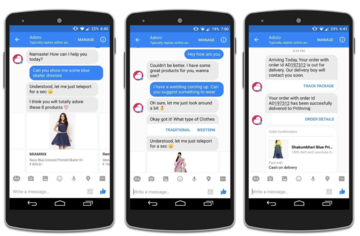
In its report –“Is anybody there? Giving Conversational Commerce a Voice,” Mastercard reveals that consumers value convenience above all else and meeting their expectations is key to driving mass adoption of Conversational Commerce.
With Conversational Commerce, consumers engage with human representatives, chatbots or a mix of both to receive a personalized service. Companies then use these chatbots to send order confirmations, shipping and delivery notifications, and resolve customer service issues.
“With voice now becoming the dominant means of interaction within this brave new digital frontier, Conversational Commerce is primed for evolution,” Mastercard said.
Created with partners Future Agenda, the research shows that 87% of U.S. consumers are aware of voice and text agents, and 66% have used them in the past. In the EU, one in five consumers have already shopped using voice or text agents (21% have shopped, 16% have made payments and 7% have banked).
“The study also reveals that despite the fact there are already many established voice assistants and smart speakers on the market, voice – and Conversational Commerce – hasn’t yet reached its full potential. Many consumers are nervous about the overall security of voice, especially when it comes to e-commerce. Lack of visible security is the number one reason consumers abandon e-commerce transactions, according to a recent study,” Mastercard said.
Exponential Growth Ahead
However, it’s a market opportunity set to grow exponentially over the next few years, noted Mastercard. According to strategy consultants OC&C, in the U.S. $40 billion will be spent through voice commerce by 2022 ($5 billion in the U.K.), representing 6% and 3% of all online spend.
“In order to maximize this opportunity for voice – trust, alongside convenience and ease of use, will be key to driving adoption. Partnership is also essential as it’s the wider ecosystem that can make or break a platform. Brands and retailers must work in tandem to integrate new products and services, which are underpinned by security, to create an environment that fosters trust in voice as a channel,” Mastercard said.
“The rapid growth and innovation of voice technology has real potential to change the way we live and do business – for the better,” said Ann Cairns, vice chairman, Mastercard. “Voice offers a unique opportunity for business to deliver faster, easier and more convenient experiences. But it has to be scaled responsibly. The role of voice technology is to drive a secure, trusted experience that delivers tangible benefit.”
The full report can be downloaded here.