

WASHINGTON–What have Americans been doing with the recent round of stimulus checks they received from the federal government? Some new research offers some early answers.
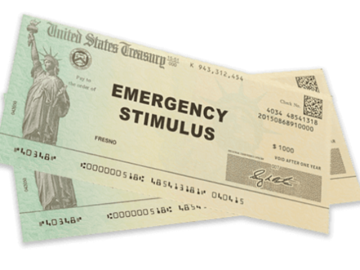
Depending on their income, many Americans received $1,200 payments, plus $500 per child under 17, as part of the CARES Act, the federal stimulus passed in response to the coronavirus pandemic.
It appears most Americans have used the funds to “keep a roof over their heads and food on the table,” according to new research by a team of economists, as first reported by MarketWatch.
“Given the size of the 2020 stimulus checks, we might have expected large impacts on categories like automobile spending, electronics, appliances, and home furnishings,” said economists at Columbia University, Northwestern University, the University of Chicago and the University of Southern Denmark, who conducted the research. “Instead, it seems that individuals are catching up with rent and bill payments as well as engaging in spending on food, personal care, and nondurables.”
The Specifics
Looking at the spending and saving habits of more than 1,600 people who received their stimulus check by April 21 in an approximate 6,000-person sample, MarketWatch reported the researchers found:
- In the first three days after the stimulus-check receipt, spending increased between $50 to $75 apiece on expenditures like food and nondurable goods, a category that includes supplies like laundry detergent, pens, paper and other items with a shorter life span.
- During that same time, the purchase of durable goods increased by $20 in those first three days. This category includes cars, appliances, furniture and other things meant for longer use.
- On the whole, households spent about one-quarter to one-third of their stimulus check money within 10 days of receipt.
- If people had less than $500 in their account, they went through almost half of their money within 10 days. People with over $3,000 in their accounts had essentially no extra spending after getting their check.
- A person who made less than $1,000 a month was twice as likely to spend money after getting a check, compared with someone making at least $5,000, researchers noted. That fits a historical pattern from stimulus programs, the study said.
‘Different’ From 2008
“It’s too soon to see what the stimulus checks accomplish for families and the economy as a whole,” Columbia Business School Professor R. A. Farrokhnia, the study’s co-author, told MarketWatch. “What we can tell for fact is consumer behavior is different,” compared to their 2008 stimulus spending habits.
Farrokhnia and his fellow authors wrote that many outlets for consumer spending were shuttered by government orders, but restaurants stayed open for pickups and deliveries. “Household spending on food delivery was one category in particular that increased following the receipt of a stimulus check,” the study said.
Time will tell how people use all their stimulus money, Farrokhnia told MarketWatch, noting the spending trailed off 10 days from receipt; many people might be holding onto the rest to see what the future holds, he added. However, he does wonder whether these $1,200 checks will be enough “to spur consumer spending to fuel economic recovery.”
The study was distributed by the National Bureau of Economic Research.
Stimulus Via Prepaid Debit
Meanwhile, the IRS and Treasury said it began sending economic stimulus payments on preloaded debit cards this week. According to the IRS' financial agent, MetaBank, will send nearly four-million payments on prepaid cards, allowing recipients to withdraw funds from in-network ATMs, make purchases and transfer funds to their personal bank accounts without incurring any fees. The mailed package will include activation instructions, according to the government.
The cards, which are being distributed to some individuals without bank account information on file with the IRS, can be used online or at any retail location where Visa products are accepted, the IRS said.
The CFPB has released a video to inform consumers that they may receive their Economic Impact Payment (EIP) on a prepaid debit card. To see the video click here.