

MIAMI--U.S. households carried $1.33 trillion in credit card debt at the end of February, and WalletHub is projecting balances will climb by another $50 billion before year-end as borrowing costs remain stubbornly high.
For banks and credit unions, the forecast points to continued pressure on card portfolios as elevated APRs keep revolving balances expensive even if debt levels, when adjusted for inflation, remain below historic peaks.
WalletHub, citing its latest Credit Card Debt Study, said February’s $1.33 trillion total was a new record for the month in nominal terms, based on new Federal Reserve data, but still 10% below the all-time February high after adjusting for inflation. The firm also said the average household carried about $11,036 in credit card debt at the end of February, roughly $2,128 below the inflation-adjusted record, suggesting consumers still have some room before hitting prior-cycle extremes.
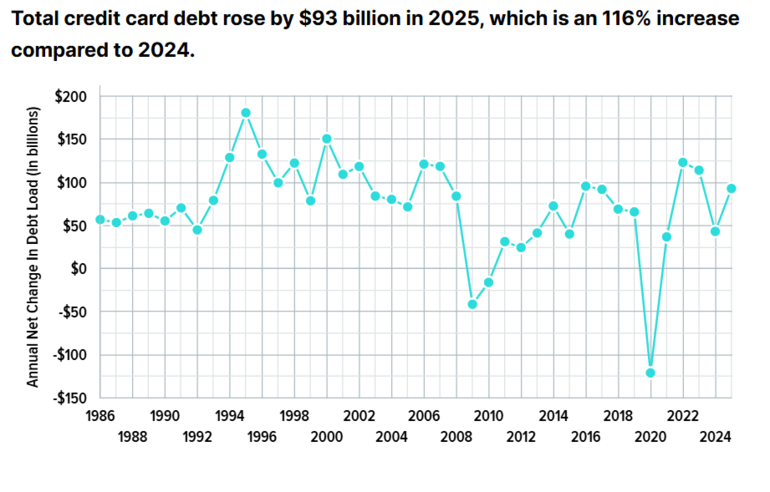
WalletHub said one of the more reassuring metrics for lenders is the debt-to-deposit ratio, which stood at 7.0% in February — 61% below its peak in Q4 2000 — indicating household credit card balances remain relatively manageable compared with the deposit base. But the company also noted that the average person with credit card debt is paying 21.52% interest annually, underscoring why balances could remain sticky and why portfolio stress could build if borrowers begin to struggle with payment shock.
For financial institutions, WalletHub’s $50 billion 2026 debt-growth projection suggests card outstandings may keep expanding even in a high-rate environment, supporting interest income but also heightening the need for close attention to delinquency, charge-off and reserve trends.