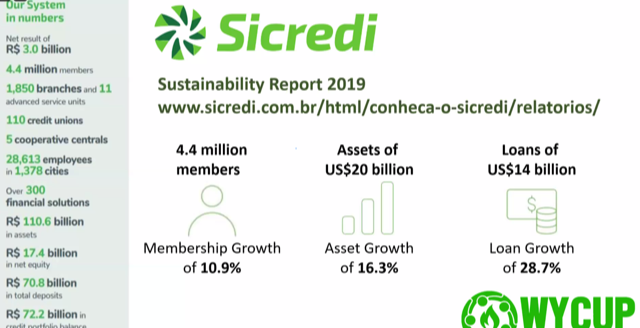
SAN JOSE, Costa Rica–An initiative is being launched that aims to expand the “youth committees” created by Brazil’s credit unions to other CU movements around the world.

Thomas Belekevich
During a Virtual Forum hosted by the World Young Credit Union Professionals group of the World Council of Credit Unions, Thomas Belekevich, program manager with the World Council, who lives in Costa Rica, told a Virtual Forum that included participants from around the world and in numerous time zones that as part of the Global Classroom and immersion learning programs he has led credit union delegations had been visiting with Brazil’s Sicredi movement prior to the pandemic.
During those visits, he said he and others were particularly intrigued by what the country’s Sicredi CUs have done in creating youth committees made up of younger members.
“It was inspiring to see how these young members were so knowledgeable about their credit union and what it meant to be a cooperative,” Belekevich told the Forum. “It was contagious. It felt like we were surrounded by ambassadors for the cooperative model and meeting people who were really making a difference for their communities. These youth committees are such a powerful example and we need to share those around the world.”
Belekevich, who has been collaborating with the World Council since 2003, said the meetings in Brazil really “planted the seeds” for the idea of “growing into something bigger.” He said youth committees have launched 20 different community projects in the country.
A ‘Perfect Example’
“I think it’s the perfect example of international engagement, for why we need to cross borders and share new perspectives on the challenges and shared problems we have,” he said.
He said efforts have been underway to take a deeper dive into the Sicredi system structure and learn more about how their youth committees work, as well as investigating the potential for replication in other countries. As CUToday.info has reported, the Sicredi model is unique, in that all credit unions in Brazil share a common brand and backoffice. The country’s credit unions grew by 16% in 2019.
“We saw this collaboration has resulted in some incredible advancements for the sector,” he said, allowing Brazil’s CUs to tackle digital transformation, community outreach and other challenges that would “have been very difficult if not impossible for individual credit unions to accomplish alone.”
That has included redefining the relationship between young people and cooperatives, according to Belekevich. He noted that one fintech in Brazil, NewBank, that launched in 2013 already has more than 25 million clients, 70% of whom are 36 years old or younger.
“As we see this competition increasing, our credit unions are working hard to make sure our members have full access to these digital channels, as well,” he said. “But is this enough? We are facing what I see as a crisis of relevance among young people. We are emphasizing our cooperative difference, but it’s been our challenge.”
The youth committees, he added, are demonstrating the power of financial cooperatives to change lives, and communities are really responding.
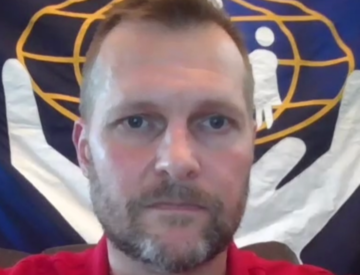
Thomas Belekevich
A Second Component
A second component of the youth committees is professional development. He said young members have been playing a key role in developing that program’s curriculum, with a key element being entrepreneurship. He noted that during the financial crisis of a year ago, it was young people who were most deeply affected in terms of jobs, income and career development, and the same is holding true with the coronavirus pandemic. Hence, the effort to have younger people develop greater entrepreneurial skills.
What’s next? According to Belekevich, a World Council initiative is now under way to replicate the youth committee model in other countries, with WOCCU now developing a “toolkit” of resources. It is also working to develop a document to help share the impact of the experience to help get CEOs and board members involved.
What the Future Holds
“I can see a day in the hopefully not too distant future where we are able to network these youth committees internationally and create an entirely new professional development opportunity for young people,” he said. “More than anything, what I think it demonstrates is this is a powerful opportunity for financial cooperatives to lead economic renewal post COVID 19 through youth empowerment.”