

MADISON, Wis.–A WOCCU-backed project along the troubled border of Columbia and Venezuela is exceeding its objectives, according to the organization.
The World Council said its Financial Inclusion Project at the Border with Venezuela has already surpassed its original goal of delivering financial services to 210,000 rural, low-income Colombians. The border zone has seen economic, social and political unrest as a result of conditions in Venezuela, with many Venezuelans having fled the country.
Part of Colombia’s Banca de las Oportunidades program, the Venezuelan border project had already brought financial services to 224,378 Colombians as of November 2018, according to the World Council, which said it hoped to reach 210,000 people by the project’s scheduled completion date of August 2019.
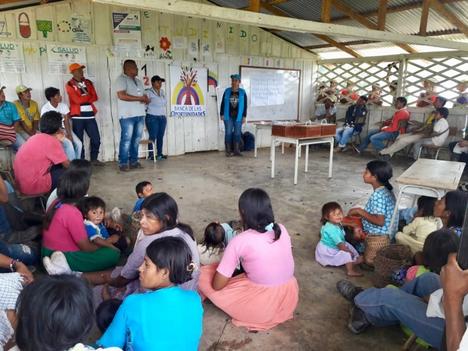
“Under the project—field agents travel to border areas via motorcycle to offer mobile banking services, support financial literacy activities to improve savings-mobilization, and increase knowledge about financial services and products being offered,” WOCCU said. “They also work to link small and medium business enterprises, entrepreneurs and farmers with local organizations that can deliver training sessions on improving income generation activities.”
‘A Very Good Project’
The project has also generated employment and entrepreneurship for people with no income, according to WOCCU.
“It’s a very good project. I’ve managed to have my own business. Previously, I had no formal job, no business. But they gave me a loan and taught me how to save. Now I am working out of my home and I have several clients,” said Yamile Hernández, a beneficiary of the Financial Inclusion Project at the Border with Venezuela, WOCCU reported.
Second Year Proves Pivotal
The World Council said reaching the goal for financial inclusion nearly one year ahead of schedule is due in large part to a strong push during year two of the program. From Aug. 2017 to Aug. 2018, partner financial institutions reached 90% of the total adult population in the border areas—207,273 people—with financial services. Of those, 85,648 of them became part of Colombia’s formal financial system for the first time, including vulnerable and displaced populations.
“This program is very important for the people living along the border. Most of the rural communities don’t have access to a physical credit union or bank branch—and traveling to a city that has one can cost families more than half of their savings,” said Oscar Guzman, World Council’s Director of the Financial Inclusion Project at the Border with Venezuela. “Our project ensures they can open accounts, make deposits and withdrawals—even secure a loan—right in their own communities.”
60,000 Attend
In addition to the increased financial inclusion, more than 60,000 people attended “financial days” to receive information on financial services and financial literacy, connecting the demand for financial services with the financial institutions, WOCCU reported.
Banca de las Oportunidades has been funding WOCCU’s work in Colombia since 2008. Financial Inclusion at the Border with Venezuela is World Council’s fourth Banca de las Oportunidades project.