

KOLOA, Kauai–A member of the NCUA board and the head of a trade group for state regulators weighed in here on questions ranging from CU acquisitions of banks, the CU tax exemption, the pending demise of LIBOR and more.

Mark McWatters
Speaking to Rochdale Paragon Group’s Volunteer Leadership Institute were NCUA Board Member J. Mark McWatters and NASCUS President and CEO Lucy Ito. The session was moderated by Dennis Tanimoto, president of the Hawaii Credit Union League.
McWatters and Ito participated in a Q&A led by Tanimoto, but first took a few moments to share their own thoughts.
The Law & An Ironic Position
McWatters, who is an attorney, referenced the “controversy” that has been surrounding credit unions purchasing banks and the CU tax exemption, but said if the law is the basis for judging the process, there should be no argument.
“What does the law say? The law says actually community banks and credit unions are substantially different,” said McWatters, before adding in jest, “You might not be aware of this, there is something called field of membership. That’s not a thing to them. There’s member business lending. That’s about 35% of their portfolio and the income is substantial. For credit unions, it’s 4%.”
He added credit unions lack the ability to raise capital through the sale of common stock, as well.
“So, in a fair and transparent way in looking at the rules, credit unions and community banks are substantially different,” McWatters told the meeting. “And the other thing is many community banks elect to file (with the IRS) as Subchapter S and what that means is the bank as a corporate entity does not pay corporate income tax. It’s a pass-through, so one level of tax is avoided. It’s ironic these same community banks complain about this tax exemption when they have this same thing.”
Guarding Against NCUA Overreach
In her remarks Ito outlined some of NASCUS’ priorities, which include changes to the NCUA board, capital modernization, and “overreach” by NCUA, including its 2019 merger rule.
“We are very concerned about the imposition of that rule on state-chartered credit unions when there is not a safety and soundness issue,” said Ito.
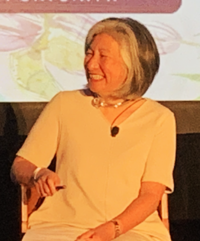
Lucy Ito
Also on NASCUS’ “radar,” according to Ito: FOM rules, how CUs can remain competitive and serve consumers in a digital world, the role of states in the fintech arena, cybersecurity, and third-party vendor authority (which NCUA wants and NASCUS opposes).
Speaking to the composition of the three-member NCUA board, Ito noted NCUA has the role of chartering federal credit unions but also serves as the insurer for both federal and state credit unions.
“If you look at CU assets, 49% are in state charters, 51% in federal charters. It’s a nice balance and we think that reflects the dual charter system is alive and well,” said Ito. “But what we would like to see one of the NCUA board seats dedicated for someone who is a state credit union regulator to make sure that a state voice is at the board table.
Would also like to see the board expanded to five seats from three.”
The Q&A
Here are the issues discussed during the Q&A:
Tanimoto: On the list of NCUA priorities, one surprise is planning for cessation of LIBOR. Why is it rated so high? (The London Interbank Offer Rate is scheduled to disappear in December of 2021.)
McWatters: No one ever thought LIBOR would go away. That has changed, and now there is a scrambling to come up with different rates, such as the Secured Overnight Financing Rate (SOFR). The FFIEC is trying to work with the other banking regulators to coordinate the change from LIBOR to SOFR or something else. The reason it’s high on our list is credit unions may not be paying attention to this issue; that could be the source of some embarrassment if LIBOR is to go away and the credit union community isn’t aware of it. So, we have questions out to credit unions about how often they use LIBOR and how might they be affected by the transition.
To me the interesting issue isn’t the transition issue. For years people who worked with LIBOR intuitively understood the risk. You could price it in your head and had a feel for the underwriting in your head. When it becomes something else, how does that translate? How are you going to price your credit with confidence you are properly accounting for the risk involved. In the world of pricing risk on credit a few basis points can be the difference between a good loan and a bad loan.
Tanimoto: Is LIBOR also high on state regulators’ lists?
Ito: It is. I am aware of two state regulators that have issued guidance on LIBOR: North Dakota and Georgia.
Tanimoto: The NCUA board has set the overhead transfer rate, and state credit unions now pay about 30% of NCUA’s operating expenses. What is NASCUS’ view on that?
Ito: I would say the overhead transfer rate methodology is fair. In terms of state charters paying 30% and FCUs paying 70% of NCUA’s operating budget, there is a number that’s missing, and that is what state charters pay to their own state regulatory agency.

Dennis Tanimoto
Tanimoto: What about the changes to NCUA’s risk-based net worth requirements and how that has changed?
McWatters: At one point I was good that we should go where it would be effective now for credit unions above $500 million in assets. But since then it became apparent to me we had an opportunity to do other things with respect to capital. One we proposed at the last NCUA board meeting, and that’s subordinated debt. I was thinking if we’re going to have this subordinated debt rule to allow complex CUs to raise subordinated debt for capital purposes, then the two rules should work together.
Ito: Fifteen states permit state charters to issue supplemental capital. In terms of when risk-based capital comes into effect, we agree with NCUA’s decision to look at the entire capital framework more comprehensively. I would say the states and NCUA are very similar in their views on this issue.
Tanimoto: The House has passed the SAFE Banking Act, which would clarify that financial institutions cannot be punished for serving legitimate marijuana-based companies. Right now it’s stalled in the Senate. What have the states been doing?
Ito: First, a disclaimer: our view on usage and legalization is we have no view. Eleven states have legalized adult recreational use; 22 states have legalized medicinal usage, and 13 states in addition to those have legalized oil and lotions. There are just three states where it’s outright prohibited.
The states are telling financial institutions to follow the Cole Memo and FinCEN guidance, and biggest concern is marijuana not made available to minors, be careful about crossing state lines, and make sure financial institutions to their due diligence to ensure money laundering is not going on.