

LAS VEGAS–Just what should there be a sense of urgency around in credit unions? Plenty of issues, according to three people.
Sharing their thoughts during the Underground Rock Festival: Xtreme Thought Leadership event in Las Vegas—which was hosted by Mitchell Stankovic Associates and broadcast live on YouTube—were Sarah Szilagyi, SVP-experience operations with CO-OP; John Cassidy, senior sales market technology with CUNA Mutual Group, and Sarah Canepa Bang, senior advisor to NCUA Vice Chairman Kyle Hauptman.
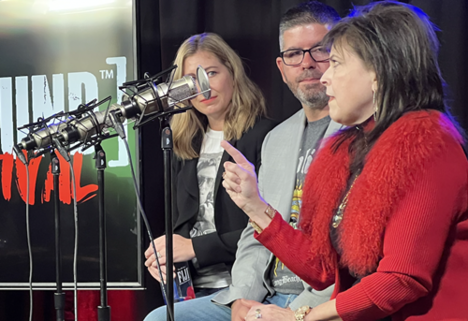
The trio was asked their thoughts on what are the issues around which they feel a sense of urgency.
“There are so many smart minds that want to come together and help credit unions and to build for the future,” said Cassidy. “I think education and innovation are two we have to double down on and focus on.”
When it comes to financial education, Cassidy especially stressed the role of financial wellbeing.
“Creating savvy consumers and helping them feel good about their finances is what we do best,” he said. “We are really set up to move forward. Innovation is another one. There are so many good system partners that work together to help more members improve their finances. Those are what are going to help us get to the future. The challenge I issue: let’s put payday lenders out of business.”
Urgent Communications
Canepa Bang said she has learned in credit unions just how much everyone cares and that she feels a strong sense of urgency around communications between credit unions and their regulatory agencies.
It’s almost a communications “emergency,” she said.
“One of the things that has struck me is how willing people are to listen if people will communicate with them and how willing they actually are to talk with you and explain things to you,” said Canepa Bang. “We know there is communication going on there and then there's communication up the chain, but there isn’t as much communication. It’s not always the examiner's fault for not getting your message out there.”
Canepa Bang also urged credit unions to actively participate in sending comment letters to the agency, saying each one is read. She stressed those comment letters don’t always have to be written by the credit union’s attorney, that real stories of real situations carry great weight.
“I know that in a lot of smaller credit unions a lot of people are intimidated about writing comment letters,” Canepa Bang added. “Don't be. Tell your story. There are people there that want to understand. Be authentic and communicate.”
Regulatory Repercussions?
Canepa Bang’s comments elicited a question from the audience—reflective of a long-time issue in credit unions—that challenging the agency or providing too much “feedback” will lead to repercussions. Canepa Bang said that will not be the case, explaining that Hauptman has been “very keen” to back an initiative in which credit unions can provide feedback after examinations.
“We have started a feedback loop. Right now, it’s just voluntary, but we have a five-person survey,” said Canepa Bang. “In Zoom (for virtual exams), you have the ability to record your exit interviews. It should be a shock to anyone when you hit the record button as long as you tell the examiner. You need to give NCUA a copy of it. It’s just there after the meeting, if two weeks later there is disagreement over what was said, you can check the recording.”
Putting Fear Aside
CO-OP’s Szilagyi said she feels urgency around the need for cooperation and pushing aside fear.
“The truth is we can talk about all these things we need to do and all this change that needs to happen, but the reality is there are these decisions that need to be made,” said Szilagyi. “There are real dollars at stake for meeting what members are asking for today, and they have other options. Members are with us because they love the CU value proposition, but if they are able to do all the things they want to do elsewhere, they are at risk. Lifting each other up is the only way this will work. This entire movement can’t do it individually, it can’t compete with Chase or Wells Fargo.
“The opportunity to participate in your own financial institution is so rare. People need to understand that is what is happening,” Szilagyi added.