

WASHINGTON–In an era in which credit unions and schools now have active shooter drills as a regular part of their security training, the broader question of what does it mean to feel safe and secure and not vulnerable was explored during one discussion here.
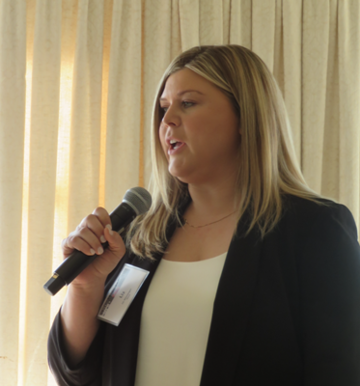
Liz Winninger
Three people offered their perspective during Mitchell Stankovic’s Underground Collision event at the Hay Adams Hotel overlooking the White House.
Sharing their thoughts were Liz Winninger, president and CEO of Xtend; Stephen Bohanon, founder and chief strategy and sales officer with Alkami; and Steve Stapp, president and CEO, Unitus Community CU, and also chairperson of the World Council.
‘Did You Tell Them to Jump?’
Winninger recalled early in her career in member services she received a message from a phone agent that she had on the phone a member who said they were standing on a bridge and threatening to jump. Winninger said one person around her responded, “Did you tell them to jump?”
What Winninger did was get an experienced agent next to the agent on the phone while also calling 911. It was an experience she said got her to thinking about the varying degrees of concern individuals and credit unions have for our communities. All of that led her to ask five questions:
- Who drives an organization’s design? “Our members drive our design. If I weren’t there, would that agent know how to react?”
- Who is my community and who are our stakeholders? “It can be community, clients, partners,” she said.
- What is my degree of concern for my community? “What is your response to fraud, is it a safety topic for you? Doesn’t it impact mental health, too? What about acts of God anywhere in the nation? We need to be prepared to step in at any moment but not to the detriment of our design.”
- What are my leading indicators that tell me concern is going on? “Why does a member leave you? They may have had a major life event.”
- What are you going to do about it?
“I challenge you to answer these,” said Winninger. “And I truly believe if you can’t answer these you are not sustainable.”
Really Hitting Home
As chairman of WOCCU, Stapp said he has had the opportunity to see credit unions around the world and to talk to members around the world. What Stapp said he has found is economic security is an issue that affects everyone.
While formerly living in San Francisco Stapp said the city’s beauty is belied by the significant amount of crime. He joked that he once put a couch on the street with a sign on it that said “free” and no one took it. When he changed the sign to “$25,” the couch was gone.
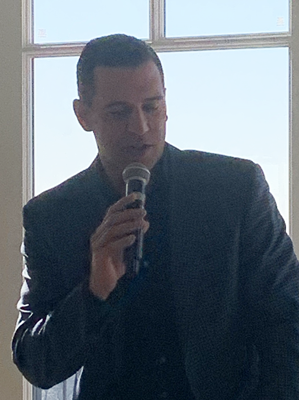
Stephen Bohanon
Now living in Portland, Ore., security again became an issue when he attended an elementary school safety meeting. He shared the story of two parents who had lost their young daughter in a school shooting. The young girl’s last message to her parents was, “I love u guys.” The parents have since started the I Love U Guys Foundation, which has distributed information on surviving a shooting, including these steps: Lockout, Look Down, Evacuate, or Shelter.
Stapp said his own credit unions uses those materials now and it has also reviewed where security gaps can be found in its own organization, as well as the homes of its senior executives.
You Don’t Understand
Because they are likely earning a good income, are financially secure and financially literate, many credit union leaders really don’t understand the fears and experiences of many of their members, according to Alkami’s Bohanon.
Bohanon related a perspective shared with him by his wife who was expressing how she—and many women—are worried about their physical safety all the time, while most men are not.
“I thought it was a good analogy for what it’s like for members who every time they hand their card over they have a true fear gripping them over whether it’s going to be accepted or not,” he said. “Or people who hear a truck and then, because they are behind on their payments, fear someone is coming for the car they need to get to work. There are 30% 40% of people in that state all the time.”
Bohanon said those for whom people have the greatest respect and empathy are for others who “teach us and protect us.”
“When it comes to financial security, I think credit unions are better positioned than anyone else to step into both of those roles, to teach people and to protect us,” he said.
As an example, Bohanon cited one credit union that contacts every member whose loan application is rejected and explains why and what they can do to change and then get the loan approved.