

HENDERSON, Nev.–It isn’t just credit union leaders in the U.S. wrestling with operational, member, bottom line and other issues for which few had prepared prior to the coronavirus pandemic.
Speaking to the first-ever virtual edition of the Underground Collision hosted by Mitchell, Stankovic & Associates, three CU leaders from three continents offered their perspectives on what they are facing and how they have reacted.
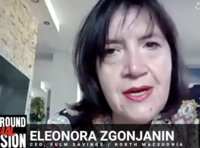
Here’s a look at what they had to say:
Eleonora Zgonjanin, CEO, FULM Savings, North Macedonia
“Half of our people are working from home. I was born a positive person, and this virus just pushed a little bit more for digitalization. We are in process of digital transformation. Now at this point our focus is on how can we deliver (services digitally),” said Zgonjanin.
One troubling issue has been the closure of local microbusinesses, many of which are owned and run by women. The credit union is seeking to help by restructuring loans to help those businesses survive the pandemic, but as Zgonjanin acknowledged, “We don’t know how long this period will be. But what we do know and what we stand for should be a sharing of best practices. Women need to share knowledge, practices.”

Leni San Roque, CEO, Asian Confederation of Credit Unions, Philippines
“We also work from home, but what I want to highlight is how the credit unions care for the community,” said San Roque. “The government locked down the whole country. Credit unions pooled money to buy food to give to members. And it is innate to us, we really care for humanity.”
The question now is how to make a difference after the pandemic, when the virus may be under control, but many members’ finances will not be.
“There are going to be a lot of people going back to poverty,” said San Roque. “A lot of people have lost their jobs. They are depending on food rations from the government. The reason people are depending on rations is there is a lot of financial illiteracy among people. We know there is a need to have at least six months of emergency funds, but that is not available now to many poor families. I think the (Global Women’s Leadership Network) Sister Society members need to be ambassadors for financial literacy, so, when this pandemic ends people don’t have to depend on others to feed their members.”

Maureen Njoroge, corporate affairs executive, ACCOSCA, Nairobi, Kenya
“We are moving to digital. It is hard, as some people in credit unions are in the older generation, and sometimes have to spend a lot of time to help them connect,” said Njoroge. “There are Internet challenges. It is hard, but we do not have a choice right now.”
Njoroge said in Kenya the lockdown on Nairobi has meant it’s very difficult to reach members in rural areas, but credit unions have found ways to do so.
The pandemic has also put a spotlight on women in the country, she said.
“Before all this started women mostly could not get appointed to attend our trainings,” said Njoroge. “These are cultural things that are supposed to be behind us. It is women who are now doing best in the virtual trainings. Who is more empathetic around the world? It is women, and there is so much we can do.”