

HENDERSON, Nevada–Four unique perspectives on systemic racism and what really needs to occur within and outside of credit unions if real change is to occur were shared as part of an online discussion.
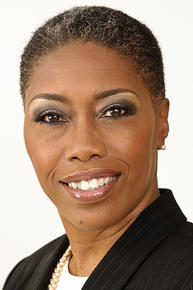
Renee Sattiewhite
Speaking to the first-ever virtual edition of the Underground Collision hosted by Mitchell, Stankovic & Associates, the four individuals, all African Americans, revealed personal perspectives and other insights for the credit union community to think about.
Below is a look at each of the viewpoints shared:
Are We Angry? Are We Hurt? Yes
Renee Sattiewhite, president/CEO, African American Credit Union Council
“You cannot continue to kill black people. We’re not having it. It’s done,” said Sattiewhite. “Are we angry, are we hurt, are we sorry? Yes, we are, we’re feeling all those feelings. Let’s turn this into something positive.”
Among the positives, said Sattiewhite, is the credit union motto of people helping people.
“I believe as credit union practitioners we can lead the nation in eradicating racism. It’s the economics that makes the difference. Social justice, political stuff, is important. But the systemic values, the systemic things that have happened to make people less than. . . credit unions have a unique opportunity. Credit unions united against racism—we are doing the change we are talking about, we are seeing the change we are talking about.”
‘I Am Going to Give it to People Straight’
Kevin Martin, SVP-organizational performance and strategic planning with SchoolsFirst FCU in Santa Ana, Calif.
Kevin Martin
Martin drew on his own perspective and how it has changed, noting, for instance, he was raised in an environment where the police were feared.
“I grew up with the mantra, ‘If the police are around, something bad just happened or something bad is about to happen’,” he shared. “I’m 41, and it wasn’t until three or four years ago that if a policeman was following me, I would change directions so he wasn’t behind me. When pulled over, the objective has always been to go home. It was yes sir, no sir, but be able to go home. And then I saw George Floyd.”
So where to from here? Not where he has been, said Martin.
Martin said he has tried to “lead through vulnerability” and to say yes to every opportunity to share and have a seat at a table. And that may not always make everyone happy.
“I have done a lot to try to make other people comfortable and take them along on this journey at their pace. I am done with that,” said Martin. “I am going to give it to people straight. They can educate themselves, continue on their journey, or they can be upset with me. But people are dying.”
Moving forward, Martin says he will be speaking truth to power even if it means discomfort.
“We’re going to have to continue to have and participate in the difficult conversations,” Marin said. “We want to be better for our movement and our country, and we can’t do that without these conversations. We’re all human and we’re all trying to do what is best. There is a lot of history, a lot of systems in place that need to be completely disassembled and completely rethought.”
A ‘Recipe for Major Trauma in Children’
Jamie Murray-Branch
Jamie Murray-Branch, emeritus clinical professor, speech language pathologist, University of Wisconsin
Branch shared insights into how the COVID-19 pandemic has brought disparities in health, homes, jobs and childhood between communities of color and other communities.
She pointed to a Harvard study that coined the term ACES, for Adverse Childhood Experiences, as revealing a number of disparity issues few have given thought to.
“We know in normal development we all experience stress at different times. Those are healthy and we develop resilience and we move on,” said Murray-Branch. “But when you have a number of different adverse childhood experiences--food insecurity, health insecurity, parents dealing with all life is throwing at them--the cumulative effect can be very, very detrimental. Couple that with other types of stressors that are not typical and are often found in children of color, such as poverty and racism and violence and the unpredictability of that, and you have a recipe for major trauma and behavioral deficits in children.”
The Other Story to be Told
Lecia Roundtree
Lecia Roundtree, VP-HR and staff development, PremierOne Credit Union, Sunnyvale, Calif.
“One thing we have to do is look at our policies,” said Roundtree. “We have to make sure our policies say we are open and we are diverse, then make something happen in those areas, and then communicate it. We hear about ‘telling your story’ in the credit union community all the time, but the other thing we need to do is talk with managers, with employees; we need to get people talking about what’s working and what’s not working.”