

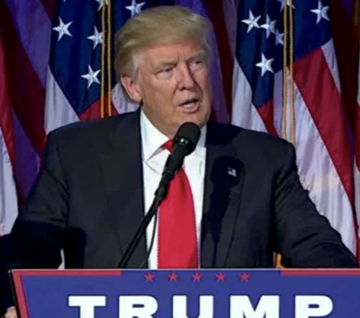
WASHINGTON–In its proposed 2019 budget, the Trump Administration is proposing deep budget cuts for the CFPB, other changes to agencies and functions created by the Dodd-Frank Act, and again calling for elimination of the CDFI Fund.
In releasing its budget, the Trump Administration said it is “committed to reforming the Nation’s financial system,” including rolling back the “regulatory excesses” that were created by Dodd-Frank.
“Since issuance of the Core Principles EO (Executive Order) in February 2017, Treasury has published several reports making numerous recommendations for administrative and statutory reforms. These reviews included evaluation of the Financial Stability Oversight Council (FSOC) and the Office of Financial Research (OFR), both established by the Dodd-Frank Act,” the document accompanying the budget states.
Under the proposed budget, the CFPB would be funded through Congress rather than through the Federal Reserve. The plan calls for capping the CFPB budget at $485-million, its 2015 level, down from the $630-million budgeted for this year.
The reductions are being proposed by the White House Office of Management and Budget, which is led by Mick Mulvaney, who also is acting director of the CFPB.
“The proposed reforms would impose financial discipline, reduce wasteful spending, and ensure appropriate congressional oversight,” according to a statement released by the OMB. “. . . To prevent actions that unduly burden the financial industry and limit consumer choice, the proposal restricts CFPB’s broad enforcement authority over Federal consumer law.”
As CUToday.info reported here,Mulvaney had earlier told the Federal Reserve he does not need any funds to cover the Bureau's operations for the second quarter of this year.
CFA Blasts Budget
The proposed budget reduction for the CFPB was blasted by the Consumer Federation of America.
Christopher Peterson, a senior fellow at the Consumer Federation of America, and the John J Flynn, Endowed Professor of Law at the University of Utah, issued a joint statement through the CFA saying, “Those who care about protecting American families from deceptive and unfair debts should insist on preserving the current system of funding the CFPB through Federal Reserve bank revenue. The Federal Reserve generates much of its own funding by providing services to the nation’s banking industry. It makes sense for banks to help cover the costs of providing a consumer protection watchdog and for banks to be insulated from a political appropriations process. The Administration’s budget plan would allow banking industry lobbyists to put a leash on America’s most important Consumer Watchdog.”
Meanwhile, the budget proposal also recommends that both the FSOC and the OFR be funded through the congressional appropriations process. Both offices were created by the Dodd-Frank Act in 2010, and any changes would require action by Congress.
Currently, FSOC expenses are paid by the Office of Financial Research through the Financial Research Fund, which is part of the Treasury and which is funded through assessments charged to banks of more than $50 billion in assets, as well as certain other nonbank financial companies overseen by the Federal Reserve.
The FSOC is empowered to draw on resources of any department or agency of the federal government, whose employees may be detailed to FSOC without reimbursement. According to the administration budget document, “The Budget proposes to impose appropriate congressional oversight of these functions by subjecting all Treasury FSOC and OFR activities to the normal appropriations process.”
The document also states that the budget reflects continued reductions in OFR spending commensurate “with the renewed fiscal discipline being applied across the Federal Government.”
CDFI Funding
While at one point in 2017 it was proposed the NCUA budget become part of the congressional appropriations process, the new budget does not recommend that any changes to the budgeting processes for the financial regulators, including the CFPB.
In addition, the Trump Administration is again proposing to eliminate funding for the Community Development Financial Institutions (CDFI) Fund’s discretionary grant and direct loan programs, which the administration says will mean a savings of $234 million “from the enacted 2017 level.”
“The CDFI Fund was created more than 20 years ago to jump-start a now mature industry,” the budget document states. “In addition, private institutions should have ready access to the capital needed to extend credit and provide financial services to underserved communities.”
The administration has previously targeted the CDFI fund before Congress restored the funding.