

WINSTON-SALEM, N.C.–A decision by the newly renamed Truist Financial Corp. to delay a name change for the bulk of its branches until at least August 2021 could become a legal liability in fending off a trademark-infringement lawsuit by Truliant Federal Credit Union, according to one new analysis.
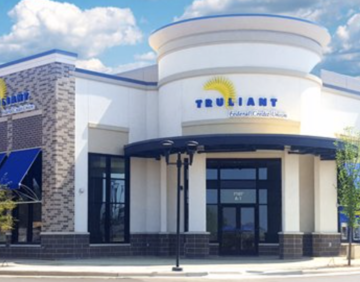
As CUToday.info has reported, Truliant filed a lawsuit in mid-2019 against the then BB&T Corp. and SunTrust Banks. which were merging and announced they would operate as Truist Financial, alleging the new name would create confusion in its markets. Truist Financial is headquartered in Charlotte.
Truliant has since narrowed the focus of its complaint to the usage of the “Tru” prefix in the Carolinas and Virginia, with the credit union asking a federal judge to halt the process.
“The credit union claims a preliminary injunction is timely and necessary to stop further confusion before the Truist signs, logo and color appear at branches in the three states,” reported the Winston-Salem Journal.
“No harm to defendants would outweigh that irreparable harm to Truliant,” the credit union said, the publication reported.
Bank Responds
In a statement, Truist stated “the two brands are very different, and we look forward to our opportunity to prove that this action is without merit…There is no risk that anyone would confuse these marks in context in actual marketplace use.”
Separately, Truist said it is delaying the bulk of the branch conversions in states where BB&T and SunTrust have significant overlap, and that it will convert the Carolinas and Georgia markets last, meaning late 2021 or early 2022.
Truliant has asked the court to prevent Truist from moving forward with marketing Truist at retail or online sites, including applying for Truist trademarks, arguing further confusion needs to be stopped.
Truliant is asking any Truist-branded products be destroyed and that it be awarded any profits made via the Truist brand as compensatory monetary damages and is requesting punitive damages, according to the report.
Affidavits Cited
According to the Winston-Salem Journal, Truliant cited in its latest response testimony by UNC Chapel Hill business school professor Nicholas Didow, examples of potential consumer confusion. Didow’s affidavit said he was hired by Truliant in August, according to the Winston Salem-Journal, which said Didow conducted both an online consumer survey and an in-person survey in Charlotte.
“Altogether, Didow said he found an average of 61% of consumers surveyed ‘mistakenly believed that Truliant and Truist were (either) the same financial services company, were affiliated, connected or associated with one another; or they did not know’,” the Winston Salem-Journal reported.
The Journal quoted Didow as stating, “There is a strong and substantial likelihood of confusion among consumers between the existing Truliant and proposed Truist marks,” adding Didow cited as a particular example confusion that Truliant’s TRU2GO mobile app belongs to Truist.
Tru That
Truist has not debuted a Truist mobile app but continues to use BB&T and SunTrust apps, the report notes.
Truist continues to argue in the case that plenty of institutions use “Tru” in their names, but Truliant responded by acknowledging other financial institutions use “Tru,” but only Truist “provides goods or services within the counties ... in Truliant’s field of membership,” the Winston-Salem Journal reported.