

WASHINGTON–The Treasury Dept. has released a 149-page report that has received generally positive reviews from the trade associations following their early reviews.
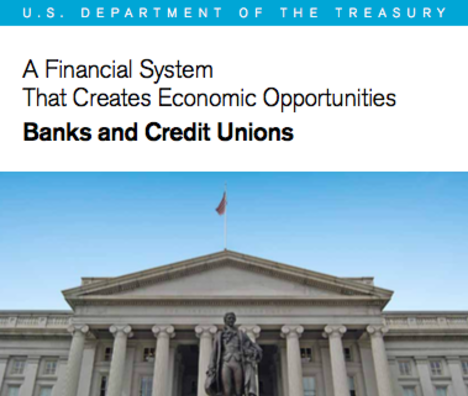
The report, “A Financial System That Creates Economic Opportunities: Banks and Credit Unions,” was assembled in the wake of an Executive Order from President Trump and in support of core principles the president has established, according to the Treasury Dept. Those core principles include empowering Americans to make independent financial decisions and informed choices; preventing taxpayer-funded bailouts; and to foster economic growth and vibrant financial markets through more rigorous regulatory impact analysis that addresses systemic risk and market failures, such as moral hazard and information asymmetry, among other things.
Among the stakeholders consulted in gathering input on the report were both CUNA and NAFCU, both of which said suggestions and ideas they had made to Treasury have been included.
"While still reviewing, NAFCU applauds many key portions of Treasury's report," said NAFCU President and CEO Dan Berger in a statement. "NAFCU has met and engaged with the Treasury Department and the White House on multiple occasions during the development of this report and identified meaningful opportunities for regulatory relief that would aid credit unions. While there is substantial work that remains ahead, NAFCU looks forward to building off of the groundwork laid by Treasury's recommendations to strengthen credit unions and the communities they serve.”
In NAFCU’s analysis, the “wins” for credit unions in the report include:
Among the "wins" for the credit union industry, the Treasury Department recommends:
- Revising the risk-based capital requirements to only apply to credit unions with total assets in excess of $10 billion or eliminating altogether RBC requirements for credit unions satisfying a 10 percent simple leverage (net worth) test and allowing credit unions subject to RBC requirements to have access to supplemental capital.
- Ensuring an extended examination cycle of at least 18 months, and extending that relief to institutions above $1 billion in assets.
- Having the CFPB provide rulemaking or guidance on UDAAP.
- Reforming the governance of the CFPB, including the possibility of changing the sole director to a bipartisan commission.
- Better tailoring of regulations and raising thresholds of their application, including regulations on qualified mortgages.
Meanwhile, CUNA President Jim Nussle said in a statement, "We are carefully reviewing the Treasury's report. Based on our initial review, the report appears to reflect input that we gave the administration in meetings and other engagements, and it shows that that the administration understands that credit unions need common-sense regulations. For too long, the one-size-fits-all rules meant for Wall Street have been hurting Main Street’s financial sector. We appreciate that the Treasury Department recognizes that credit unions know how to lend and promote economic growth in their communities, and we will continue to work with policymakers to improve the operating environments for credit unions and their members."