

WASHINGTON—NAFCU and CUNA have each offered suggestions to improve the Department of Housing and Urban Development's (HUD) implementation of the Fair Housing Act's "disparate impact" standard.
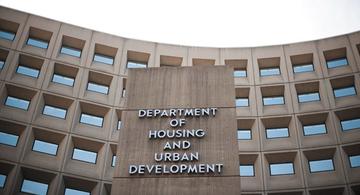
The separate letters were sent in response to an advanced notice of proposed rulemaking (ANPR) released by HUD in July to reconsider the implementation of the standard.
NAFCU emphasized that it has “steadfastly supported” the enforcement of fair lending laws, but has previously raised concerns about disparate-impact claims.
In its letter, NAFCU stressed the importance of ensuring HUD's disparate impact rule is consistent with a 2015 Supreme Court decision that recommended safeguards to ensure that "only 'artificial, arbitrary, and unnecessary' practices are targets of disparate impact liability."
The letter signed by Regulatory Affairs Counsel Andrew Morris noted that HUD's burden-shifting approach can be difficult to apply. The Supreme Court decision placed limits on disparate-impact claims by establishing a strong causation standard.
‘Lack of Clarity’
"The Court’s emphasis on a 'robust causality requirement' underscores the current lack of clarity in the Disparate Impact Rule, which may invite abuse of the burden shifting framework and unnecessarily increase litigation risk," Morris wrote. "While all credit unions maintain fair lending policies and procedures, which are regularly examined and audited, NAFCU believes that conforming the burden shifting framework to the legal guardrails articulated in [the 2015 Texas Department of Housing and Community Affairs v. InclusiveCommunities decision] will ensure that disparate impact liability does not cause distortion in lending practices or undermine broader public policy goals."
In addition to adjusting the burden-shifting framework, Morris also suggested HUD clarify issues related to legally sufficient business justification.
CUNA, in its letter, said, “In light of Inclusive Communities, we believe it is necessary for HUD to revisit the 2013 Disparate Impact Rule. It is critical that the requirements of HUD’s rule conform to the findings of the Court in Inclusive Communities.”
Thorough Scrutiny Needed
CUNA’s noted that the Supreme Court’s characterization of some of the aspects of a disparate impact analysis differ from those of HUD.
“We urge HUD to thoroughly scrutinize the specific requirements of the 2013 Disparate Impact Rule against the expansive language in Inclusive Communities to determine all changes necessary to bring parity between the rule and the ruling,” CUNA’s letter reads. “Following that review, it is critical that HUD work with credit unions and other interested stakeholders through both the formal NPRM process and direct outreach to the financial services community.”