

WASHINGTON—CUNA, NAFCU and representatives from six credit unions participated in a financial institution roundtable on developing and implementing successful savings programs for consumers hosted by the Consumer Financial Protection Bureau.
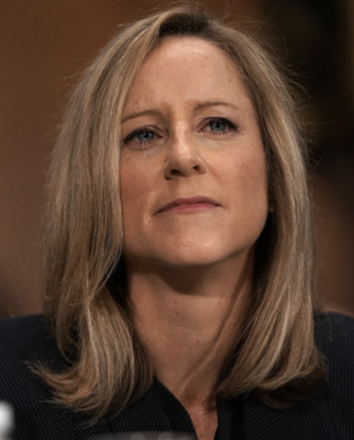
Kathy Kraninger
Among those in attendance at the meeting in addition to credit unions were large banks, community banks, and insurance companies.
“Credit unions’ presence at the event reinforced the credit union ‘people helping people’ philosophy, as credit unions empower them with the tools, information and decision-making skills necessary based on the various stages of life,” said Alexander Monterrubio, CUNA senior director of advocacy and counsel, who attended the event.
CFPB Director Kathy Kraninger spoke at the event, and participants heard presentations on emergency savings strategies and lessons learned from financial entities that have developed successful programs.
BECU, Tukwila, Wash., presented on its early saver program and how to leverage technology to reach vulnerable members.
The meeting also included breakout sessions to discuss helping consumers and workforce build emergency savings, marketing, and research.
NAFCU noted it has pledged to promote financial literacy and to work with the CFPB in achieving its objectives.
Other credit unions in attendance included Franklin Mint FCU in Chadds Ford, Penn.; True Sky CU in Oklahoma City, and University FCU in Austin, Texas.
NAFCU Meets With FCC
Separately, in a follow-up to a meeting with Federal Communications Commission (FCC) Commissioner Michael O' Rielly, NAFCU President and CEO Dan Berger is repeating NAFCU's call for guidance and relief under the Telephone Consumer Protection Act (TCPA) and shared concerns from member credit unions in a letter to the agency.
President Trump recently signed legislation expanding the FCC's enforcement authority over violations of the TCPA and requiring voice services providers to authenticate and block illegal robocalls.
"NAFCU continues to hear concerns regarding the current unclear TCPA landscape, which poses operational challenges and the potential for costly litigation," wrote Berger. "As the goal of eliminating illegal robocalls gains more attention in Congress, NAFCU urges the FCC to continue to lead in efforts to delineate between illegal robocalls and legitimate communications by providing callers with clarity under the TCPA.
Concerns Highlighted
Berger highlighted that one of the major concerns among credit unions is the difficulty in implementing procedures to contact members that would not violate regulations under the TCPA, including issues related to the definition of an autodialer.
"Credit unions, as member-owned, not-for-profit cooperative financial institutions, always put their members first and work hard to provide their communities with key financial products and services," he added. "However, growing litigation has had a chilling effect on helpful, time-sensitive communications with members, while leaving fewer resources for credit unions to provide necessary services to their local communities."