

ALEXANDRIA, Va. –The number of federally insured credit unions in the United States has now fallen below 5,000.
The threshold was breached during the third quarter of 2021, according to new data released by NCUA. The reduction has been steady in the recent decade as various pressures and other issues have led many CUs to merge.
The number of federally insured credit unions in the U.S., which peaked at more than 23,000 in the 1970s, was 4,990 in the third quarter of 2021, from 5,133 in the third quarter of 2020. In the third quarter of 2021, there were 3,122 federal credit unions and 1,868 federally insured, state-chartered credit unions, NCUA noted.\
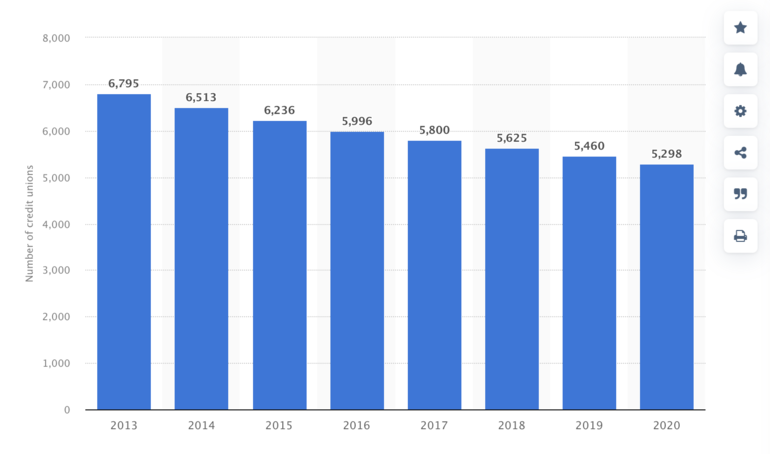
The actual number of credit unions in the U.S. is actually greater than 5,000 once CUs with private share insurance are factored in.
Meanwhile, the new financial performance data released by NCUA show federally insured credit unions saw shares and deposits increase by $219.9 billion, or 14.4%, to $1.75 trillion over the year ending in the third quarter of 2021.
In addition, NCUA’s Quarterly Data Summary Report also shows regular shares increased $95.8 billion, or 17.6%, to $640.0 billion. Total assets in federally insured credit unions rose by $231 billion, or 12.9%, to $2.02 trillion in the third quarter of 2021, NCUA said.
Can’t ‘Fail to Plan,’ Says Harper
“Federally insured credit unions, as a whole, continued to perform well in the third quarter,” said NCUA Chairman Todd M. Harper in a statement. “Lending has increased 5.8% compared to this point a year ago, and delinquency and charge-off rates are down. And, nearly five million new members have joined a federally insured credit union in the last 12 months. That is all good news.
“There is, however, wisdom in the age-old advice: If you fail to plan, you plan to fail,” Harper added. “While the third quarter data appear strong, federally insured credit unions should brace for potential challenges ahead like inflation and interest rate risk. They should also prepare for increases in credit risks now that many pandemic-relief programs have ended.”
Report Highlights
According to NCUA, highlights of the report for the third quarter of 2021 include:
- The credit union system’s net worth increased by $20.0 billion, or 10.7%, over the year to $206.6 billion. The aggregate net worth ratio — net worth as a percentage of assets — stood at 10.23% in the third quarter of 2021, down from 10.44% one year earlier.
- The return on average assets for federally insured credit unions was 112 basis points in the third quarter of 2021, up from 65 basis points in the third quarter of 2020. The median return on average assets across all federally insured credit unions was 56 basis points, up 14 basis points from the third quarter of 2020.
- Total loans outstanding increased $67.1 billion, or 5.8%, over the year, to $1.22 trillion. Credit union loan balances rose in most major categories, compared with the third quarter of 2020.
- The delinquency rate at federally insured credit unions was 46 basis points in the third quarter of 2021, down eight basis points from one year earlier. The net charge-off ratio was 26 basis points, down from 48 basis points in the third quarter of 2020.
- Federally insured credit unions added 4.9 million members over the year, and credit union membership in these institutions reached 128.6 million in the third quarter of 2021.