

OMAHA, Neb.–A concern frequently associated with markets along the coasts is hitting the heartland, with housing costs in the Midwest increasingly out of reach for many.
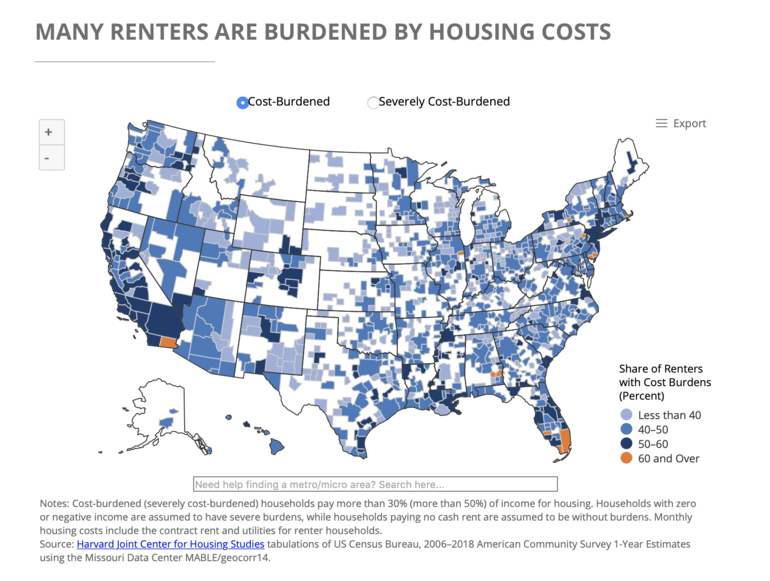
New research released by the Harvard Joint Center for Housing Studies finds housing costs are slipping out of reach for the middle class in smaller and medium-size cities across the U.S., the latest sign that the affordability crisis that started on the coasts is moving inland.
From 2011 to 2018, the proportion of households making $30,000 to $45,000 a year that were “cost-burdened” -- paying more than 30% of their income on rent -- soared the most in metros including Nashville, Tennessee; Greenville, South Carolina; and McAllen, Texas, the report found.
Omaha, for instance, came in ninth on the list, a worse showing than San Francisco or New York, which showed relatively little change over the period despite having notoriously pricey housing markets, noted Bloomberg in its analysis.
‘Harsh Reality’
“The data highlight a harsh reality of the U.S. economy a decade into the longest expansion on record: For people who don’t make big salaries, there are fewer and fewer affordable places to go,” Bloomberg reported.
Whitney Airgood-Obrycki, a research associate at the Center and lead author of the report, told Bloomberg, “The lowest-income people have always had an absurdly high cost of living. But the affordability crisis that we’re seeing now is hitting middle-income renters, and it’s hitting them across the country.”
Overall, the report showed about 48% of all renters were cost burdened in 2018, representing more than 20-million Americans -- a slight improvement from 51% in 2011 when the share peaked in the years following the 2008 recession.
Other Findings
Among other findings in the report, as cited by Bloomberg:
- Wage growth has been lackluster in recent years compared with previous periods of economic expansion, and has failed to keep pace with rental costs. The consumer price index for rent rose an average 3.2% year-over-year from 2011 through 2019, Bureau of Labor Statistics data show. That outpaced average yearly earnings growth over the period of 2.4%.
- An influx of high-income renters –- mainly young, married, white, and college-educated –- are increasingly delaying home ownership either out of choice or necessity, driving up rents by fueling competition for existing units and spurring new construction designed primarily for the upper end of the market.
- High-income households drove more than three-quarters of growth in renters from 2010 to 2018, bringing the share of people earning at least $75,000 to a record, the researchers’ analysis of inflation-adjusted Census data show.
- The share of low-cost units in the national rental stock shrank to 25% in 2017 from 33% in 2012 -- with the biggest declines in Iowa, Montana, Nebraska, North Dakota, Oklahoma, and Texas.
“This isn’t just a New York or San Francisco story,” Airgood-Obrycki told Bloomberg, regarding the dwindling options for middle-income renters. “This is everywhere.”