

NEW YORK–There are five factors companies and credit unions should focus on in designing a hybrid office as more employers bring workers back after a year in which many have been working from home.

In this, the second in a four-part series, CUToday.info provides a synopsis of interviews conducted by the New York Times examining how companies and academics are studying how the virtual work arrangements put in place during the pandemic will factor into their long-term plans — or not—and how to strike a balance.
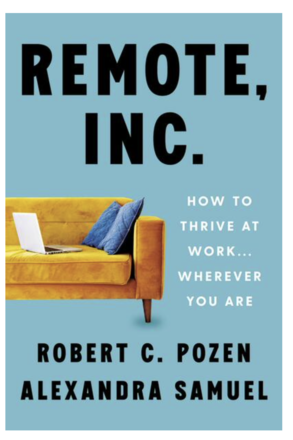
Featured in this second in the series: Robert C. Pozen, a senior lecturer at the Massachusetts Institute of Technology’s Sloan School of Management, and Alexandria Samuel, a technology researcher, who co-authored the book “Remote, Inc.” How to Thrive at Work … Wherever You Are.”
According to the two researchers, a review of the research on virtual teams comes up short on universal best practices for designing a hybrid office.
“But it does suggest certain factors that companies should focus on. We call these five factors FLOCS: function, location, organization, culture and schedule,” Pozen and Samuel said.
Five Factors
The five factors:
- What is the function of each team member? “A team that spends many hours on brainstorming or collaborative tasks needs more time at the workplace. By contrast, teams that do a lot of deep, focused work benefit from the relative quiet of home.”
- What is the location of each team member? “Hiring in a single metropolitan area means you can join your teammates in a nearby office or meet up easily for one-on-one meetings. Conversely, there’s no point in making employees report to the nearest office if everyone they work with is in another city.”
-
What is the structure of the organization?
In a comparison of two accounting companies, researchers found that a flatter hierarchy helped facilitate virtual work, because remote workers didn’t feel too far from the center of the organization. Our own research also found a strong correlation between employee autonomy and productivity outside the office,” wrote Pozen and Samuel. - What is the culture of the company? “Companies with an individualistic culture seem to make a smoother transition to virtual work; by contrast, companies that stress “us” over “me” have been slower to adopt online collaboration.”
- What is each team’s schedule? “If schedules are similar and work is interdependent, it’s good to encourage everyone to work roughly at the same time. If employees live in different time zones, it’s better to set a few common windows for real-time communications like videoconferences, and let most other work unfold through email or document sharing.”