

ALEXANDRIA–Federally insured credit unions experienced continued growth in assets and loans during 2021, an increase in ROAA, and a decline in the total delinquency rate, according to the NCUA’s fourth-quarter state-level data, which also continue to show growth problems among small FCUs—and issues with overall CU membership growth
But as is often the case, the overall numbers mask a more complex picture, as the NCUA data show that 25 states and Washington, D.C. had negative membership growth during the year ending in the fourth quarter of 2021.
While overall membership in federally insured credit unions continued to grow, at the median, membership declined 0.4%. Overall, about 55% of federally insured credit unions had fewer members at the end of the fourth quarter of 2021 than a year earlier.
Idaho FCU’s led the way in median annual asset (17.1%) and share growth (17.7%), while Alaska beat all states in membership growth (4.4%). Washington, D.C., credit unions ranked at the bottom in all three categories. Looking at the data by asset size continues to tell the story of the big CUs getting bigger while small cooperatives struggle—65% of credit unions with declining memberships had assets below $50 million.
Below is what the NCUA data show for state-level CU performance, as well as the agency's analysis of each category.
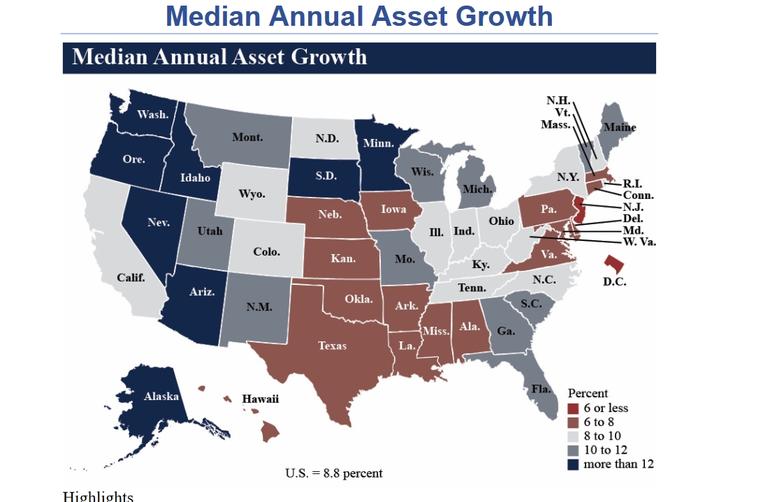
Median Annual Asset Growth
Nationally, median asset growth over the year ending in the fourth quarter of 2021 was 8.8%. In other words, half of all federally insured credit unions had asset growth at or above 8.8% and half had asset growth of 8.8% or less, NCUA said. In the year ending in the fourth quarter of 2020, the median growth rate in assets was 14.2%. Over the year ending in the fourth quarter of 2021, median asset growth was highest in Idaho (17.1%) and South Dakota (14.0%). At the median, assets grew the least in Washington, D.C. (4.2%) and New Jersey (5.2%).
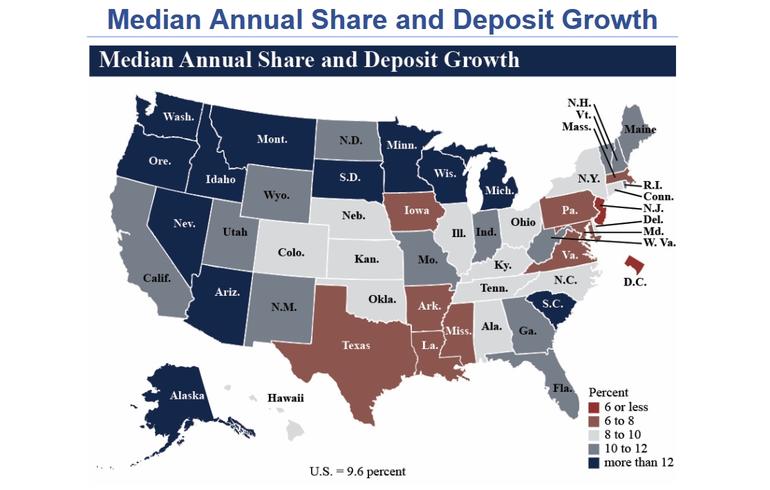
Median Annual Share and Deposit Growth
Nationally, median growth in shares and deposits over the year ending in the fourth quarter of 2021 was 9.6%. In the year ending in the fourth quarter of 2020, the median growth rate in shares and deposits was 15.9%. Over the year ending in the fourth quarter of 2021, median growth in shares and deposits was highest in Idaho (17.7%) and Nevada (15.1%). At the median, shares and deposits grew the least in Washington, D.C. (4.1%) and New Jersey (5.9%) during that time.
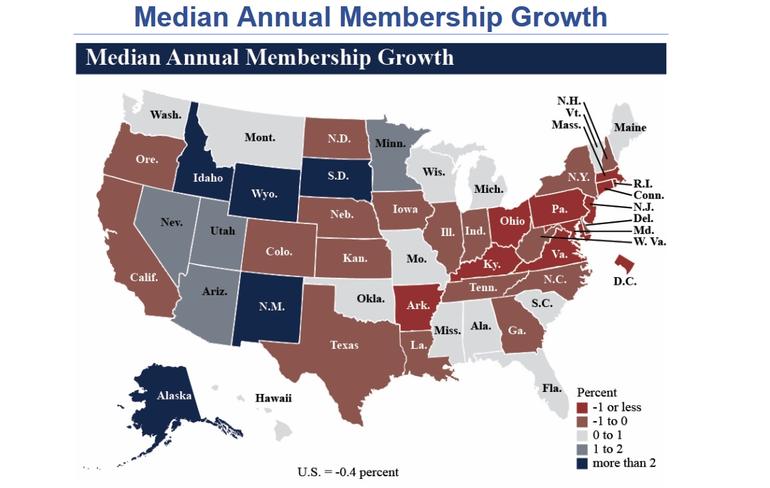
Median Annual Membership Growth
While overall membership in federally insured credit unions continued to grow during the year ending in the fourth quarter of 2021, at the median, membership declined 0.4%. Membership declined 0.5% at the median in the year ending in the fourth quarter of 2020. Overall, about 55% of federally insured credit unions had fewer members at the end of the fourth quarter of 2021 than a year earlier. Credit unions with falling membership tend to be small; almost 65% had less than $50 million in assets in the fourth quarter of 2021, NCUA said. Over the year ending in the fourth quarter of 2021, credit unions headquartered in Alaska (4.4%) and Wyoming (3.9%) experienced the strongest median membership growth. At the median, membership declined in 25 states and Washington, D.C., over the year. New Jersey (-2.6%) and Washington, D.C. (-1.8%) saw the largest median declines in membership during that time. Membership was unchanged in California, Iowa, and Oregon at the median.
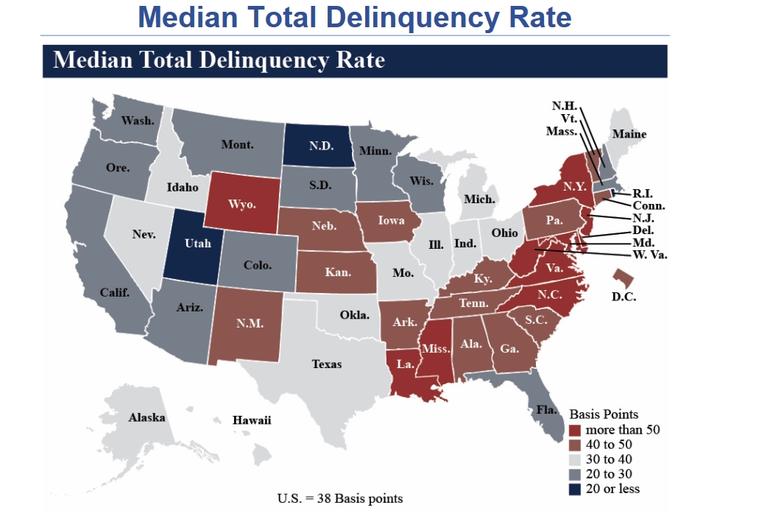
Median Total Delinquency Rate
At the end of the fourth quarter of 2021, the median total delinquency rate among federally insured credit unions was 38 basis points, compared with 51 basis points in the fourth quarter of 2020. At the end of the fourth quarter of 2021, the median delinquency rate was highest in New Jersey (99 basis points) and Virginia (68 basis points). The median delinquency rate was lowest in Utah (16 basis points) at that time, followed by North Dakota and Rhode Island (both 18 basis points).
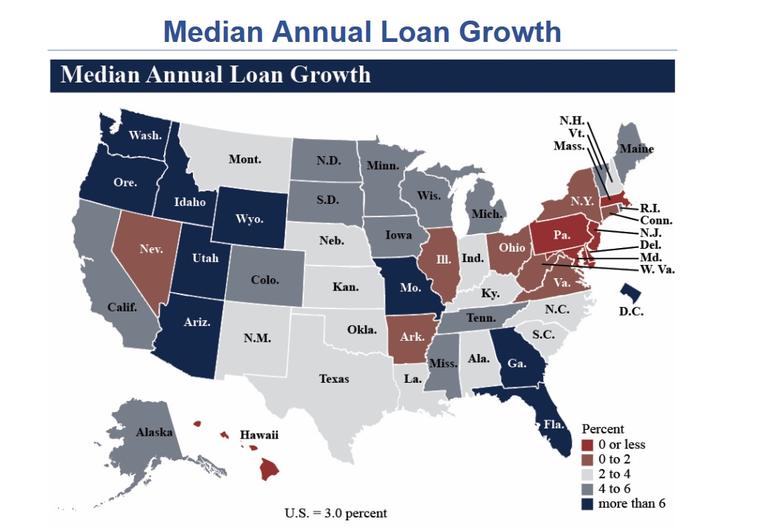
Median Annual Loan Growth
Nationally, loans outstanding rose 3.0% at the median over the year ending in the fourth quarter of 2021. During the previous year, loans declined 0.9% at the median. Over the year ending in the fourth quarter of 2021, median loan growth was strongest in Idaho (13.3%) and Wyoming (8.6%). At the median, loans outstanding declined in six states over the year. Delaware (-4.1%) and New Jersey (-3.5%) saw the largest median declines in loans outstanding during that time. Outstanding loans also declined in Hawaii, Maryland, Massachusetts, and Pennsylvania at the median.
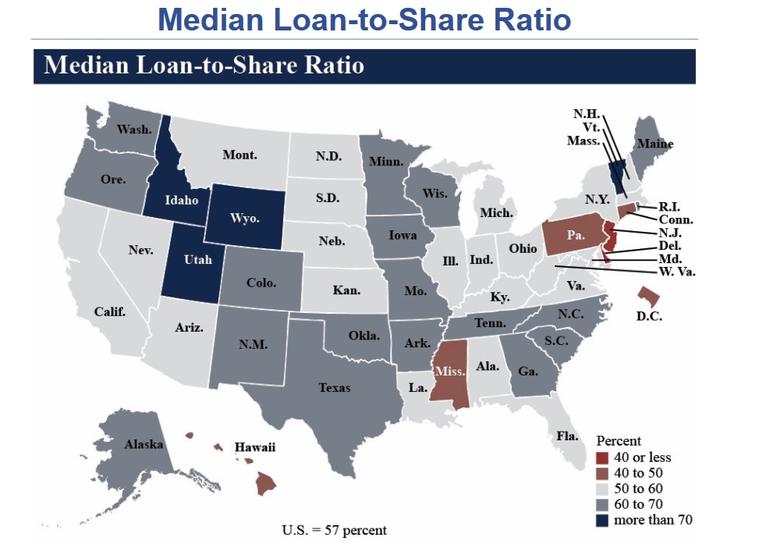
Median Loan-To-Share Ratio
Nationally, the median ratio of total loans outstanding to total shares and deposits (the loan-to-share ratio) was 57% at the end of the fourth quarter of 2021. At the end of the fourth quarter of 2020, the median loan-to-share ratio was 61%. The median loan-to-share ratio was highest in Idaho (78%) and Utah (77%). The median loan-to-share ratio was lowest in New Jersey (38%) and Delaware (40%) at that time, the data show.
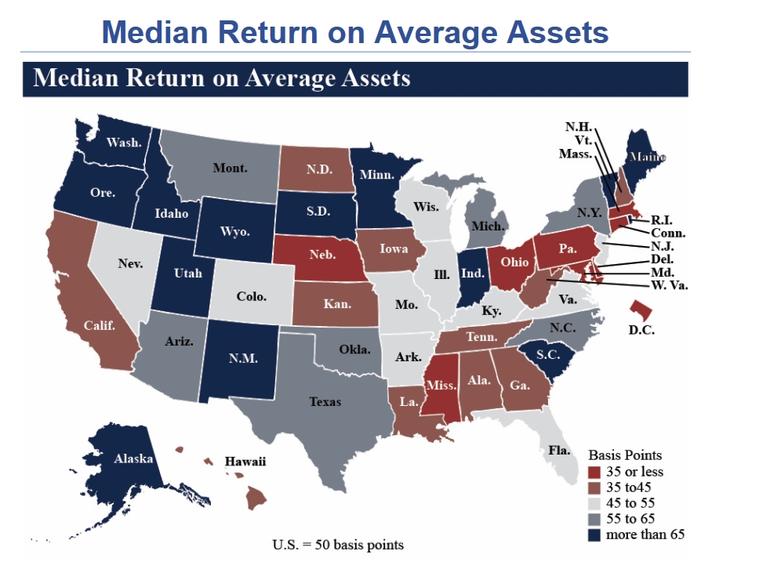
Median Return on Average Assets
Nationally, the median return on average assets at federally insured credit unions was 50 basis points in 2021, compared with 39 basis points in 2020. Idaho (99 basis points) and South Dakota (97 basis points) had the highest median returns on average assets in 2021. Nebraska (18 basis points) had the lowest median return on average assets during that time, followed by Connecticut and Ohio (both 20 basis points).