

MADISON, Wis.–CUNA’s April Monthly Credit Union Estimates (MCUEs), which reflect the first credit union operating results for the first full month of the coronavirus crisis (April) reflect the “challenges wrought by immense fiscal and monetary policy responses,” according to the trade group.
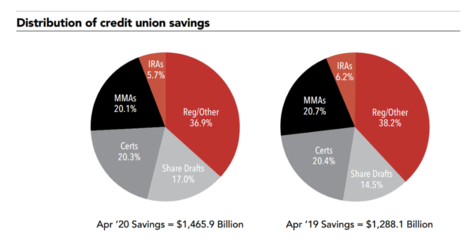
The data show massive growth in credit union savings balances – due mostly to a flood of government stimulus deposits which greatly magnified normal seasonal savings inflows, according to CUNA Chief Economist Mike Schenk.
Overall, CUNA reported credit union savings balances grew 4.7% in April, an “astonishing 56% annualized pace and the largest one-month increase in the 30-plus years that CUNA has collected MCUE data.”
“The increases occurred against a backdrop of rising equity prices – which staged a 13% rally during the month,” Schenk said in a statement.
Savings Increase
Overall, savings balances increased 7.0% during the first four months of the year and 13.8% over the past 12 months.
CUNA said its analysis found credit union members continued to keep savings short and liquid with share drafts and regular shares accounting for 93% of total savings growth in the month.
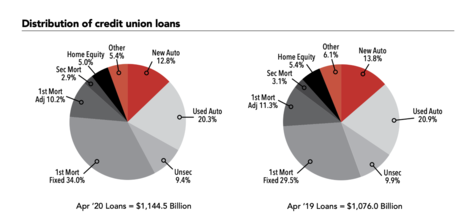
“While savings balances ballooned, anxiety related to the fast-spreading pandemic and a shocking wave of over 30 million job losses had most members hunkered down,” Schenk said. “Beyond stockpiling necessities, consumers were generally reluctant to spend or borrow: Overall, credit union loan balances were up only 0.1% in the month (an annualized pace of just 1.2%).”
Mostly Feeling A-Loan
According to CUNA, loans increased 1.0% during the first four months of the year and 6.8% over the year ending April 2020.
Loan balances declined across all but two portfolio segments in April, CUNA said, noting:
- Low market interest rates continued to fuel mortgage re-financings and fixed-rate mortgages increased 1.2% in the month (a 14.2% annualized pace);
- In addition, the SBA’s $349 billion Paycheck Protection Program (PPP) rolled out April 3 and credit unions stepped in to help small businesses across the nation - reflected in the fact that commercial loans increased an astonishing 5.2% in the month (a 62% annualized pace).
“Fast savings growth and weak loan growth pushed the credit union movement’s loan-to-share ratio down from 84.4% at the start of the year to a three-year low of 78.1%,” Schenk said. “No four-month period in MCUE’s 30-year history reflects a decline as severe as this 6.3 percentage point slide. Of course, declining loan-to-share ratios are typically associated with falling net interest margins and more challenging bottom-line results.”
Delinquencies, Capital-to-Assets
CUNA reported dollar delinquency as a percent of loans increased modestly – from 0.59% in April 2019 to 0.69% in April 2020. However, total dollar delinquencies increased by 10% in April and by 23% compared to year-ago levels.
According to the analysis, fast asset growth and more obvious earnings pressures combined to push the aggregate credit union capital-to-asset ratio down from 11.2% at the start of the year to 10.7% at the end of April.
The 0.5% decline is the most severe since the Great Recession, but overall capitalization levels are substantially higher than the 7.0% level seen as “well capitalized” by credit union regulators,” CUNA quoted Schenk as saying. “Credit unions remain well-positioned to continue to serve members in the downturn.”