

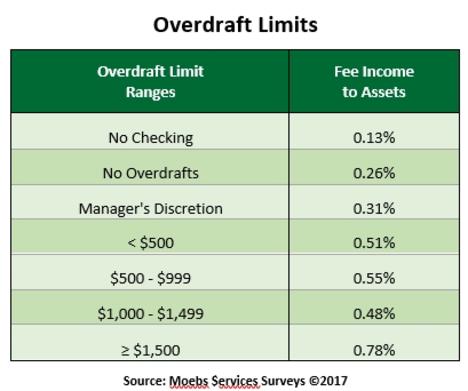
LAKE FOREST, Ill.—The overdraft limit, or the maximum amount a depository will allow a consumer to overdraw their account, has not changed in almost two decades, according to a new report that shows that setting higher limits can lead to 40% more fee revenue.
The report also shows that letting managers make the call on which items to pay or bounce costs the FI a great deal of money.
Currently, the median overdraft limit is $500, which has remained stagnant since 1998, said Michael Moebs, economist and CEO at Moebs $ervices.
“OD revenue has never achieved its full potential due to the lack of increasing the limits on overdrafts,” said Moebs. “The Moebs Overdraft Limit Study demonstrates depositories that have increased OD limits to match consumer needs generate nearly double the revenue of depositories that only have a $500 OD limit or less. Equally as important, higher limits address consumers’ short cash pitfalls.”
Another strategy depositories use is to have no set OD limits and rely on the manager’s discretion to decide which items to pay, or bounce or not authorize. About half of all depositories use the manager’s discretion approach, said Moebs.
Sufficient Income?
“Using a manager’s discretion strategy does not allow a depository to reach its full fee revenue potential – most make two to three times less than depositories with set limits. Nor are consumers properly served. Even those financial institutions that do not offer ODs at all, make almost the same fee income as those using manager’s discretion,” said Moebs.
What is a sufficient overdraft limit to increase revenue?
“Overall, establishing set overdraft limits can be risky and expensive. In many cases, the Moebs OD Limit Study points out, it may be out of reach for smaller depositories,” said Moebs.
The study shows if resources are available, creating set limits can be both beneficial for the depository as well as the consumer. Having higher limits, greater than $1,500 per account, can produce the most fee income, he said.
Creating higher limits earns at least 40% more than lower overdraft limit ranges. Higher limits also provide the consumer with the protection to cover mortgage or rent payments if necessary, added Moebs.

Michael Moebs
“With the industry average OD limit remaining at $500 for almost two decades, it proves depositories need a change, but are leery on how to make the change. In most cases, the consumer is not being served well and because of this the depository loses value and earnings it is capable of achieving,” said Moebs.
But creating higher limits comes with a certain amount of risk, said Moebs.
“Since most financial institution managers dislike unsecured credit, how can a depository successfully create limits and avoid any potential consequences?”
Risky Business?
Overdrafts are defined as unsecured credit, but not a loan, without a formal agreement. In many cases allowing a consumer to reach a large negative balance can be risky to the depository, the Moebs Overdraft Limit Study notes.
The study further shows use of FICO scores can eliminate the risk associated with giving higher limits to those who have a history of not paying the overdrawn amount back. Creating separate limits for different FICO score ranges is a great solution to increase limits for those consumers who are less risky, added Moebs.
“Almost all depositories that have OD limits of $1,500 or greater use some form of auto decision for overdrafts,” said Moebs. “This form of overdraft revenue underwriting allows for larger limits, reduces operating expense, and produces much more fee revenue. Most importantly it keeps the overdraft customers or members grateful for not bouncing home or apartment payments, or car loan payments.”