

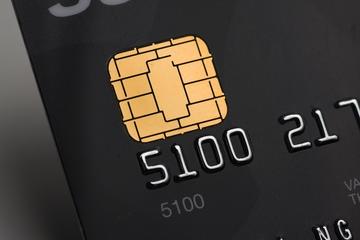
HOUSTON—A new survey has found that by year-end 2015, almost half (45%) of issuers had begun issuing chip debit cards, a figure that is much lower than the 90% of issuers that indicated in the same study one year earlier that they expected to have chip cards in the market by that date. Nevertheless, chip debit transactions have been growing at triple digit rates, while skimming has contributed to a surge in fraud.
That is just one finding from the new 2016 Debit Issuer Study, commissioned by PULSE, which takes stock of the debit industry's shift to chip (EMV) cards and mobile payments. As a result of the October 2015 liability shift, financial institutions have begun their chip debit card rollout in earnest with optimism about the technology's potential for enhancing the security of payment card transactions, PULSE said.
The study also details financial institutions' move to support more mobile payment options as competition grows among mobile wallet providers.
"In this sea of change, core debit performance metrics remain strong, with debit use growing with each installment of the study," said Steve Sievert, executive vice president of marketing and communications for PULSE, in a statement. "This year's results provide key facts behind the shift to chip debit cards and mobile payments, two of the most significant developments within the payments industry."
Among the findings:
- Based upon issuers' actual card migration, the study estimates that one-third of all debit cards featured a chip by year-end 2015. The study forecasts that approximately three in four debit cards will be chip-enabled by year-end 2016.
- Largely due to the slower-than-anticipated pace of merchant adoption, the use of chip cards at chip-enabled terminals remains limited. Even among consumers using chip debit cards, only 11% of their chip card transactions were at chip-enabled terminals. The remaining 89% were processed as traditional magnetic stripe or card-not-present transactions, such as online purchases.
- When taking into consideration all debit card transactions, chip debit transactions (chip cards used at chip-enabled terminals) accounted for only 4% of total debit transactions, PULSE said.
- Chip debit transactions are growing at triple-digit rates year-over-year. Issuers view the shift to chip debit cards as a critical step toward increasing the security of card-based transactions and reducing fraud loss rates.
Mobile
- More financial institutions are supporting the ability to pay at the point of sale with a mobile phone. By the end of 2015, two-thirds of issuers had debit cards eligible to be loaded into a mobile wallet. The previous Debit Issuer Study found fewer than one-third had that capability, signaling a year-over-year increase of more than 100%.
- The 2016 Debit Issuer Study notes that mobile wallets have greater adoption with financial institutions than with cardholders. Apple Pay dominates the market, with approximately 3.5% of eligible debit cards loaded, compared to 0.2% each for Samsung Pay and Android Pay.
- Cardholder usage was higher for Samsung Pay and Android Pay in January 2016, averaging 1.8 and 1.7 transactions per enrolled card per month, respectively, compared to 0.7 transactions for Apple Pay. Combined, the three "Pays" generated approximately eight-million debit transactions per month at that time.
"Despite limited usage, mobile payments have now become a table-stakes offering for financial institutions," said Tony Hayes, a partner at Oliver Wyman who co-led the study. "Issuers foresee a near-term boom in mobile payments – nearly half of issuers project mobile payments to make up over 25% of debit transactions in five years' time. That would make mobile a primary payment method."
Debit
- The PULSE survey found issuers saw sustained growth in penetration, activation and usage metrics in 2015. On consumer debit cards, transactions per active card increased 4% year-over-year to 22.1 per month. The penetration rate ticked up slightly from 76% to 77%. Business debit also saw similar gains, with transactions per active card per month growing from 14.5 in 2013 to 15.0 in 2015.
Fraud
- Data breaches remained the most common source of fraud but accounted for 33% of fraud losses in 2015, a decline from 57% in 2014. This was offset by an almost three-fold increase in skimming – from 7% to 20% of all fraud losses, PULSE reported.
- The increased skimming – and related rise of in-footprint fraud (i.e., fraud within a financial institution's primary market, which requires more sophisticated techniques to mitigate) – led to a tripling of PIN POS fraud to $0.008 per transaction. By contrast, when a debit card is used without the added security of a PIN, the loss rate is three times higher, averaging $0.026 per transaction.