ST. LOUIS–For an increasing number of people, the American Dream of homeownership is becoming just that, a dream, especially in certain markets where affordability has become difficult for most. And now, rents are also becoming unaffordable for many.
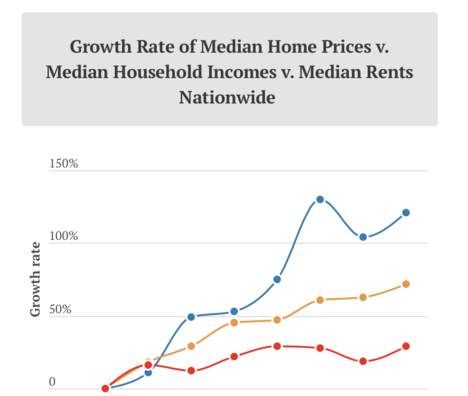
Pointing to research conducted by MassMutual that found one-in-three Americans believe the American Dream is disappearing, the real estate firm Clever has released a new analysis based on Census data from 1960 to 2017 that includes home prices, rents, and household income. “After adjusting for inflation over time, the future of the American Dream seems rather gloomy: Median home prices increased 121% nationwide since 1960, but median household income only increased 29%,” Clever stated. “Home buyers aren’t the only ones struggling. Median gross rent increased by 72% since the 1960s, more than twice the growth seen by adjusted incomes, making renting costlier than ever and saving for a future home difficult.
The Findings
Among the findings in the Clever research:
- Median home prices have increased at four times the rate of household incomes since 1960, leading to imbalanced price-to-income ratios in most major metropolitan areas.
- Nationwide rents have increased at twice the rate of household incomes since 1960, making saving for a down payment increasingly difficult.
- A healthy price-to-income ratio is 2.6 (i.e. it would take 2.6 years of median disposable household income to purchase the median home), but the nationwide price-to-income ratio hasn’t been healthy since the late 1990s.
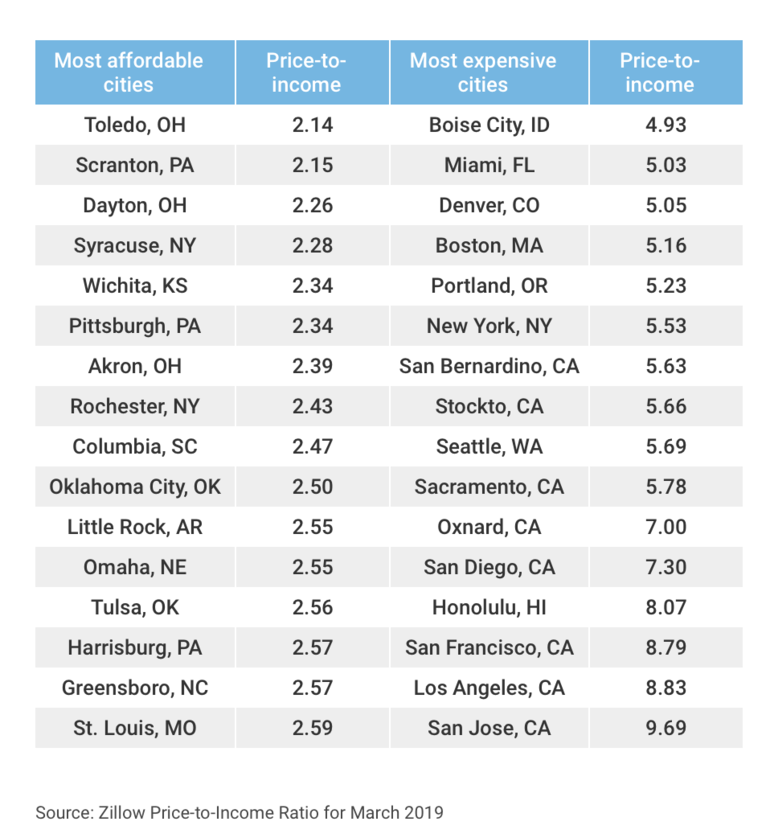
- Only 16 out of the 100 most populated cities in the United States are below a 2.6 price-to-income ratio in 2019.
Ratio Used
To determine affordability, Clever said it turned to the rule used by real estate agents of a 2.6 price-to-income ratio.
“We can also use price-to-income ratio to assess how healthy a housing market is — can the median resident save for a down payment within a reasonable time frame?” the company said. “In the 1960s, the price-to-income ratio was 2, meaning that two years of household income was enough to purchase a house,” Clever said. “Since the 1960s, however, the difference between home prices and income has nearly doubled. By 2017, the nationwide price-to-income ratio was 3.6, showing over 3.5 years of household income was necessary to purchase a house. In fact, the nationwide price-to-income ratio hasn’t been at a healthy balance since the 1990s. Homes are increasingly unaffordable, leading to unstable housing markets where demand can’t meet supply.”
The company said it found home prices in the West are increasingly out of line with household income, while only 16 out of the 100 most populated areas in the U.S. are below the healthy 2.6 price-to-income ratio.
The Dream by Region
In looking at the U.S. by region, Clever said it found:
- Real estate in the West is becoming unobtainable: Median home prices increased by 195% since the 1960s, while median household income only increased by 26%.
- The Midwest might be the last region homeowners can realistically afford. There’s almost no gap between rental and household income growth rates, so Midwesterners can save for their down payment and afford the median mortgage payments in their cities.
- The gap between household income and home prices was pronounced in the Northeast, but following the 2008 crash, the gap has narrowed as household incomes rise and home prices have dropped throughout the region.
- Home prices in the South were consistent with household income increases until the 2000s when the market became unstable. Home values increased 75% from 2000 to 2017 and continue to climb.
For the full findings, go here.