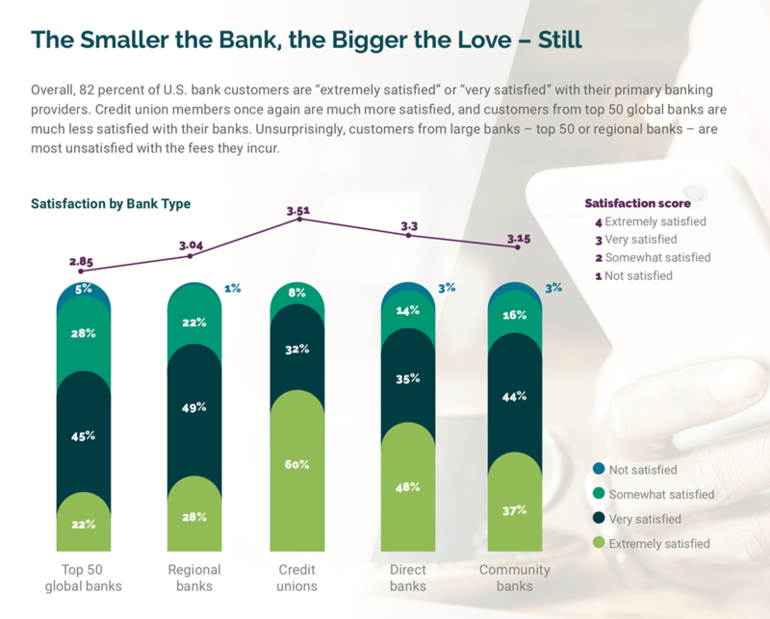
JACKSONVILLE, Fla.––Consumers overall are happy with their financial institutions, but happiest with credit unions, according to a new survey.
The 2018 FIS Performance Against Customer Expectations (PACE) study asked nearly 2,000 Americans to rank the importance of nine performance attributes, and found 92% of credit union members were either “extremely satisfied” or “very satisfied.” That figure was 82% for bank customers.
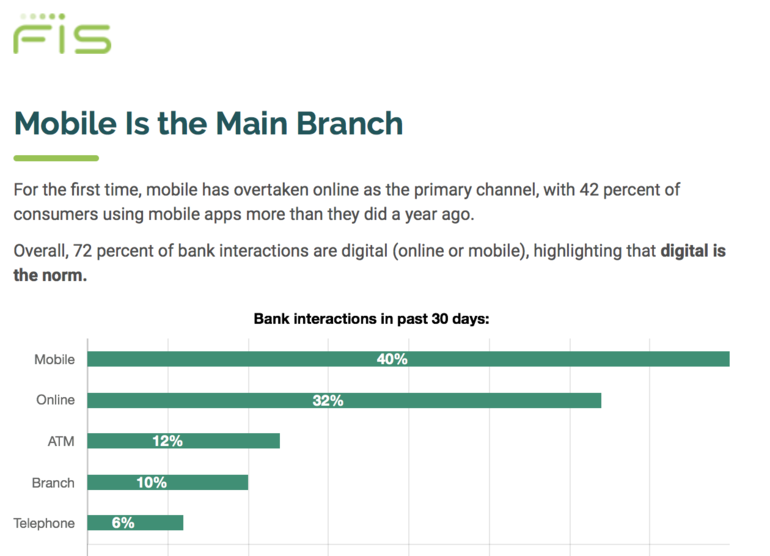
For the first time, the FIS survey found mobile has overtaken online as the primary channel, with 42% of consumers using mobile apps more than they did a year ago. Overall, 72 percent of bank interactions are digital (online or mobile), highlighting that “digital is the norm,” FIS reported.
Meanwhile, the survey also found:
- Security is a “double-edged sword,” with its analysis noting, “Consumers are happy with their banks’ security and privacy protocols, but a mistake can be costly. That’s because 25% of consumers who switched banks have experienced fraud in the past 12 months. A much higher rate than what’s seen in the general consumer population.
- The great wealth transfer is coming, but consumers are broadly unprepared for retirement or a transfer of wealth. “Amazingly, just 10% believe they’ll inherit any assets, even though $30 trillion is on deck to change hands,” the analysis points out.
- Feature parity is here. “Smaller banks that introduce features like P2P payments see rapid adoption, and it has never been cheaper or easier to add ‘big bank’ digital capabilities.”
- Education is job one. “Nurture must become second nature for banks to grow, and deploying trusted financial advice across channels, assets levels, and price points (including free) is essential to success.”
Four Recommendations
The FIS analysis has four recommendations for financial services providers:
- Digital Transformation. “Consumers now expect the same digital capabilities – mobile deposits, transfers, account opening, digital payments, mobile wallets, etc.– from credit unions and community banks as they do from larger banks. And given how affordably and quickly such features can be rolled out, these are reasonable expectations.”
- Multilayer Security. “Smaller banks are now prime targets of hackers moving down the food chain as larger banks harden their defenses. Banks must insulate themselves and their customers with multiple layers of security from the core to the edge, technology-driven fraud monitoring and threat detection, and rigorous response plans.”
- Wealth and Investing. “With GenMX and young millennials eager to improve their finances, banking providers can capture more accounts by adding wealth management solutions to accompany multichannel financial education, which should include everything from basic information to digital (robo) advice to traditional financial advisory.”
- Open Banking. “The transition to open banking, when awareness remains low, presents an opportunity for banks to leverage consumers’ favorable views of their security, engage trusted technology partners and add a host of ancillary products and services. This is likely the most efficient, agile way to add the services consumers want now and in the coming years.”