

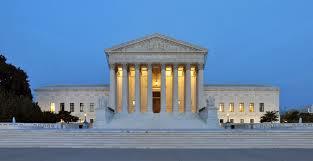
WASHINGTON–The Supreme Court today will hear oral arguments in a case of such strong interest to credit unions that CUs have been working with attorneys on one side of the case.
The case, Expressions Hair Design v. Schneiderman, involves a ban on credit card surcharges in the state of New York. Schneiderman is New York’s attorney general, Eric Schneiderman.
Specifically, the case centers on whether state no-surcharge laws unconstitutionally restrict speech conveying price information (as the Eleventh Circuit ruled) or regulate economic conduct (as the Second and Fifth Circuits have previously ruled).
The ban on surcharges has the strong support of credit unions. CUNA, as well as leagues in several states, have filed amicus briefs with the court. In addition, CUNA said its attorneys have been “heavily involved” in working with New York’s attorneys general office on their oral arguments.
As CUToday.info earlier reported here, the New York Credit Union Association’s General Counsel, Henry Meier, and Vice President of Governmental Affairs, Michael Lieberman, argued in their brief that the state legislature passed the surcharge ban based on the understanding that surcharges and discounts are separate pricing mechanisms, and not merely two words for the same conduct.
“Meier and Lieberman state that the ban does not regulate what merchants can say about the pricing structure,” the NYCUA said. “Rather, they write, ‘no-surcharge laws are economic regulations that do not infringe on merchants’ rights of Free Speech, and petitioners cannot invoke the First Amendment to accomplish in the Supreme Court what must be done in the chambers of Congress or state legislatures.’”
In the brief the two argue that:
- In countries where they are authorized, surcharges inevitably become a source of merchant revenue instead of a mechanism to recoup transaction costs.
- Merchants exercise monopoly control over how large a surcharge consumers pay.
- Credit card surcharges promote misleading pricing tactics and dubious marketing schemes.
- Banning “excessive surcharges” will not protect consumers from the negative consequences of surcharging.
- New York anticipated the negative consequences of surcharging experienced in other countries.
- Consumers do not construe pricing as merchant expression.
The full brief can be found here.