

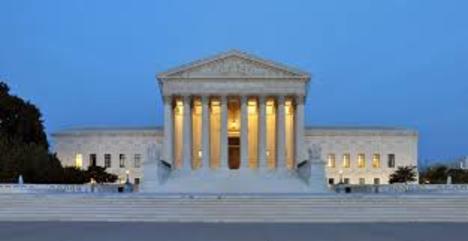
WASHINGTON–The United States Supreme Court has ruled in favor of whistle-blowers at a bank in a case that dates back to the financial crisis.
The Court ruled that using too narrow a legal standard when weighing whistle-blower suits under the False Claims Act, is meant to punish those who defraud the government. A New York Times analysis said that by highlighting a more expansive standard for what constitutes a false claim under the act, the court’s ruling is likely to open the door to more whistle-blower cases.
The Supreme Court ruling involved actions taken by the Federal Reserve Board and other regulators to shore up failing banks during the financial crisis. The former employees, Paul Bishop from World Savings and Robert Kraus from Wachovia (both banks were later acquired by Wells Fargo), filed the suit in 2011 under the False Claims Act and are seeking damages from Wells Fargo on behalf of taxpayers for improprieties that occurred before and during the mortgage crisis.
Both men alleged they had been fired after they told their superiors about the frauds. Citing documents filed in the lawsuit, the New York Times said the fraud involved accounting maneuvers using an off-balance sheet entity that made Wachovia’s books look better than they were. Insiders at the bank had a name for the entity: the Black Box, according to the plaintiffs. Loans that needed to be hidden from internal or regulator reviews were hidden in the Black Box, which is a violation of accounting rules that call for off-balance sheet vehicles to be “demonstrably distinct” from the entities transferring loans to them. An estimated $6 billion in loans and other assets were in that box, according to the suit.
“The plaintiffs contend that taxpayers are owed damages reflecting the difference between what the banks paid for the billions of dollars in financial assistance and what they would have paid for that help if they had been truthful about their precarious financial position,” the Times reported.
If the former employees win their case, they will receive a portion of those damages.
The two plaintiffs said whistle-blowing has come at a steep price. Kraus could not find a job in his field and currently works at a McDonalds in North Carolina.
“When you blow the whistle, you better be clear that you are on your own,” Bishop, 60, told the New York Times. “I naïvely believed there was a system behind me that would enforce the rules.”