

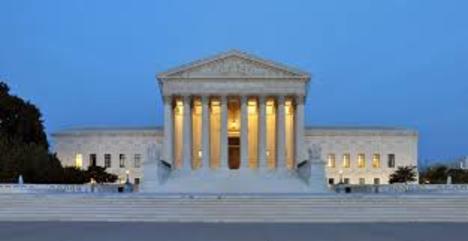
WASHINGTON —The Supreme Court has ruled the city of Miami can sue Bank of America and Wells Fargo for predatory lending under the Fair Housing Act of 1968.
The case goes all the way back to the financial crisis of 2008, with Miami suing the two banks arguing that discriminatory mortgage lending practices resulted in a disproportionate number of defaults by minority home buyers. Those defaults, the city argued, caused financial harm to Miami.
The court, however, declined to issue an opinion on whether the city had sufficiently made the case there was a direct enough connection between the banks’ actions and the harm it claimed. The court has now sent the case back to the federal appeals court in Atlanta for further exploration of that question.
The court ruled 5-3 in favor of the city.
In its case, Miami said the banks had intentionally and disproportionately issued risky mortgages on unfavorable terms to black and Hispanic borrowers. That led, the city said, to segregation and foreclosures, hurting its property tax base and requiring it to provide additional municipal services, the New York Times reported.
A trial court dismissed the suits in 2014, saying the city had not demonstrated that its claims were covered by the housing law. The United States Court of Appeals for the 11th Circuit, in Atlanta, reversed that ruling in 2015.
Writing for the majority on Monday, Justice Stephen G. Breyer said Congress had meant to include cities among the “aggrieved” persons who may sue under the housing law. In a second part of his opinion, Justice Breyer wrote that the appeals court had used too lax a standard in assessing the connection between the banks’ conduct and the city’s asserted injuries. The appeals court had ruled that injuries had only to be foreseeable, but Justice Breyer said that was too attenuated.
“The housing market is interconnected with economic and social life,” Justice Breyer wrote, and violations of the housing law always have ripples, according to the New York Times’ analysis. “Nothing in the statute suggests that Congress intended to provide a remedy wherever those ripples travel,” he wrote.
Justice Clarence Thomas wrote the dissent.