

WASHINGTON–In a case that had the attention of credit unions, financial services providers, business groups and consumer groups alike, the Supreme Court has rejected a challenge to the way the Consumer Financial Protection Bureau is funded.
By a vote of 7-2, and with Justice Clarence Thomas writing the majority opinion, the court upheld the Bureau’s funding structure, which the plaintiffs had argued violated the appropriations clause of the Constitution, which says that “no money shall be drawn from the Treasury, but in consequence of appropriations made by law.”
‘No Violation of Clause’
Thomas wrote, however, that the majority had found the funding mechanism to be constitutional.
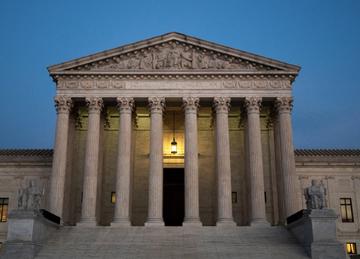
“Under the appropriations clause,” he wrote, “an appropriation is simply a law that authorizes expenditures from a specified source of public money for designated purposes. The statute that provides the bureau’s funding meets these requirements. We therefore conclude that the bureau’s funding mechanism does not violate the appropriations clause.”
Had the Supreme Court ruled in favor of the plaintiffs’ challenge, the CFPB could have been significantly limited and the rules, regulations, enforcement actions and more that it has put in place over the last 13 years could have been thrown into doubt.
CUs Express Disappointment
Credit union groups expressed disappointment in the ruling.
“The Court’s decision to side with the CFPB is one of acute consequence to credit unions and their 142 million members who are suffering from the unchecked actions of the Bureau," America's Credit Unions CEO Jim Nussle said in a statement. "America’s Credit Unions is disappointed with the ruling as we strongly believe that the CFPB’s current funding structure denies any accountability to Congress and ultimately the consumers it is tasked with serving. "The CFPB has the ability to shape the entire financial services marketplace with its actions, but has chosen to pursue overreaching regulatory burdens as a result of its broad powers. America’s Credit Unions will continue to advocate for accountability and transparency at the Bureau," Nussle added.
DCUC Statement
"We are disappointed in the court’s decision and will continue to work with members of Congress to help pass common-sense reform legislation like establishing a five-member commission to run the agency to improve transparency and accountability," said Anthony Hernandez, president and CEO of the Defense CU Council. "This would prevent much of the regulatory overreach credit unions have experienced recently from the agency. DCUC will continue to work with the current CFPB Director and his team to help educate them on the long-term impact their decisions have on the ability of defense and veteran credit unions to serve their members.”
ABA Statement
“The Supreme Court’s ruling today affirming the CFPB’s funding structure, attention should rightly shift back to the CFPB’s recent actions and its willingness to flout the law,” said ABA Rob Nichols in a statement. “All too often, this CFPB has exceeded its statutory authority and the will of Congress with significant negative consequences for the consumers the Bureau is supposed to protect, and that must come to an end. We will continue to advocate for our members and their customers including through litigation where necessary.
“ABA will also continue to call on Congress to establish more accountability for the Bureau. Only be placing limits on this rogue regulator can we ensure that consumers are truly protected and that banks can continue to provide them with the financial products they want and need.”
Creation of the CFPB
The CFPB was created by 2010’s Dodd-Frank Act in the wake of the financial crisis of the preceeding years. The Bureau is funded by the Federal Reserve System, in an amount determined by the CFPB so long as the sum does not exceed 12% of the system’s operating expenses. For the 2022 fiscal year, the agency requested and received $641.5 million of the $734 million available.
Justice Samuel A. Alito Jr., joined by Justice Neil M. Gorsuch, dissented.
The Supreme Court ruling came after a unanimous three-judge panel of the U.S. Court of Appeals for the Fifth Circuit in New Orleans ruled in 2022 that the CFPB’s funding method violated the appropriations clause. Other courts, however, had ruled that there was no violation.
The Plaintiffs
The case, Consumer Financial Protection Bureau v. Community Financial Services Association of America, No. 22-448, was originally filed by two trade groups for payday lenders who had challenged a regulation limiting the number of times lenders can try to withdraw funds from borrowers’ bank accounts.
The Fifth Circuit had earlier struck down the regulation, saying it was “wholly drawn through the agency’s unconstitutional funding scheme.”
CFPB Responds to Ruling
Following the ruling, the CFPB issued a statement saying, “For years, lawbreaking companies and Wall Street lobbyists have been scheming to defund essential consumer protection enforcement. The Supreme Court has rejected their radical theory that would have devastated the American financial markets. The Court repudiated the arguments of the payday loan lobby and made it clear that the CFPB is here to stay.”
“Congress created the CFPB to be the primary federal watchdog protecting consumers from predatory and abusive practices in the financial sector. Since the CFPB opened its doors in 2011, it has delivered more than $20 billion in consumer relief to hundreds of millions of consumers and has handled more than 4 million consumer complaints.”
“Today’s decision is a resounding victory for American families and honest businesses alike, ensuring that consumers are protected from predatory corporations and that markets are fair, transparent, and competitive.”
“This ruling upholds the fact that the CFPB’s funding structure is not novel or unusual, but in fact an essential part of the nation’s financial regulatory system, providing stability and continuity for the agencies and the system as a whole. As we have done since our inception, the CFPB will continue carrying out the vital consumer protection work Congress charged us to perform for the American people."
Small Business Critical of Decision
In response to the Supreme Court ruling, Beth Milito, executive director of the National Federation of Small Business’ Legal Center said in a statement, “Small businesses will feel the negative impact of this decision. We are disappointed with the Court’s ruling, which will ultimately leave small businesses with expensive penalties and burdensome inspections at the hands of the CFPB.”
How to Sign Up For the Best Daily News Email in Credit Unions? (It’s Free!)
Every workday CUToday.info delivers the most comprehensive, freshest daily newsletter with the day’s news headlines, including links to the related articles. The Fresh Today newsletter is the most timely, relevant and widely-read source of news and information in the CU community. And it’s free!
If you haven’t yet signed up for the new email solution on which CUToday.info has partnered with ResponseGenius, you can do so here. Signing up requires less than one minute of your time—and it’s free!
Please note that after signing up you may need to go to your Spam/Junk folder and mark the morning headlines email as safe. CUToday.info does not provide its list of readers and emails to outside parties,
And did we mention it’s free?