

WASHINGTON–Judge Brett M. Kavanaugh, nominated by President Trump to fill the vacancy on the Supreme Court, was the author of an appeals court opinion in October declaring the structure of the Bureau of Consumer Financial Protection (then known as the CFPB) to be unconstitutional.
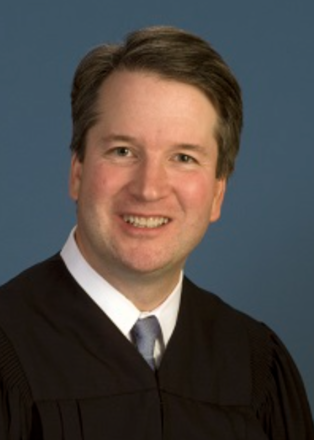
Brett M. Kavanaugh
Writing for a three-judge panel that voted 2-1, Kavanaugh said the 2010 Dodd-Frank law had wrongly placed “enormous executive power” in the CFPB’s single director. That decision in a case originally filed by PHH Corp., was hailed by credit unions and their trade groups, which have been calling for a five-person board to oversee the agency.
Kavanaugh, 53, was confirmed for the United States Court of Appeals for the District of Columbia Circuit in 2006.
As CUToday.info reported here, the court’s ruling had been eagerly awaited by many after it was first argued in the Appeals Court in the District of Columbia in April. PHH, a Mt. Laurel, N.J.-based mortgage company, had asked the court to vacate a June 2015 enforcement ruling by the CFPB that said PHH violated anti-kickback provisions in Section 8(a) of the Real Estate Settlement Procedures Act (RESPA) and as a result would have to give up $109 million in what CFPB Director Cordray said were ill-gotten mortgage reinsurance premiums.
While PHH challenged the CFPB on its interpretation of several aspects of RESPA, the far more important issue in the case has always been PHH’s arguments over the “unprecedented structure” of the CFPB and its “unaccountable director,” which PHH said violated the U.S. Constitution.
“Because the CFPB is an independent agency headed by a single director and not by a multi-member commission, the director of the CFPB possesses more unilateral authority – that is, authority to take action on one’s own, subject to no check – than any single commissioner or board member in any other independent agency in the U.S. Government,” Kavanaugh wrote in the majority opinion.
Not Everyone Agreed
Not everyone embraced the court’s decision. Karl Frisch, who heads up Allied Progress, which calls itself a “progressive issue advocacy organization,” said in a statement, “The plaintiffs in this case have been cheered on from the legal sidelines by the very same Wall Street special interests that instigated and profited from the financial crisis of 2007 and 2008, while millions of Americans were losing their homes and their retirement savings. The Consumer Financial Protection Bureau was created to hold these powerful financial institutions accountable – to make sure we never experience such a crisis ever again…Judge Kavanaugh’s reckless, partisan decision was written to appease his cronies on Wall Street and the right-wing political movement where he got his start. We have no doubt that it will be reversed by a full panel of his colleagues on the D.C. Circuit.”