

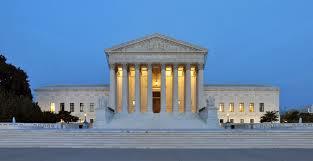
WASHINGTON—The Supreme Court has declined to intervene in a case centered on how the fate of Fannie Mae and Freddie Mac should be handled.
The court, in a brief written order, said it won’t take up appeals that have been brought by hedge funds and other investors holding distressed assets from the two secondary market giants, which have been in government conservatorship since the financial crisis.
The investors filed suit after the government in 2012 amended the terms of its bailout of the two companies.
The federal government has been operating Fannie and Freddie under conservatorship since the 2008 financial crisis, pumping nearly $188 billion into the two companies to stabilize them. In exchange, the government received a special class of stock that paid a 10% dividend along with warrants to acquire nearly 80% of Fannie and Freddie’s common stock for a nominal price, explained the Wall Street Journal.
“In 2012, the government stopped requiring the companies to pay dividends in quarters when they lost money, which had forced the companies to borrow money to pay the government. In exchange, the firms would pay all of their profits to the Treasury Department as dividends,” the Journal noted. “The change coincided with the firms’ return to profitability amid a rebounding housing market. The investors who sued said the terms of the profit sweep amounted to an illegal end-run to prevent the firms from building capital that might one day be available for private shareholders.”
As a result of the profit sweep, Fannie and Freddie have now paid about $280 billion back to the federal government.
“Although we are disappointed by the court’s order today, we remain confident that we will ultimately prevail in reversing the illegal nationalization of Fannie and Freddie,” said David Thompson, a Cooper & Kirk PLLC lawyer representing the plaintiffs, according to the Journal.
According to the Journal, the decision likely narrows the options for the shareholders to just one legal path: a pending challenge to the Fannie and Freddie profit sweep that for four years has been before the U.S. Court of Federal Claims in Washington, which hears cases against the federal government.